Live action TV
Description
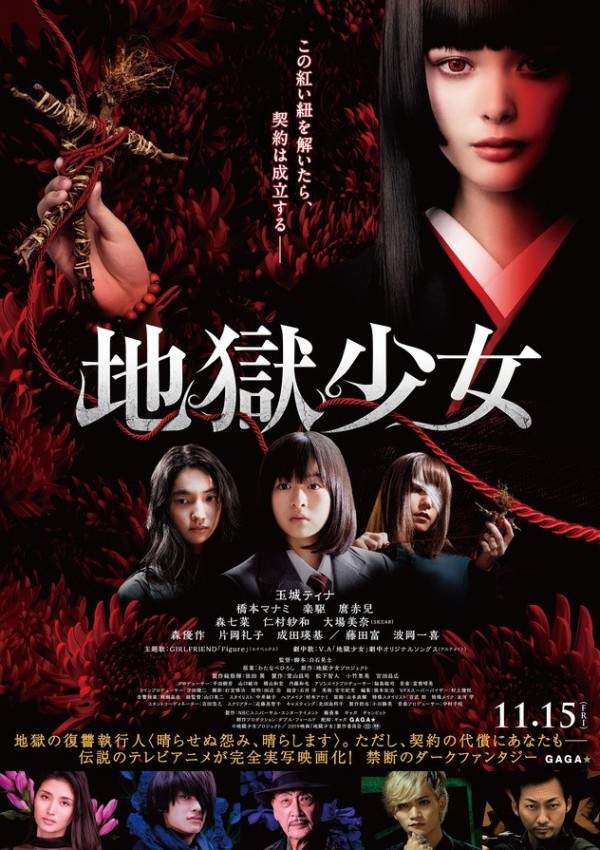
At midnight, a website known as the Hell Correspondence can be accessed, offering anyone nursing a deep grudge a chance for supernatural retribution. By posting the name of the person they hate, the requester calls upon Ai Enma, the Hell Girl, who appears in a traditional kimono with an impassive expression. She presents a straw doll with a red string around its neck; if the client unties the string, the contract is sealed. Her three servants—Wanyudo, a wheel-like yokai who often appears as an elderly man; Hone Onna, a seductive skeleton spirit; and Ichimoku Ren, a being with a hidden third eye—then torment the target before Ai ferries them to hell in a boat on a river of fire. The price for this vengeance is steep: after the client’s own natural death, their soul is condemned to hell, and a cross-shaped mark is branded on their chest as a lasting sign of the pact.
The setting shifts between ordinary modern-day Japanese towns and a twilight realm where Ai dwells with her grandmother. The series follows a largely episodic structure, with each episode focusing on a different client—often a child or vulnerable person being cruelly mistreated—and the moral dilemma of whether to invoke the Hell Girl. Over time, a recurring subplot emerges involving Hajime Shibata, a freelance journalist who specializes in blackmailing people with scandalous photographs, and his young daughter Tsugumi. After Hajime stumbles upon the Hell Correspondence rumor, he begins investigating the mysterious disappearances tied to it, becoming increasingly entangled in the supernatural system. Tsugumi possesses the rare ability to see Ai, even when she is invisible to others, and she often acts as a source of empathy and conscience. Their involvement adds a serialized layer to the story, as they grapple with the ethics of intervention and the irreversible consequences of the contracts.
Key narrative arcs in the live-action adaptation include the gradual revelation of Ai’s own tragic past: she was once a human girl sacrificed by her village centuries ago, and her subsequent vengeance bound her to the endless role of Hell Girl as punishment. The series also explores the emotional toll on clients who survive with the knowledge of their own damnation, and the moral ambiguities of seeking revenge through such a dark channel. While some episodes are adapted from the original anime, the live-action includes original storylines set in a shorter, 12-episode format that condenses the core themes of injustice, hatred, and the price of wrath. The Shibatas’ personal lives are also given more attention, with Hajime’s wife Ayumi still alive in this version, adding a family dynamic absent from the anime. Throughout the series, Ai remains a remote, sorrowful figure, occasionally showing flickers of emotion as she witnesses the suffering of those who call upon her.
The setting shifts between ordinary modern-day Japanese towns and a twilight realm where Ai dwells with her grandmother. The series follows a largely episodic structure, with each episode focusing on a different client—often a child or vulnerable person being cruelly mistreated—and the moral dilemma of whether to invoke the Hell Girl. Over time, a recurring subplot emerges involving Hajime Shibata, a freelance journalist who specializes in blackmailing people with scandalous photographs, and his young daughter Tsugumi. After Hajime stumbles upon the Hell Correspondence rumor, he begins investigating the mysterious disappearances tied to it, becoming increasingly entangled in the supernatural system. Tsugumi possesses the rare ability to see Ai, even when she is invisible to others, and she often acts as a source of empathy and conscience. Their involvement adds a serialized layer to the story, as they grapple with the ethics of intervention and the irreversible consequences of the contracts.
Key narrative arcs in the live-action adaptation include the gradual revelation of Ai’s own tragic past: she was once a human girl sacrificed by her village centuries ago, and her subsequent vengeance bound her to the endless role of Hell Girl as punishment. The series also explores the emotional toll on clients who survive with the knowledge of their own damnation, and the moral ambiguities of seeking revenge through such a dark channel. While some episodes are adapted from the original anime, the live-action includes original storylines set in a shorter, 12-episode format that condenses the core themes of injustice, hatred, and the price of wrath. The Shibatas’ personal lives are also given more attention, with Hajime’s wife Ayumi still alive in this version, adding a family dynamic absent from the anime. Throughout the series, Ai remains a remote, sorrowful figure, occasionally showing flickers of emotion as she witnesses the suffering of those who call upon her.
Cast
- Tina Tamashiro
- ShinjōEiki Narita
- Manami Hashimoto
- Masako NagaokaReiko Kataoka
- MakiTom Fujita
- Tomoe MikuriyaMiki Yamazaki
- RaimuRaimu Shiratori
- ShynaSimon Li
- WanyūdōAkaji Maro
- Jin KudōKazuki Namioka
- Sanae MikuriyaMina Ōba
- Ren IchimokuRaiku
- Haruka NanjōSawa Nimura
- Takurō NagaokaYūsaku Mori
- NagisaNagisa Takano
- Natsumi TanakaSaki Terashima
- Yui KudōYuki Kazamatsuri
Comment(s)
Staff
- DirectorKōji Shiraishi
- MusicHarumi Fuuki
- Executive producerTatsumi Yoda
- Associate producerSatoshi Fukushima
- Line Producer
- Planning CooperationToshio Fujioka
- Theme Song ArrangementNAOKI-T
- Theme Song LyricsNAOKI-TSAKIKA
- ScreenplayKōji Shiraishi
- Original Concept
- ProducerKazuhiro YokoyamaKazuya NaitōMikihiko HirataToshinori Yamaguchi
- Chief Executive ProducerMasahiro MiyataSatomi KotakeShōji DōyamaTomohito Matsushita
- Original Work Cooperation
- Production CommitteeDai YoshitomiEiji MuranoHideki ChibaHideyuki SakuraiHiroshi HattoriKotaro EnomotoManabu KobayashiTakeshi Itoga
- Theme Song CompositionNAOKI-TSAKIKA
- Theme Song PerformanceGIRLFRIEND
Production
- Original Work CooperationAniplex
- Production ManagementGAMBIT
- Production StudioW Field
- Original WorkJigoku Shōjo Project
- ProductionGAMBITNBCUniversal Entertainment JapanGAGA CorporationFujishoji
- DistributorNBCUniversal Entertainment JapanGAGA Corporation
- Publicity CooperationFujishoji
Relations
Recommendations based on shared tags.