Manga
Description
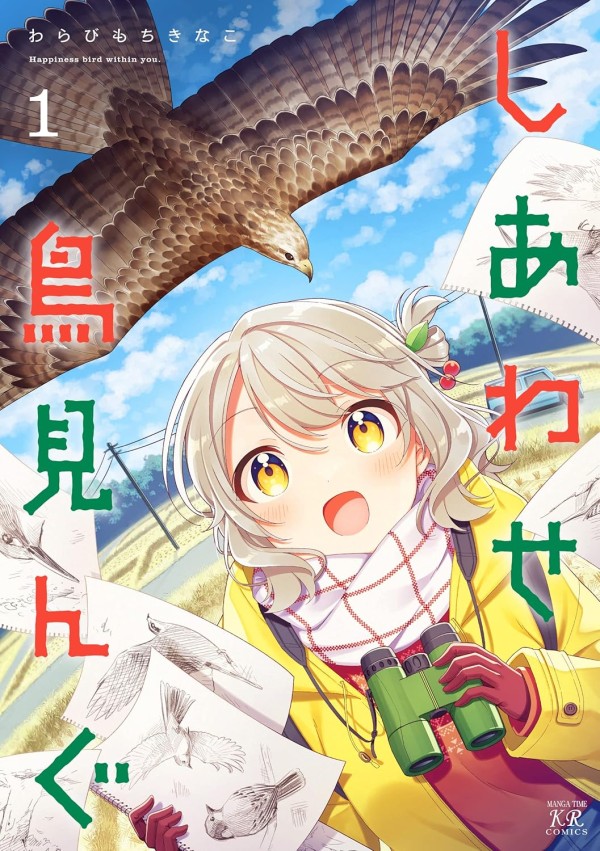
An art student named Suzu Miyauchi finds herself trapped in a painful creative rut. Though her technical skills are beyond reproach, her instructors and peers consistently criticize her work for lacking a distinct voice or emotional color; it is expertly crafted but has no soul. While searching for inspiration in a local park, a chance encounter changes everything. She spots a strange, intense girl hiding behind a tree, staring at her through a pair of binoculars while murmuring the word suzume, which means sparrow. This is Tsubasa Tokiniwa, a passionate and somewhat awkward birdwatching otaku. Embarrassed by the misunderstanding, Tsubasa explains her hobby and inadvertently opens a door for Suzu. As Tsubasa describes the vivid details of the birds in the park, their migratory patterns, their unique plumage, and their secret behaviors, Suzu sees her surroundings transform. The world suddenly becomes a canvas of brilliant, living color, and for the first time in months, she feels her creative spark reignite.
The story follows these two young women as they navigate this new shared passion. Tsubasa is a wealth of arcane ornithological knowledge and takes her hobby very seriously, even moonlighting as the bird-costumed host of an educational YouTube series called Tori-san and Friends. Suzu is her opposite: a cheerful, ditzy amateur who knows nothing about birds but is driven by pure emotional awe. Their friend group expands to include Ayame, one of Suzu's classmates from art college who is often bewildered by the intense birding sessions, and Hina, Tsubasa's wealthy and easygoing friend from a regular university who serves as a calming presence. They are frequently joined by Misaki, an aloof and talented nature photographer who prefers the company of animals to people and works part-time at a yakitori restaurant, which ironically becomes the group's regular after-expedition hangout.
The series uses its backdrop of the forests, rivers, and skies of Yamagata Prefecture to explore deeper themes of artistic growth and human connection. Major narrative arcs often begin with Suzu facing a specific artistic block, such as struggling to capture movement, depth, or the interplay of light on feathers. These challenges are resolved not through classroom lectures, but through field observations with Tsubasa, where lessons about bird anatomy or flight patterns directly translate into breakthroughs in Suzu's sketchbooks. A recurring early arc involves Suzu getting her first pair of real binoculars, going broke in the process, only to discover that Hina is the secret heiress to a local fruit snack company and can afford a hundred-thousand-yen pair on a whim.
As the story progresses, the focus shifts from pure observation to documentation. The characters learn responsible wildlife photography and the ethics of approaching nature without causing disturbance. The narrative also explores Tsubasa's social anxieties and her struggle to make connections outside of her avian obsession, finding a bridge in Suzu, who sees her passion as beautiful rather than embarrassing. The manga emphasizes that happiness can be found in quiet patience, and that seeing the world clearly sometimes requires learning to look from a different angle. Through the lens of a pair of binoculars, a struggling artist learns to fill her empty canvas with the joy of a world she never stopped to see before.
The story follows these two young women as they navigate this new shared passion. Tsubasa is a wealth of arcane ornithological knowledge and takes her hobby very seriously, even moonlighting as the bird-costumed host of an educational YouTube series called Tori-san and Friends. Suzu is her opposite: a cheerful, ditzy amateur who knows nothing about birds but is driven by pure emotional awe. Their friend group expands to include Ayame, one of Suzu's classmates from art college who is often bewildered by the intense birding sessions, and Hina, Tsubasa's wealthy and easygoing friend from a regular university who serves as a calming presence. They are frequently joined by Misaki, an aloof and talented nature photographer who prefers the company of animals to people and works part-time at a yakitori restaurant, which ironically becomes the group's regular after-expedition hangout.
The series uses its backdrop of the forests, rivers, and skies of Yamagata Prefecture to explore deeper themes of artistic growth and human connection. Major narrative arcs often begin with Suzu facing a specific artistic block, such as struggling to capture movement, depth, or the interplay of light on feathers. These challenges are resolved not through classroom lectures, but through field observations with Tsubasa, where lessons about bird anatomy or flight patterns directly translate into breakthroughs in Suzu's sketchbooks. A recurring early arc involves Suzu getting her first pair of real binoculars, going broke in the process, only to discover that Hina is the secret heiress to a local fruit snack company and can afford a hundred-thousand-yen pair on a whim.
As the story progresses, the focus shifts from pure observation to documentation. The characters learn responsible wildlife photography and the ethics of approaching nature without causing disturbance. The narrative also explores Tsubasa's social anxieties and her struggle to make connections outside of her avian obsession, finding a bridge in Suzu, who sees her passion as beautiful rather than embarrassing. The manga emphasizes that happiness can be found in quiet patience, and that seeing the world clearly sometimes requires learning to look from a different angle. Through the lens of a pair of binoculars, a struggling artist learns to fill her empty canvas with the joy of a world she never stopped to see before.
Comment(s)
Staff
- Story & ArtKinako Warabimochi
Recommendations
Empfehlungen auf Basis gemeinsamer Kategorien.