TV Special
Description
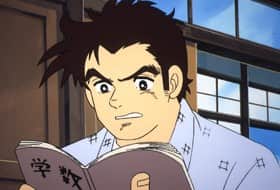
"Botchan" is an anime adaptation of Natsume Soseki's classic 1906 novel, set in the Meiji era of Japan. The story centers on a young, impulsive man from Tokyo who takes up a teaching position in a rural town on the island of Shikoku. Known only by his childhood nickname, Botchan, the protagonist is characterized by his straightforward and often brash demeanor, which frequently clashes with the more reserved and traditional attitudes of the townspeople.
Botchan's journey begins when he accepts a teaching job at a middle school in Matsuyama, a small provincial town. His decision to leave Tokyo is driven by a desire for independence and a fresh start, though he quickly finds himself out of place in the unfamiliar rural setting. The school is rife with petty politics, rivalries, and a rigid hierarchy that Botchan struggles to navigate. His interactions with colleagues, particularly the manipulative and scheming Red Shirt (a fellow teacher), highlight the cultural and social tensions between urban and rural Japan during the Meiji period.
The narrative explores Botchan's attempts to adapt to his new environment while maintaining his sense of integrity. His relationships with other characters, such as the kind-hearted but naive Kiyo, his former caretaker, and the hot-tempered Porcupine, a fellow teacher who becomes an unlikely ally, add depth to the story. Botchan's clashes with authority figures and his refusal to conform to societal expectations often lead to humorous and dramatic situations, underscoring his role as an outsider.
As the story progresses, Botchan becomes embroiled in a series of conflicts, including a rivalry with Red Shirt over a female teacher and a confrontation with the school's administration. These events culminate in a climactic decision that forces Botchan to confront his own values and the realities of the world around him. The series captures the essence of Soseki's original work, blending humor, satire, and social commentary to depict the challenges of individualism in a rapidly modernizing society.
The anime adaptation remains faithful to the novel's episodic structure and its exploration of themes such as identity, tradition, and the clash between old and new values. Botchan's character, with his flaws and virtues, serves as a lens through which the complexities of Meiji-era Japan are examined, making the series a compelling portrayal of a pivotal moment in Japanese history.
Botchan's journey begins when he accepts a teaching job at a middle school in Matsuyama, a small provincial town. His decision to leave Tokyo is driven by a desire for independence and a fresh start, though he quickly finds himself out of place in the unfamiliar rural setting. The school is rife with petty politics, rivalries, and a rigid hierarchy that Botchan struggles to navigate. His interactions with colleagues, particularly the manipulative and scheming Red Shirt (a fellow teacher), highlight the cultural and social tensions between urban and rural Japan during the Meiji period.
The narrative explores Botchan's attempts to adapt to his new environment while maintaining his sense of integrity. His relationships with other characters, such as the kind-hearted but naive Kiyo, his former caretaker, and the hot-tempered Porcupine, a fellow teacher who becomes an unlikely ally, add depth to the story. Botchan's clashes with authority figures and his refusal to conform to societal expectations often lead to humorous and dramatic situations, underscoring his role as an outsider.
As the story progresses, Botchan becomes embroiled in a series of conflicts, including a rivalry with Red Shirt over a female teacher and a confrontation with the school's administration. These events culminate in a climactic decision that forces Botchan to confront his own values and the realities of the world around him. The series captures the essence of Soseki's original work, blending humor, satire, and social commentary to depict the challenges of individualism in a rapidly modernizing society.
The anime adaptation remains faithful to the novel's episodic structure and its exploration of themes such as identity, tradition, and the clash between old and new values. Botchan's character, with his flaws and virtues, serves as a lens through which the complexities of Meiji-era Japan are examined, making the series a compelling portrayal of a pivotal moment in Japanese history.
Cast
Comment(s)
Staff
- Script
- Character Design
- Animation DirectorTakeo Kitahara
- DirectorEisuke Kondō
- MusicHideo Shimazu
- Art DirectorMasamichi TakanoKōichi Kudō
- Executive producerKōichi Motohashi
- Original Novel
Production
- Animation ProductionNippon Animation
Relations
Recommendations based on shared tags.