Movie
Description
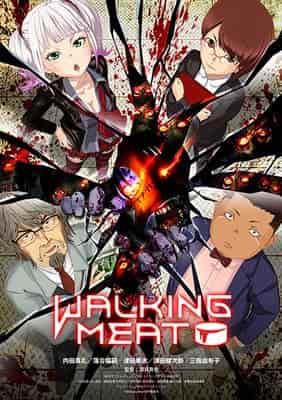
"Walking Meat" is a dark comedy anime series that explores themes of survival, morality, and societal collapse through a satirical lens. The story is set in a dystopian future where humanity faces a severe food shortage due to overpopulation and environmental degradation. In response, a controversial solution is implemented: the legalization and normalization of cannibalism. The government establishes a system where individuals can voluntarily register as "meat," allowing their bodies to be harvested for consumption after death. Those who choose to become "meat" are provided with financial incentives and societal privileges, creating a stark divide between those who opt into the system and those who refuse.
The protagonist, a young man named Haruto, struggles to navigate this morally fraught world. Initially indifferent to the system, Haruto's perspective shifts when his childhood friend, Aoi, decides to register as "meat" to support her impoverished family. This decision forces Haruto to confront the ethical implications of the system and his own complicity in it. As he becomes more involved in Aoi's life, he uncovers the darker underbelly of the "meat" industry, including corruption, exploitation, and the dehumanization of those who choose to participate.
The narrative delves into the lives of various characters, each representing different facets of the society's response to the crisis. There is Riku, a government official who enforces the system with cold efficiency, and Yuna, a journalist who risks her life to expose its injustices. The series also explores the perspectives of those who have chosen to become "meat," highlighting their personal struggles and the societal pressures that led to their decisions. Through these interconnected stories, the anime examines the complexities of human survival, the erosion of empathy in the face of desperation, and the moral compromises individuals make in extreme circumstances.
As the plot progresses, Haruto becomes increasingly entangled in a resistance movement that seeks to dismantle the "meat" system. This movement, led by a charismatic but morally ambiguous figure named Kaito, challenges the status quo through acts of sabotage and propaganda. However, the resistance's methods raise further ethical questions, blurring the line between justice and vengeance. The series builds toward a climactic confrontation between the resistance and the government, forcing Haruto to make a definitive choice about where he stands in the conflict.
"Walking Meat" balances its grim subject matter with moments of dark humor and absurdity, using its dystopian setting to critique real-world issues such as consumerism, inequality, and the commodification of human life. The characters are multifaceted, with their motivations and actions reflecting the moral ambiguity of the world they inhabit. The anime's narrative structure weaves together personal drama, political intrigue, and philosophical inquiry, creating a thought-provoking exploration of what it means to be human in a society that has lost its way.
The protagonist, a young man named Haruto, struggles to navigate this morally fraught world. Initially indifferent to the system, Haruto's perspective shifts when his childhood friend, Aoi, decides to register as "meat" to support her impoverished family. This decision forces Haruto to confront the ethical implications of the system and his own complicity in it. As he becomes more involved in Aoi's life, he uncovers the darker underbelly of the "meat" industry, including corruption, exploitation, and the dehumanization of those who choose to participate.
The narrative delves into the lives of various characters, each representing different facets of the society's response to the crisis. There is Riku, a government official who enforces the system with cold efficiency, and Yuna, a journalist who risks her life to expose its injustices. The series also explores the perspectives of those who have chosen to become "meat," highlighting their personal struggles and the societal pressures that led to their decisions. Through these interconnected stories, the anime examines the complexities of human survival, the erosion of empathy in the face of desperation, and the moral compromises individuals make in extreme circumstances.
As the plot progresses, Haruto becomes increasingly entangled in a resistance movement that seeks to dismantle the "meat" system. This movement, led by a charismatic but morally ambiguous figure named Kaito, challenges the status quo through acts of sabotage and propaganda. However, the resistance's methods raise further ethical questions, blurring the line between justice and vengeance. The series builds toward a climactic confrontation between the resistance and the government, forcing Haruto to make a definitive choice about where he stands in the conflict.
"Walking Meat" balances its grim subject matter with moments of dark humor and absurdity, using its dystopian setting to critique real-world issues such as consumerism, inequality, and the commodification of human life. The characters are multifaceted, with their motivations and actions reflecting the moral ambiguity of the world they inhabit. The anime's narrative structure weaves together personal drama, political intrigue, and philosophical inquiry, creating a thought-provoking exploration of what it means to be human in a society that has lost its way.
Cast
- Marin
- Masaru
- Kaori
- Hasegawa
Comment(s)
Staff
- DirectorShin'ya Sugai
- MusicTakumi Saitou
- Art DirectorYūsuke Takeda
- Cgi DirectorTakahiro Kawaguchi
- ProducerTomohisa Nishimura
- StoryboardRomanov Higa
- Character DesignMitsukasa Kanda
- Mechanical designTakayuki Yanase
- Director of PhotographyMaki Morikawa
- ScreenplayDaishirō Tanimura
Production
- Animation ProductionSublimation
Relations
Recommendations based on shared tags.