TV-Series
Description
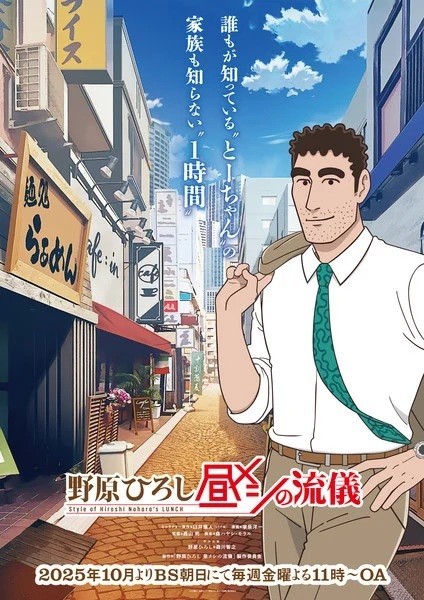
Hiroshi Nohara, the perpetually beleaguered but good-hearted salaryman father from the Crayon Shin-chan series, steps into the spotlight as the protagonist of his own story. However, this is not a tale of wild adventures with his rambunctious five-year-old son. Instead, the series focuses on a far more personal and daily ritual: his lunch break. The premise is deceptively simple. Within the strict confines of a limited budget, a short break time, and the ever-present pressures of office life, Hiroshi pursues the perfect midday meal. The show follows his internal and external journey as he navigates the mundane yet crucial decision of what to eat, turning a routine part of a working day into a meaningful and often comedic event. The central conflict is not about saving the world but about the quiet battle between craving and cost, time and taste, as he seeks a moment of personal satisfaction before returning to his duties as a section chief.
The setting alternates primarily between two environments. The first is the bustling, generic urban landscape of Kasukabe, specifically the various restaurants, cafes, and food stalls that Hiroshi visits. These locations range from conveyor belt sushi bars and curry shops to hamburger stands and soba noodle joints. The second is the office of his workplace, where the anticipation and aftermath of his lunch play out among his colleagues. The narrative arc is driven by Hiroshi’s daily search, with each episode exploring a different dish or dining dilemma, such as debating whether to splurge on a tuna bowl or save money, or finding a quick meal between sales meetings.
The main characters are an extension of Hiroshi’s work life. His primary companion and foil is Kawaguchi, a younger colleague who often joins him for lunch and with whom he discusses work-related frustrations. Other recurring figures include Haruka Yosugi and Akitake Takagiri, coworkers whose own personalities and lunch preferences create opportunities for social dynamics to unfold. While members of the Nohara family, like his wife Misae or son Shinnosuke, exist in this universe, they remain firmly in the background, with the show’s focus never straying from Hiroshi’s perspective as an individual provider.
The series is structured across twelve episodes, each containing two distinct lunch stories. Notable narrative arcs are defined by the specific culinary challenge or theme of the day. One early episode explores The Style of Curry, while another focuses on the etiquette and strategy of The Style of Conveyor Belt Sushi. The show expands its culinary palette beyond Japanese staples, featuring episodes on The Style of Biryani, The Style of Kebab Sandwiches, and The Style of Rappokki, a Korean rice cake dish. These arcs are not about grand plots but about the detailed, humorous, and surprisingly philosophical exploration of food preparation, cooking trivia, and the personal philosophy of eating. Hiroshi often concocts new food combinations or finds inspiration to resolve a conflict with his boss through the simple act of enjoying a well-made meal. The series concludes with episodes focused on classic comfort foods like yakiniku and katsudon, celebrating the uplifting power a good meal can have on an otherwise ordinary day.
The setting alternates primarily between two environments. The first is the bustling, generic urban landscape of Kasukabe, specifically the various restaurants, cafes, and food stalls that Hiroshi visits. These locations range from conveyor belt sushi bars and curry shops to hamburger stands and soba noodle joints. The second is the office of his workplace, where the anticipation and aftermath of his lunch play out among his colleagues. The narrative arc is driven by Hiroshi’s daily search, with each episode exploring a different dish or dining dilemma, such as debating whether to splurge on a tuna bowl or save money, or finding a quick meal between sales meetings.
The main characters are an extension of Hiroshi’s work life. His primary companion and foil is Kawaguchi, a younger colleague who often joins him for lunch and with whom he discusses work-related frustrations. Other recurring figures include Haruka Yosugi and Akitake Takagiri, coworkers whose own personalities and lunch preferences create opportunities for social dynamics to unfold. While members of the Nohara family, like his wife Misae or son Shinnosuke, exist in this universe, they remain firmly in the background, with the show’s focus never straying from Hiroshi’s perspective as an individual provider.
The series is structured across twelve episodes, each containing two distinct lunch stories. Notable narrative arcs are defined by the specific culinary challenge or theme of the day. One early episode explores The Style of Curry, while another focuses on the etiquette and strategy of The Style of Conveyor Belt Sushi. The show expands its culinary palette beyond Japanese staples, featuring episodes on The Style of Biryani, The Style of Kebab Sandwiches, and The Style of Rappokki, a Korean rice cake dish. These arcs are not about grand plots but about the detailed, humorous, and surprisingly philosophical exploration of food preparation, cooking trivia, and the personal philosophy of eating. Hiroshi often concocts new food combinations or finds inspiration to resolve a conflict with his boss through the simple act of enjoying a well-made meal. The series concludes with episodes focused on classic comfort foods like yakiniku and katsudon, celebrating the uplifting power a good meal can have on an otherwise ordinary day.
Cast
Comment(s)
Staff
- DirectorTsukasa Nishiyama
- ScriptHayashi MoriMoral
- Original creatorYōichi Tsukahara
- Character DesignKōtarō Yamawaki
- Series CompositionHayashi Mori
- MusicAkifumi Tada
- Original Character Design
Production
- Animation ProductionDLE
- ProductionShin-Ei Animation
Relations
Recommendations based on shared tags.
Anime overview