TV-Series
Description
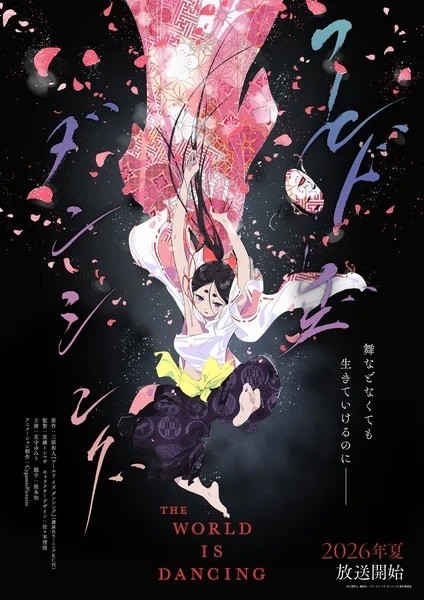
In 1374, during the turbulent and war-torn period of Japan’s Northern and Southern Courts, a young boy named Oniyasha lives in a state of quiet gloom. Born into a family of sarugaku theater performers, the precursor to the refined art of Noh, he is haunted by a simple but persistent question: Why do people dance? As the son of Kanami, the head of the Kanze troupe, he is expected to one day lead the company, yet he feels no connection to the performances and resents his often-misunderstood father. His spirit begins to change when he witnesses a performance he can only describe as truly good. This encounter awakens in the curious and strikingly beautiful boy a desperate need to understand the essence of dance and to shape a new form of expression for a world steeped in impermanence.
Oniyasha is surrounded by a cast of characters who shape his journey. His father, Kanami, is a master performer of few words who elevated sarugaku’s popularity within a single generation, but his inability to communicate often creates friction with his son. Within the troupe, Oniyasha finds support in Ishiya, a kind-hearted boy who gave up his dream of performing due to a childhood leg injury but remains an essential voice through his chanting, and in Junigoro, a serious young apprentice of the hand drum. Outside the troupe, his friend Kogane offers a rough but dependable companionship, often joining him to invent stories by the riverbank. Oniyasha also faces a fierce rival in Zojiro, the strict and demanding young leader of the Dengaku Shinza troupe, who directs a sharp, critical gaze at Oniyasha’s potential. The powerful Shogun Ashikaga Yoshimitsu, a rising force in the Northern Court, takes an interest in the arts and becomes a patron, recognizing the boy’s extraordinary talent and setting the stage for Noh to flourish as a high art form.
The narrative follows Oniyasha’s artistic awakening as he moves from rejecting his heritage to embracing it. He confronts his own weaknesses, laughs, cries, and experiments with capturing the rhythm of the world through movement. This is not just a historical drama but a philosophical exploration of what drives humans to create art. The story traces the evolution of sarugaku from rural entertainment into the sophisticated, philosophical art of Noh, focusing on the father-son duo who would be remembered as its founders. The anime adaptation, which will include characters and scenes not present in the original manga, chronicles the boy who would one day be remembered as Zeami, the legendary master who formalized Noh and wrote its foundational treatises on performance theory.
Oniyasha is surrounded by a cast of characters who shape his journey. His father, Kanami, is a master performer of few words who elevated sarugaku’s popularity within a single generation, but his inability to communicate often creates friction with his son. Within the troupe, Oniyasha finds support in Ishiya, a kind-hearted boy who gave up his dream of performing due to a childhood leg injury but remains an essential voice through his chanting, and in Junigoro, a serious young apprentice of the hand drum. Outside the troupe, his friend Kogane offers a rough but dependable companionship, often joining him to invent stories by the riverbank. Oniyasha also faces a fierce rival in Zojiro, the strict and demanding young leader of the Dengaku Shinza troupe, who directs a sharp, critical gaze at Oniyasha’s potential. The powerful Shogun Ashikaga Yoshimitsu, a rising force in the Northern Court, takes an interest in the arts and becomes a patron, recognizing the boy’s extraordinary talent and setting the stage for Noh to flourish as a high art form.
The narrative follows Oniyasha’s artistic awakening as he moves from rejecting his heritage to embracing it. He confronts his own weaknesses, laughs, cries, and experiments with capturing the rhythm of the world through movement. This is not just a historical drama but a philosophical exploration of what drives humans to create art. The story traces the evolution of sarugaku from rural entertainment into the sophisticated, philosophical art of Noh, focusing on the father-son duo who would be remembered as its founders. The anime adaptation, which will include characters and scenes not present in the original manga, chronicles the boy who would one day be remembered as Zeami, the legendary master who formalized Noh and wrote its foundational treatises on performance theory.
Cast
Comment(s)
Staff
- DirectorToshimasa Kuroyanagi
- ScriptSawako Kawamitsu
- Original creator
- Art DirectorHiromasa OguraKazuhiro Inoue
- Sound DirectorYukio Nagasaki
- Series CompositionSawako Kawamitsu
- MusicDaisuke Shinoda
- Character DesignKeigo Sasaki
- 3D DirectorYoshinori Nakano
- Director of PhotographyYūtarō Kikuchi
Production
- Animation ProductionCygamesPictures
Relations
Recommendations based on shared tags.