TV-Series
Description
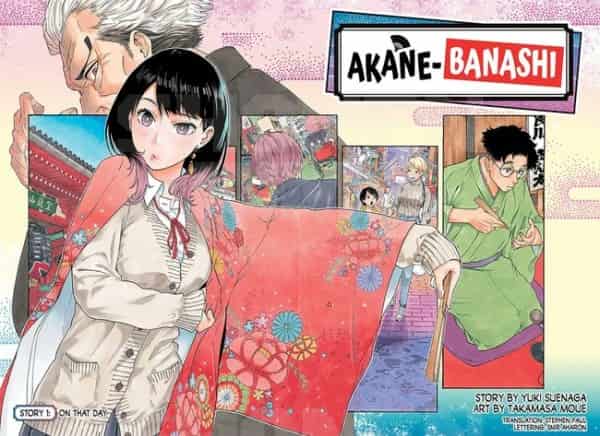
Since childhood, Akane Osaki has been captivated by rakugo, the traditional Japanese art of comedic storytelling where a lone performer uses only a fan, a cloth, and subtle shifts in voice and posture to bring entire stories to life. Her father, Tooru, performing under the name Shinta Arakawa, was a talented rakugoka she idolized. Her world shattered when she witnessed his promotion test for the highest rank, shin'uchi. Despite a stellar performance, the head of the Arakawa school, the stern Isshou Arakawa, declared him and every other applicant expelled from the school, forcing Tooru to abandon the profession in disgrace. Six years later, a high school student named Akane secretly trained by Tooru's former master, Shiguma Arakawa, is ready to step onto the stage herself. Her goal is clear: become a shin'uchi of the Arakawa school, restore her father's honor, and prove that his art was never a failure.
The story follows Akane as she enters the deeply hierarchical world of rakugo under Shiguma's tutelage. She begins as an apprentice, learning that raw talent is not enough. She must master kībataraki, the subtle art of reading a room and serving the audience. Her early training is practical and harsh. She is placed under the guidance of her serious senior brother, Kyoji, and is sent to work in an izakaya to learn attentiveness and service. This grounding in humility and observation becomes the foundation of her craft. Her first test is the Karaku Cup, a student rakugo competition where the prize includes a chance to confront Isshou Arakawa and learn the truth behind her father's expulsion. There, she faces formidable rivals, including Karashi from the rival Kashiwaya school, who wields flashy, modernized adaptations, and Hikaru Kouragi, a popular voice actress seeking legitimacy through pure dramatic expression.
The first season of the anime covers the Karaku Cup arc in its entirety. In the competition, Akane is tasked with performing the classic tale Shibahama, the same piece her father failed with. She must make it her own. She adapts the story not to copy her father but to channel her own fierce emotions and deep understanding of the material. Her performance transforms the competition from a simple contest into a personal declaration. In the final confrontation after her victory, Isshou Arakawa reveals his reasoning behind the mass expulsion. He did not see the applicants as failures but as too dependent on easy audience approval. He offers Akane a new test: she must prove she can stand entirely on her own art, without the safety of imitation or audience sympathy. The season ends with this challenge laid before her. Akane accepts it, and the stage is set for the second season, where she will pursue official promotion to the futatsume rank and push deeper into the professional world of the Arakawa school.
The story follows Akane as she enters the deeply hierarchical world of rakugo under Shiguma's tutelage. She begins as an apprentice, learning that raw talent is not enough. She must master kībataraki, the subtle art of reading a room and serving the audience. Her early training is practical and harsh. She is placed under the guidance of her serious senior brother, Kyoji, and is sent to work in an izakaya to learn attentiveness and service. This grounding in humility and observation becomes the foundation of her craft. Her first test is the Karaku Cup, a student rakugo competition where the prize includes a chance to confront Isshou Arakawa and learn the truth behind her father's expulsion. There, she faces formidable rivals, including Karashi from the rival Kashiwaya school, who wields flashy, modernized adaptations, and Hikaru Kouragi, a popular voice actress seeking legitimacy through pure dramatic expression.
The first season of the anime covers the Karaku Cup arc in its entirety. In the competition, Akane is tasked with performing the classic tale Shibahama, the same piece her father failed with. She must make it her own. She adapts the story not to copy her father but to channel her own fierce emotions and deep understanding of the material. Her performance transforms the competition from a simple contest into a personal declaration. In the final confrontation after her victory, Isshou Arakawa reveals his reasoning behind the mass expulsion. He did not see the applicants as failures but as too dependent on easy audience approval. He offers Akane a new test: she must prove she can stand entirely on her own art, without the safety of imitation or audience sympathy. The season ends with this challenge laid before her. Akane accepts it, and the stage is set for the second season, where she will pursue official promotion to the futatsume rank and push deeper into the professional world of the Arakawa school.
Cast
- Shōmei Tsubakiya
- Urara Ransaika
- Ryū'un Kenpūtei
- Ensō Sanmeitei
Comment(s)
Staff
- Original creator