
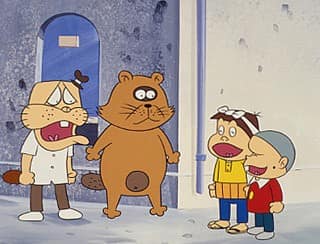
TV-Series
Description
"Mōretsu Atarō" is a comedic anime series centered around Atarō, a mischievous and hyperactive young boy with a knack for causing chaos. Atarō’s boundless energy and impulsive nature often lead him into absurd and humorous situations, frequently involving his classmates and the adults around him. The series is episodic, with each episode presenting a self-contained story that highlights Atarō’s antics and their consequences.
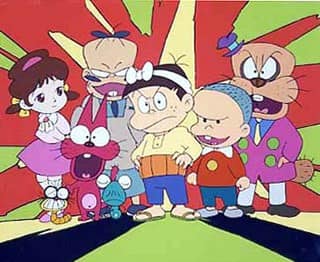
Atarō’s primary companions include his best friend, Pāko, a timid and easily frightened boy who often finds himself dragged into Atarō’s schemes. Pāko’s cautious nature contrasts sharply with Atarō’s recklessness, creating a dynamic that drives much of the humor. Another key character is Chinpira, a tough-talking but ultimately cowardly boy who frequently tries to assert dominance but is easily outwitted by Atarō. The trio’s interactions form the core of the series, with their personalities clashing in ways that generate both conflict and comedy.
The series also features a range of recurring characters, including Atarō’s long-suffering teacher, who struggles to maintain order in the classroom, and various classmates who often become unwitting participants in Atarō’s plans. The adults in the series, including Atarō’s parents and neighbors, are frequently exasperated by his behavior but are occasionally drawn into his chaotic world.
The humor in "Mōretsu Atarō" is rooted in slapstick comedy, exaggerated reactions, and absurd scenarios. Atarō’s schemes often spiral out of control, leading to increasingly ridiculous outcomes that test the patience of everyone around him. Despite the chaos he causes, Atarō’s intentions are rarely malicious, and his antics are portrayed as the result of his boundless curiosity and enthusiasm rather than any desire to harm others.
The series maintains a lighthearted tone throughout, with its episodic structure allowing for a wide variety of comedic situations. While the focus is primarily on humor, the interactions between the characters occasionally touch on themes of friendship, loyalty, and the challenges of growing up. However, these moments are always framed within the context of the series’ comedic style, ensuring that the overall tone remains playful and entertaining.
Atarō’s primary companions include his best friend, Pāko, a timid and easily frightened boy who often finds himself dragged into Atarō’s schemes. Pāko’s cautious nature contrasts sharply with Atarō’s recklessness, creating a dynamic that drives much of the humor. Another key character is Chinpira, a tough-talking but ultimately cowardly boy who frequently tries to assert dominance but is easily outwitted by Atarō. The trio’s interactions form the core of the series, with their personalities clashing in ways that generate both conflict and comedy.
The series also features a range of recurring characters, including Atarō’s long-suffering teacher, who struggles to maintain order in the classroom, and various classmates who often become unwitting participants in Atarō’s plans. The adults in the series, including Atarō’s parents and neighbors, are frequently exasperated by his behavior but are occasionally drawn into his chaotic world.
The humor in "Mōretsu Atarō" is rooted in slapstick comedy, exaggerated reactions, and absurd scenarios. Atarō’s schemes often spiral out of control, leading to increasingly ridiculous outcomes that test the patience of everyone around him. Despite the chaos he causes, Atarō’s intentions are rarely malicious, and his antics are portrayed as the result of his boundless curiosity and enthusiasm rather than any desire to harm others.
The series maintains a lighthearted tone throughout, with its episodic structure allowing for a wide variety of comedic situations. While the focus is primarily on humor, the interactions between the characters occasionally touch on themes of friendship, loyalty, and the challenges of growing up. However, these moments are always framed within the context of the series’ comedic style, ensuring that the overall tone remains playful and entertaining.
Cast
Comment(s)
Staff
- DirectorIsao Takahata
- Episode DirectorIsao TakahataMinoru OkazakiTakeshi TamiyaHideo FurusawaYūgo SerikawaBonjin NagakiNobutaka NishizawaKazuya MiyazakiYasuo YamaguchiKatsutoshi SasakiToshio KatsutaKazukiyo ShigenoMasayuki AkehiTokushige Shirane
- Original Manga
- ScriptMasaki TsujiTadaaki YamazakiMichio SuzukiKeiichi YamashitaKaya MiyoshiHiroshi OzawaKiyoyuki NishikawaKeiichi Okawa
- MusicTaku Izumi
- Animation DirectorHideo FurusawaMasamune OchiaiBonjin NagakiKeisuke MorishitaShinnosuke KonTeruo KogureTeruo HosodaTakeshi TamazawaMakoto KuniyasuFumio EtoTakuya IshiyamaMinoru TajimaMichimasa OchiaiJōji KikuchiKeiichirō Kimura
Production
- ProductionToei Animation
Relations
Anime overview
Music
Ending