TV-Series
Description
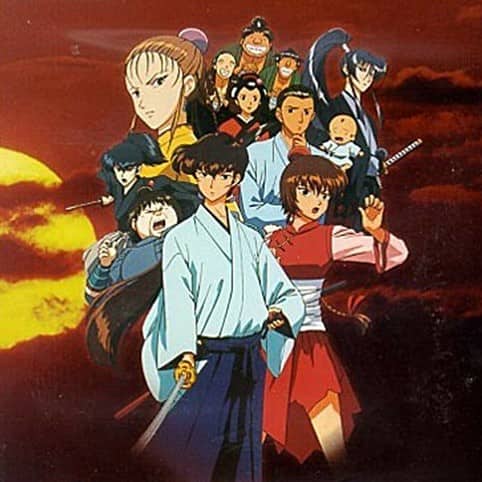
"Carried by the Wind: Tsukikage Ran" is a 13-episode anime series set in Japan’s Edo period, blending elements of action, comedy, and samurai drama. The narrative centers on Ran Tsukikage, a skilled and wandering female samurai who travels the countryside with her companion, a sake-loving martial artist named Myao. Ran is a master of the Yagyū Shinkage-ryū sword style, and her journey is marked by encounters with various individuals and groups, often leading to confrontations that test her abilities and principles.
The episodic structure of the series focuses on Ran and Myao’s travels, with each episode presenting a self-contained story. Ran’s stoic and disciplined demeanor contrasts with Myao’s carefree and humorous personality, creating a dynamic partnership. While Ran seeks to uphold justice and protect the innocent, her motivations are not driven by grand ideals but rather by a personal code of honor. Myao, on the other hand, often provides comic relief and lightens the tone, though she is also capable of holding her own in combat.
Throughout the series, Ran and Myao encounter a variety of characters, including corrupt officials, rival swordsmen, and ordinary villagers caught in difficult situations. The conflicts often arise from misunderstandings, greed, or personal vendettas, with Ran stepping in to resolve them through her swordsmanship and moral resolve. The series avoids overarching plotlines, instead emphasizing the episodic nature of their journey, which allows for a focus on character interactions and the exploration of themes such as loyalty, justice, and the transient nature of life.
The setting reflects the historical Edo period, with attention to cultural details such as traditional clothing, architecture, and societal norms. However, the series incorporates a lighthearted tone and exaggerated character traits, balancing its historical backdrop with comedic and action-oriented elements. Ran’s calm and collected approach to challenges, combined with Myao’s antics, creates a blend of seriousness and humor that defines the series’ tone.
"Carried by the Wind: Tsukikage Ran" is a character-driven narrative that prioritizes the journey and interactions of its protagonists over a continuous plot. Its episodic format, combined with its mix of action and comedy, offers a straightforward yet engaging portrayal of a wandering samurai’s life in feudal Japan.
The episodic structure of the series focuses on Ran and Myao’s travels, with each episode presenting a self-contained story. Ran’s stoic and disciplined demeanor contrasts with Myao’s carefree and humorous personality, creating a dynamic partnership. While Ran seeks to uphold justice and protect the innocent, her motivations are not driven by grand ideals but rather by a personal code of honor. Myao, on the other hand, often provides comic relief and lightens the tone, though she is also capable of holding her own in combat.
Throughout the series, Ran and Myao encounter a variety of characters, including corrupt officials, rival swordsmen, and ordinary villagers caught in difficult situations. The conflicts often arise from misunderstandings, greed, or personal vendettas, with Ran stepping in to resolve them through her swordsmanship and moral resolve. The series avoids overarching plotlines, instead emphasizing the episodic nature of their journey, which allows for a focus on character interactions and the exploration of themes such as loyalty, justice, and the transient nature of life.
The setting reflects the historical Edo period, with attention to cultural details such as traditional clothing, architecture, and societal norms. However, the series incorporates a lighthearted tone and exaggerated character traits, balancing its historical backdrop with comedic and action-oriented elements. Ran’s calm and collected approach to challenges, combined with Myao’s antics, creates a blend of seriousness and humor that defines the series’ tone.
"Carried by the Wind: Tsukikage Ran" is a character-driven narrative that prioritizes the journey and interactions of its protagonists over a continuous plot. Its episodic format, combined with its mix of action and comedy, offers a straightforward yet engaging portrayal of a wandering samurai’s life in feudal Japan.
Episodes
Staffel 1
1She's Tough for a Woman
2Sake Made the Tears Sting
3Suddenly, I was a Mother
4I Was a Target Before I Knew It
5It Was Pretty Amazing When I Stripped
6The Mole Was in the Wrong Place
7I Buzzed with Electricity
8There Was No God in This World
9I Counted on an Enemy
10That European Girl was Huge
11Vengeance Made Himself an Enemy
12I Was So Crucified I Didn’t Know What to Do!
13She Hid a Romance in the Past
Cast
Comment(s)
Staff
- Director
- Screenplay
- Episode DirectorSatoshi NishimuraMasahiko MurataYasuhiro MatsumuraHarumi TamanoHideo HayashiNorihiko NagahamaMashu ItōSōichirō Zen
- Character DesignHajime Watanabe
- Chief Animation DirectorTakahiro Yoshimatsu
- Sound DirectorKazuya Tanaka
- Director of PhotographyHitoshi Yamaguchi
- ScriptMichiko YokoteMamiko IkedaTou NagatsukiYoshito HataYōsuke Kuroda
- StoryboardSatoshi NishimuraMasayuki KojimaFumio IkenoMasahiko MurataKiyoko SayamaYasuhiro MatsumuraHarumi TamanoHideo HayashiSōichirō ZenShin'ichi Masaki
- MusicToshihiko Sahashi
- Art DirectorHidetoshi Kaneko
- Animation DirectorTakahiro YoshimatsuYutaka MinowaYūki IwaiTomoko HirotaYukihiro KitanoTomoyuki KannoSatoshi TasakiYōko Kikuchi
- ProducerMasao MorosawaKazuhiko Suzuki
Production
- ProductionBandai Visual
Relations
Recommendations based on shared tags.