Manga
Description
"Rascal Does Not Dream of Bunny Girl Senpai" is a manga series that blends elements of supernatural mystery, romance, and slice-of-life. The story revolves around Sakuta Azusagawa, a high school student who encounters a series of strange phenomena affecting the people around him. These phenomena are tied to a mysterious condition known as "Adolescence Syndrome," which manifests as surreal, often inexplicable events linked to the emotional struggles of teenagers.
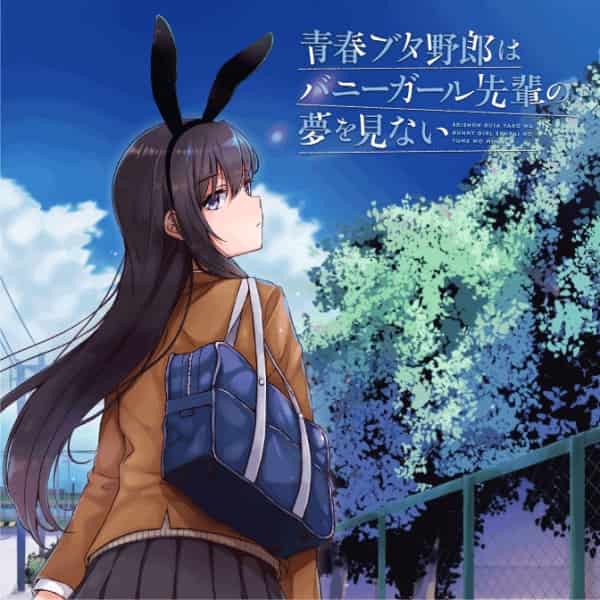
The narrative begins when Sakuta spots Mai Sakurajima, a famous actress and his upperclassman, wandering through the library in a bunny girl costume. Surprisingly, no one else seems to notice her. Mai explains that she is experiencing a phenomenon where she is becoming invisible to others, a result of her fading presence in the public eye due to her hiatus from acting. Sakuta, intrigued and determined to help, investigates the cause of her condition and eventually helps Mai regain her visibility by confronting the underlying emotional issues tied to her isolation.
As the story progresses, Sakuta encounters other individuals affected by Adolescence Syndrome. Each case is unique, reflecting the personal struggles of the characters involved. For instance, Tomoe Koga, a classmate, experiences time loops that force her to relive the same day repeatedly, while Rio Futaba, a scientifically-minded friend, grapples with a doppelgänger phenomenon. Sakuta’s younger sister, Kaede, also suffers from the syndrome, manifesting as memory loss and a fear of leaving the house due to past trauma.
The series delves into the psychological and emotional challenges faced by its characters, using Adolescence Syndrome as a metaphor for the turbulence of adolescence. Sakuta acts as a grounding force, offering support and understanding to those affected. His relationship with Mai evolves into a central romantic subplot, characterized by their mutual trust and shared experiences.
The manga balances its supernatural elements with grounded, heartfelt interactions, exploring themes of identity, self-acceptance, and the impact of societal expectations on young people. The characters’ struggles are portrayed with empathy, and the resolution of each case often hinges on emotional growth and personal reconciliation. The story maintains a steady pace, alternating between moments of humor, introspection, and drama, creating a cohesive narrative that appeals to fans of both supernatural and character-driven storytelling.
The narrative begins when Sakuta spots Mai Sakurajima, a famous actress and his upperclassman, wandering through the library in a bunny girl costume. Surprisingly, no one else seems to notice her. Mai explains that she is experiencing a phenomenon where she is becoming invisible to others, a result of her fading presence in the public eye due to her hiatus from acting. Sakuta, intrigued and determined to help, investigates the cause of her condition and eventually helps Mai regain her visibility by confronting the underlying emotional issues tied to her isolation.
As the story progresses, Sakuta encounters other individuals affected by Adolescence Syndrome. Each case is unique, reflecting the personal struggles of the characters involved. For instance, Tomoe Koga, a classmate, experiences time loops that force her to relive the same day repeatedly, while Rio Futaba, a scientifically-minded friend, grapples with a doppelgänger phenomenon. Sakuta’s younger sister, Kaede, also suffers from the syndrome, manifesting as memory loss and a fear of leaving the house due to past trauma.
The series delves into the psychological and emotional challenges faced by its characters, using Adolescence Syndrome as a metaphor for the turbulence of adolescence. Sakuta acts as a grounding force, offering support and understanding to those affected. His relationship with Mai evolves into a central romantic subplot, characterized by their mutual trust and shared experiences.
The manga balances its supernatural elements with grounded, heartfelt interactions, exploring themes of identity, self-acceptance, and the impact of societal expectations on young people. The characters’ struggles are portrayed with empathy, and the resolution of each case often hinges on emotional growth and personal reconciliation. The story maintains a steady pace, alternating between moments of humor, introspection, and drama, creating a cohesive narrative that appeals to fans of both supernatural and character-driven storytelling.
Comment(s)
Staff
- Story
- ArtTsugumi Nanamiya
- Character DesignKeeji Mizoguchi
Recommendations
Empfehlungen auf Basis gemeinsamer Kategorien.