Movie
Description
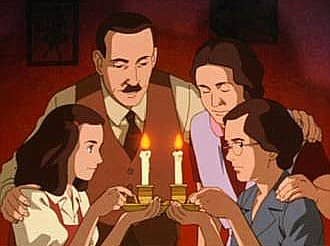
"The Diary of Anne Frank" anime adaptation brings to life the poignant and harrowing true story of Anne Frank, a Jewish girl who documented her experiences during the Holocaust. The narrative is based on Anne’s diary, written while she and her family were in hiding from the Nazis in Amsterdam during World War II. The story begins in 1942, when Anne, her parents Otto and Edith, and her older sister Margot are forced into hiding in a concealed annex above her father’s business premises. They are joined by the van Pels family—Hermann, Auguste, and their son Peter—and later by Fritz Pfeffer, a dentist.
The series meticulously portrays the daily struggles of the eight individuals confined to the annex, highlighting their efforts to maintain normalcy and hope under dire circumstances. Anne’s diary entries serve as the primary lens through which the story unfolds, capturing her introspective thoughts, dreams, and fears. Her vivid imagination and youthful optimism contrast sharply with the grim reality of their situation, creating a deeply emotional narrative. The relationships within the annex are complex, with tensions arising from close quarters, limited resources, and the constant threat of discovery. Anne’s evolving bond with Peter, her conflicts with her mother, and her admiration for her father are central to the emotional core of the story.
As the war progresses, the annex’s inhabitants face increasing hardships, including food shortages, illness, and the psychological toll of isolation. The series does not shy away from depicting the broader historical context, including the persecution of Jews and the horrors of the Holocaust. The narrative culminates in the group’s betrayal and arrest by the Gestapo in 1944. The final episodes reflect on the aftermath, revealing the fates of the annex’s occupants, most of whom perished in concentration camps. Only Otto Frank survives, returning to Amsterdam to discover Anne’s diary and fulfill her wish to have her words published.
The anime adaptation remains faithful to the source material, emphasizing Anne’s resilience, creativity, and enduring hope in the face of unimaginable adversity. It serves as a powerful reminder of the human cost of war and the importance of remembering history. The characters are portrayed with depth and sensitivity, ensuring that their stories resonate with audiences. The series balances the intimate, personal perspective of Anne’s diary with the broader historical events, creating a compelling and educational narrative.
The series meticulously portrays the daily struggles of the eight individuals confined to the annex, highlighting their efforts to maintain normalcy and hope under dire circumstances. Anne’s diary entries serve as the primary lens through which the story unfolds, capturing her introspective thoughts, dreams, and fears. Her vivid imagination and youthful optimism contrast sharply with the grim reality of their situation, creating a deeply emotional narrative. The relationships within the annex are complex, with tensions arising from close quarters, limited resources, and the constant threat of discovery. Anne’s evolving bond with Peter, her conflicts with her mother, and her admiration for her father are central to the emotional core of the story.
As the war progresses, the annex’s inhabitants face increasing hardships, including food shortages, illness, and the psychological toll of isolation. The series does not shy away from depicting the broader historical context, including the persecution of Jews and the horrors of the Holocaust. The narrative culminates in the group’s betrayal and arrest by the Gestapo in 1944. The final episodes reflect on the aftermath, revealing the fates of the annex’s occupants, most of whom perished in concentration camps. Only Otto Frank survives, returning to Amsterdam to discover Anne’s diary and fulfill her wish to have her words published.
The anime adaptation remains faithful to the source material, emphasizing Anne’s resilience, creativity, and enduring hope in the face of unimaginable adversity. It serves as a powerful reminder of the human cost of war and the importance of remembering history. The characters are portrayed with depth and sensitivity, ensuring that their stories resonate with audiences. The series balances the intimate, personal perspective of Anne’s diary with the broader historical events, creating a compelling and educational narrative.
Cast
- Go Kato
- Bela Gruschka
- James Shuman
- Jacques Saint Just
- Seiko Tano
- Marissa DavisonReina Takahashi
- Estelle Heinaux
- Patricia Kessler
- Takurō Nakayoshi
Comment(s)
Staff
- Director
- Storyboard
- Original creatorAnne Frank
- Art DirectorYūji Ikeda
- Sound DirectorYasunori Honda
- ProducerMasao MaruyamaYasuteru Iwase
- ScreenplayRoger ParbesHachirō Konno
- MusicMichael Nyman
- Original Character DesignTsuguyuki Kubo
- Animation DirectorYoshinori Kanemori
- Director of PhotographyHitoshi Yamaguchi
Production
- Animation ProductionMadhouse
- ProductionHakuhodo Inc.Tokyo Broadcasting SystemBungeishunjuImagica
Relations
Recommendations based on shared tags.