
TV-Series
Description
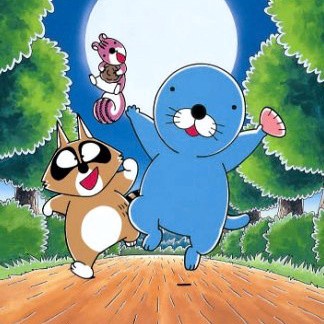
A young, blue-furred sea otter named Bonobono lives with his father in a small home on a cliffside by the sea, at the edge of a sprawling forest. Gentle, naive, and endlessly curious, Bonobono spends his days exploring the world with his two best friends. The first is Shimarisu-kun, a timid and easily flustered chipmunk who constantly carries a walnut and frequently asks if others are going to bully him. The second is Araiguma-kun, a short-tempered raccoon who often acts as the straight man to his friends' foolishness, teasing Shimarisu mercilessly but generally meaning well. The trio's peaceful daily life involves playing, foraging for food like clams and walnuts, and getting into minor mischief under the watchful or not-so-watchful eyes of the forest's other residents.
There is no grand, overarching conflict. Instead, the narrative is driven by Bonobono's simple, childlike questions about the world around him, which often lead to gentle, philosophical musings on life, nature, and friendship. An episode might follow the group as they ponder why the sky is blue, attempt to build a dam like a beaver, or confront a small, self-created fear like the mythical Putaway Man who locks up naughty children. The humor is soft and relaxed, derived from the characters' misunderstandings and the dry, observational wit of Araiguma-kun. A recurring gag involves Araiguma-kun physically punting Shimarisu-kun across the screen in a moment of frustration.
The forest is populated by a rich cast of supporting characters. The sensible and strong Fishing Cat, Sunadori Neko-san, often serves as a wise figure who can answer the friends' deeper questions. The former strongest creature in the forest, a kind-hearted but massive brown bear known as Higuma no Taisho, lives in seclusion. Bonobono's own father is a bumbling, well-meaning otter who speaks with odd pauses and takes long journeys. Araiguma-kun lives in fear of his short-fused, easily annoyed father. Shimarisu-kun has an absurd number of sisters, most notably the elegant Dai Nee-chan and the tough, bullying Shou Nee-chan, who secretly cares for her little brother. Other recurring faces include a wolverine who walks on all fours, a stoic badger, and a self-conscious fennec fox.
Notable narrative arcs are subtle and character-focused rather than plot-driven. One significant, more dramatic story appears in the first theatrical film, where Bonobono and his friends hear rumors of a giant animal passing through the forest and decide to find it, leading to encounters with other major characters like a lost kitten brother and a big bear. The second film introduces a character named Popo and a mysterious fragrant tree that can make one forget painful memories, leading Bonobono to help his new friend confront grief. Throughout the long-running television series, the narrative remains consistently episodic, focusing on small, relatable moments of discovery and the gentle humor found in the everyday lives of these animal friends.
There is no grand, overarching conflict. Instead, the narrative is driven by Bonobono's simple, childlike questions about the world around him, which often lead to gentle, philosophical musings on life, nature, and friendship. An episode might follow the group as they ponder why the sky is blue, attempt to build a dam like a beaver, or confront a small, self-created fear like the mythical Putaway Man who locks up naughty children. The humor is soft and relaxed, derived from the characters' misunderstandings and the dry, observational wit of Araiguma-kun. A recurring gag involves Araiguma-kun physically punting Shimarisu-kun across the screen in a moment of frustration.
The forest is populated by a rich cast of supporting characters. The sensible and strong Fishing Cat, Sunadori Neko-san, often serves as a wise figure who can answer the friends' deeper questions. The former strongest creature in the forest, a kind-hearted but massive brown bear known as Higuma no Taisho, lives in seclusion. Bonobono's own father is a bumbling, well-meaning otter who speaks with odd pauses and takes long journeys. Araiguma-kun lives in fear of his short-fused, easily annoyed father. Shimarisu-kun has an absurd number of sisters, most notably the elegant Dai Nee-chan and the tough, bullying Shou Nee-chan, who secretly cares for her little brother. Other recurring faces include a wolverine who walks on all fours, a stoic badger, and a self-conscious fennec fox.
Notable narrative arcs are subtle and character-focused rather than plot-driven. One significant, more dramatic story appears in the first theatrical film, where Bonobono and his friends hear rumors of a giant animal passing through the forest and decide to find it, leading to encounters with other major characters like a lost kitten brother and a big bear. The second film introduces a character named Popo and a mysterious fragrant tree that can make one forget painful memories, leading Bonobono to help his new friend confront grief. Throughout the long-running television series, the narrative remains consistently episodic, focusing on small, relatable moments of discovery and the gentle humor found in the everyday lives of these animal friends.
Episodes
Staffel 1
1Let's play with Bono Bono
2I also want a home
4What's that sound?
10What's fire?
11Shima Risu's sister
12I want a new stone!
13Where does night come from?
14Dai-neechan's mud dumpling
15Shima Risu caught a cold
16What's our fear?
18Araiguma-kun is in love
21Bye! Bye! Poet Uncle
22Gentle Araiguma-kun
23I can't stop sneezing
25Araiguma-kun runs away
26Thy name is Gebu Gebu
28The storm has arrived to the forest!
29Transform? Bono Bono!
32Araiguma-kun's birthday
33Kujira-kun is lost
34Nagareboshi-san moves house
41I can see tomorrow P:あしたが見えーる
42Mysterious lake
43Who's first!?
45Bono Bono's vigorous race!
46Who is the culprit?
47Araiguma-kun cannot play
48If everyday was so fun?
Cast
- Eun-Suk Park
- PororiHong Yeongran
Comment(s)
Staff
- Series DirectorHitoshi Nanba
- ScriptChika HojoTetsuo YasumiShoji YonemuraSatoru NishizonoKazuhiko GōdoChinatsu HōjōYasuhiro Komatsuzaki
- Episode DirectorKunitoshi OkajimaKiyoko SayamaKazunari KumeTetsuya WatanabeHiroko TokitaTakashi IkehataKiyotaka OhataKiyoshi FukumotoTakashi YamasakiTakashi AsamiOsamu InoueDaiji SuzukiTakashi IkebataAkira AonoShō AonoTakashi Yamazaki
- Original story
- Art DirectorKou Watanabe
- Animation DirectorYasuhide MaruyamaKazunari KumeMegumu IshiguroYuka HoyaMasami AbeMasayuki HiraokaTakashi YamasakiHidetoshi OwashiIzumi ShimuraHaruo ŌgawaraRie NishiyamaToyomi SugiyamaYuka KudōYūichirō SueyoshiYuri TakasakiRyōko HataAtsushi IrieDaiji SuzukiYoshiko KonnoKōsei Maeda
- Director of PhotographyMitsunobu Yoshida
- Series CompositionTetsuo Yasumi
- StoryboardKunitoshi OkajimaKiyoko SayamaKazunari KumeYukihiro ShinoHiroko TokitaTakashi IkehataKiyotaka OhataKiyoshi FukumotoTsutomu YabukiTakashi AsamiNamimi SanjoOsamu InoueDaiji SuzukiTakeshi Ushigusa
- MusicKazunori MiyakeMotonori Miyake
- Character DesignYuka Hoya
- Chief Animation DirectorYuka Hoya
- Sound DirectorSusumu Aketagawa
- ProducerKeisuke IwataKatsutoshi KanesakaMasatoshi Kanesaka
Production
- Animation ProductionGroup TAC
Relations
Recommendations based on shared tags.



Music
Ending
Ep. 1-23, 48
Ep. 24-47