TV-Series
Description
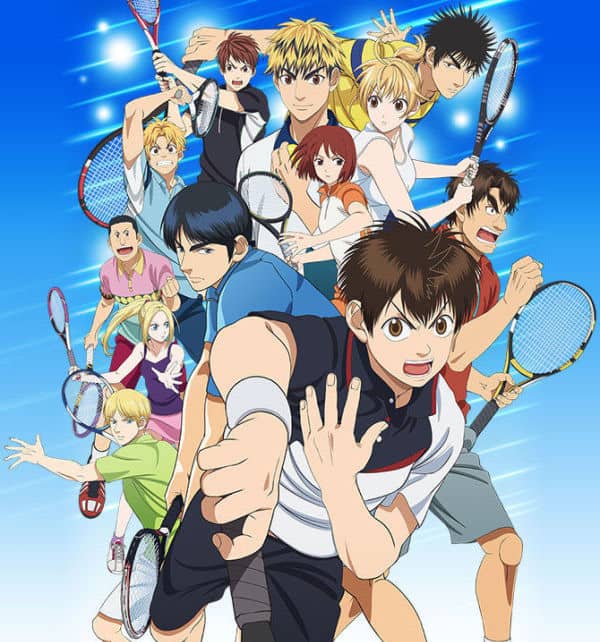
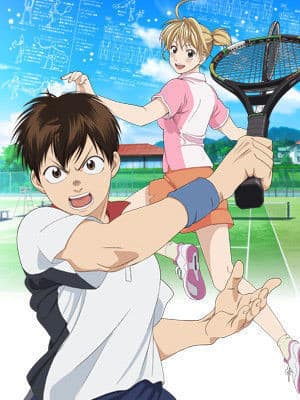
Eiichirō Maruo, a diligent and methodical high school student, initially joins the tennis club to improve his physical fitness. Unlike his peers, who rely on natural talent, Eiichirō approaches tennis with a studious mindset, meticulously analyzing techniques and strategies. His analytical nature leads him to develop a unique playing style, characterized by precise footwork and calculated shot placement. As he progresses, Eiichirō’s dedication and hard work begin to yield results, earning him recognition among his teammates and opponents.
The series chronicles Eiichirō’s journey from a novice to a competitive player, highlighting his growth through rigorous training and participation in tournaments. Along the way, he forms a close bond with Natsu Takasaki, a talented and experienced tennis player who becomes both a rival and a source of inspiration. Their relationship evolves from friendship to mutual support, with Natsu often providing guidance and encouragement as Eiichirō navigates the challenges of competitive tennis.
Eiichirō’s development is marked by his ability to adapt and learn from each match, often overcoming opponents with superior physical abilities through strategic thinking and perseverance. The narrative emphasizes the importance of discipline, preparation, and mental fortitude, showcasing how Eiichirō’s meticulous approach sets him apart in a sport dominated by instinct and raw talent. As he climbs the ranks, he faces increasingly skilled opponents, each encounter serving as a stepping stone in his journey toward becoming a professional tennis player.
The series also explores the dynamics of the tennis community, including rivalries, friendships, and the pressures of competition. Supporting characters, such as Eiichirō’s teammates and coaches, play significant roles in his development, offering both challenges and support. The story balances intense match sequences with moments of personal reflection, providing a comprehensive portrayal of Eiichirō’s growth as an athlete and an individual.
"Baby Steps" stands out for its realistic depiction of tennis, with detailed explanations of techniques and strategies that appeal to both sports enthusiasts and casual viewers. The narrative’s focus on hard work and incremental progress resonates with themes of perseverance and self-improvement, making it a compelling sports anime.
The series chronicles Eiichirō’s journey from a novice to a competitive player, highlighting his growth through rigorous training and participation in tournaments. Along the way, he forms a close bond with Natsu Takasaki, a talented and experienced tennis player who becomes both a rival and a source of inspiration. Their relationship evolves from friendship to mutual support, with Natsu often providing guidance and encouragement as Eiichirō navigates the challenges of competitive tennis.
Eiichirō’s development is marked by his ability to adapt and learn from each match, often overcoming opponents with superior physical abilities through strategic thinking and perseverance. The narrative emphasizes the importance of discipline, preparation, and mental fortitude, showcasing how Eiichirō’s meticulous approach sets him apart in a sport dominated by instinct and raw talent. As he climbs the ranks, he faces increasingly skilled opponents, each encounter serving as a stepping stone in his journey toward becoming a professional tennis player.
The series also explores the dynamics of the tennis community, including rivalries, friendships, and the pressures of competition. Supporting characters, such as Eiichirō’s teammates and coaches, play significant roles in his development, offering both challenges and support. The story balances intense match sequences with moments of personal reflection, providing a comprehensive portrayal of Eiichirō’s growth as an athlete and an individual.
"Baby Steps" stands out for its realistic depiction of tennis, with detailed explanations of techniques and strategies that appeal to both sports enthusiasts and casual viewers. The narrative’s focus on hard work and incremental progress resonates with themes of perseverance and self-improvement, making it a compelling sports anime.
Episodes
Staffel 1
1First Step
Eiichirou Maruo,a diligent honor student, joins the tennis club to maintain physical fitness after a classmate suggests exercise for academic stamina. He arrives at the courts with no prior experience, carrying a notebook to meticulously record observations and mechanics. Coach Aoi notices Eiichirou’s analytical approach and assigns him to practice against Takuma, a skilled but inconsistent player. During their rally, Eiichirou relies on his notes to predict Takuma’s shots, managing to return several balls through careful positioning. His methodical tracking allows him to score his first point by targeting Takuma’s weaker backhand. Takuma, frustrated by Eiichirou’s persistence, accelerates his serves and forces errors. Eiichirou struggles to keep pace but refuses to forfeit, determined to see the exercise through. A sudden rainstorm interrupts the match, halting play before a conclusion is reached. Despite the physical toll and a loss, Eiichirou leaves the court having earned acknowledgment from his peers for his adaptability. The experience shifts his view of tennis from a mere academic tool to a personal challenge he wants to master. He commits to returning, now driven by the specific goal of defeating Takuma in a full match.
2The Match
Eiichiro Maruno returns to the Sometime Tennis Club for his second training session and receives a club uniform. Senior members observe his basic stroke practice while Natsu Takasaki drills with him,pointing out his stiff posture and over-reliance on note-taking instead of physical adjustment. Eiichiro struggles to coordinate his movements but methodically documents each correction in his notebook, applying the same academic discipline he uses for his studies. After the drills, senior member Takuma Egawa challenges Eiichiro to a practice match to demonstrate the gap between a beginner and a regular club member. Eiichiro accepts despite having only two weeks of experience, using his notes to anticipate Egawa’s serves and attempt strategic positioning. Egawa easily takes the first three games with powerful, precise shots that Eiichiro cannot return, but Eiichiro reads a pattern and returns one serve for his only point. The match ends with Egawa winning 6–0, yet Eiichiro’s single return earns him a nod of recognition from Egawa and draws the attention of other club members. Natsu later explains that Egawa rarely challenges beginners and that Eiichiro’s analytical approach surprised him enough to acknowledge potential. Eiichiro reflects on the match, recognizing that raw physical ability alone will not carry him, but his method of observation and adaptation gives him a foundation to improve. He commits to rigorous daily practice, setting his sights on earning a spot in the club’s regular rotation before the upcoming rookie tournament.
3Episode 3
Eiichiro Maruo arrives at the tennis club practice wearing the proper attire he purchased. Natsu Takasaki notices his meticulous preparation and offers to help him warm up. Club members run through fundamental drills,and Eiichiro struggles to keep pace with the basic footwork and swing forms. He records every observation and correction in his notebook, committing each technical point to memory. Natsu observes his systematic approach and challenges him to focus on feeling the ball rather than over-analyzing. Eiichiro repeatedly fails to return clean shots but persists through each error. The coach assigns him to practice against a ball machine, where he gradually adjusts his grip and timing. By the end of the session, he manages to land a handful of consistent returns. His exhaustion is clear, yet he stays after practice to log additional notes on his physical limits. The other club members acknowledge his perseverance but note that his raw stamina and reflexes remain far behind. Eiichiro realizes that his methodical learning style alone will not close the gap against experienced players. He resolves to build a training regimen that balances technical precision with athletic conditioning before the intra-club ranking matches begin.
4Switch On
Eiichiro Maruo faces his first practice match against senior player Egawa. Egawa exploits Eiichiro’s lack of experience with consistent,deep shots that push him behind the baseline. Eiichiro relies on the notes he has been keeping, identifying Egawa’s tendency to hit cross-court when pressured. He successfully predicts two shots in a row and earns Egawa’s acknowledgment. The match ends with Eiichiro losing 0–6, but he walks off the court with a clearer understanding of his weaknesses. He realizes his note-taking alone cannot compensate for insufficient stamina and footwork. Natsu, observing the match, points out that his physical conditioning lags far behind his analytical skills. Eiichiro decides to add daily runs to his training regimen before school. The next morning, he begins running a fixed route through his neighborhood, committing to a measurable improvement goal. His parents take note of his sudden shift in routine but offer quiet support. At the tennis club, Egawa informs coach Aoi that Eiichiro has started conditioning on his own. Aoi remarks that Eiichiro’s ability to identify and act on his own shortcomings will determine how quickly he closes the gap with experienced players.
5The Tennis Court's Challenge
Eiichiro Maruo arrives at the Kanagawa Junior Tournament with his notebook filled with detailed observations. He faces Takuma Irie in the first round,a player known for a powerful flat serve that immediately puts Eiichiro on the defensive. Irie’s serve consistently breaks Eiichiro’s racket angle, forcing weak returns that Irie easily converts into points. Eiichiro’s precise footwork and calculated positioning, practiced in countless drills, allow him to extend rallies but not to seize control. He loses the first set 6–4, unable to solve the serve despite cataloging Irie’s tendencies. During the break, Eiichiro recalls coach Aoi’s instruction to trust his accumulated data and to adjust his grip slightly. He begins stepping inside the baseline to return serve earlier, shrinking Irie’s reaction time. The shift forces Irie into unforced errors and reveals that his serve lacks variety under pressure. Eiichiro claims the second set 6–3 by exploiting Irie’s now-predictable patterns and attacking his weaker backhand. Irie’s frustration grows as Eiichiro’s returns become sharper and his own confidence wavers. With the match tied at one set each, the final set begins with both players visibly exhausted but Eiichiro holding the tactical advantage.
6The Match
Eiichirou Maruo resumes his challenge match against third-year Takuma. Takuma’s powerful serve and court coverage initially maintain his lead. Eiichirou counters by implementing the patterns he recorded in his notebook,targeting Takuma’s backhand and forcing lateral movement. The set progresses with Eiichirou breaking Takuma’s serve once, narrowing the score to 4-3. Takuma responds by increasing the pace and using his stamina advantage. He closes out the match with consecutive games, winning 6-3. After the final point, Eiichirou bows to the club members and accepts his loss. Coach Aoi reviews Eiichirou’s notes and grants him full membership in the tennis club. Eiichirou receives his uniform and immediately joins the team’s conditioning drills. Natsu Takasaki approaches him after practice, acknowledging his effort and reaffirming her own goals. Eiichirou sets his focus on the upcoming rookie tournament, recognizing that his lack of a reliable serve remains a critical weakness. The episode closes with Eiichirou committing to daily serve practice alongside his analytical preparation.
7The Real Match
Eiichiro Maruno steps onto the court for his first official tournament match in the Kanagawa Junior Tennis Tournament. His opponent,Takuma Ide, immediately pressures him with a powerful, flat serve that Eiichiro struggles to return. Eiichiro consults his notebook during a break, cross-referencing his observations of Ide’s serve patterns and footwork. He shifts his receiving position deeper and uses a shorter backswing to block the serves back with control. Ide becomes frustrated as his winning shots turn into rally starters, and he begins missing attempts to overpower Eiichiro. Eiichiro breaks Ide’s serve in the fifth game by redirecting a second serve into the open court, forcing Ide into an error. Closing out the first set 6–3, Eiichiro maintains steady baseline exchanges and refuses to go for low‑percentage winners. Ide tries rushing the net but leaves openings that Eiichiro exploits with angled passes. Eiichiro wins the match in straight sets, earning his first tournament victory. Immediately after, the tournament board shows his next opponent: Miyagawa, a seeded player known for his precise groundstrokes. Eiichiro watches Miyagawa’s match from the stands, recognizing that his previous strategy will not suffice against a more disciplined opponent.
8The Flow of the Match
Maruo faces Ide in the continuation of their tournament match. Ide’s powerful groundstrokes and consistent baseline pressure force Maruo into defensive positions. Maruo consults his notebook between points,reviewing Ide’s shot tendencies and footwork patterns. He begins to predict Ide’s cross-court returns by watching his shoulder rotation and racket preparation. Maruo adjusts his serve placement to target Ide’s backhand, drawing weaker replies. One long rally ends when Maruo reads a drop shot, sprints forward, and flicks a passing shot down the line. Ide shows visible frustration, double-faulting for the first time as he tries to increase his pace. Maruo breaks serve and later forces a tie-break with steady cross-court exchanges. In the tie-break, Maruo capitalizes on Ide’s rushed approach shots, winning the first set 7-6. Ide returns to his bench, muttering to himself, while Maruo grips his racket and acknowledges that the match has only grown harder. The second set opens with Ide abandoning his baseline game and charging the net, immediately challenging Maruo’s passing shots.
9Match and Test
Eiichiro Maruo competes in a practice match against Takuma Ide,a player known for his powerful flat serve. Ide’s serves consistently land on the center line, exploiting the T-zone to force Eiichiro off balance. Eiichiro recalls his detailed notes on Ide’s serving patterns and shifts his return stance to a neutral position, sacrificing a step to gain more time. He successfully returns several of Ide’s serves, breaking Ide’s rhythm and forcing rallies that expose Ide’s weak backhand. Eiichiro wins the match 6–4, securing a spot in the next tier of practice matches. Immediately after, he faces the prospect of midterm examinations, which he had neglected while focusing on tennis. Coach Aoi warns Eiichiro that falling behind academically could jeopardize his participation in official tournaments. Eiichiro dedicates the following days to studying alongside Natsu Takasaki, who helps him organize his study schedule. He completes his exams without failing any subject, preserving his eligibility to continue training. With the immediate academic threat resolved, Eiichiro learns that his next opponent in the ranking matches will be a seeded player, raising the stakes for his continued advancement.
10Unease on the Edge
Eiichirō advances to the third round of the Kanagawa Junior Tournament. He faces the fifth-seeded Takuya Miyagawa,a player known for patience and mastering seven distinct shots. Miyagawa adapts his game to exploit opponents' weaknesses. The match begins with both players holding their serves. Eiichirō notices a persistent off-balance feeling during rallies. He consults his notes and discovers Miyagawa has been studying his shot patterns and positioning. Miyagawa uses this preparation to anticipate Eiichirō's returns and control the baseline exchanges. At 4-3 in the set, Eiichirō faces the risk of falling behind if he loses the next game. He abandons his baseline strategy and switches to serve-and-volley attacks. The change in pace disrupts Miyagawa's rhythm. Eiichirō wins the eighth game with aggressive net play, leveling the set at 4-4. The set remains undecided as both competitors hold serve, forcing a conclusion in the subsequent games.
11Episode 11
Eiichiro Maruo enters his first official junior tennis tournament. He faces Takuma Ide,a player known for his powerful serve. Ide’s serve consistently pushes Eiichiro off the court, forcing him to defend. Eiichiro recalls his notes from observing Ide’s previous matches, identifying a slight weakness in Ide’s footwork after wide serves. He adjusts his return position and begins directing shots to Ide’s backhand side. Ide grows frustrated as Eiichiro extends rallies and forces errors. Eiichiro wins the first set by breaking Ide’s serve twice. In the second set, Ide changes his strategy, aiming for sharper angles to prevent Eiichiro from setting up his returns. Eiichiro’s stamina, built from daily running, allows him to chase down balls that would have been winners against other opponents. He breaks Ide’s serve again late in the second set to close the match. After the victory, Eiichiro checks the tournament bracket and sees his next opponent is a seeded player with a consistent baseline game. He knows he must refine his footwork and shot selection to advance.
12Improvement by Memory
Following his upset victory over the fifth-seeded Miyagawa,Eiichirō Maruo returns to the STC for specialized training. Coach Mike, a psychological trainer from Florida, instructs Eiichirō to recall his best shots within twenty seconds to speed up his decision-making. Eiichirō masters this memory-recall technique and applies it immediately in the tournament’s fourth round. He defeats the sixteenth-seeded Terashima with relative ease, demonstrating the effectiveness of the new method. After the match, a broken string forces Eiichirō to visit a tennis shop. There, he encounters his quarterfinal opponent, the third-seeded Hiromi Iwasa. Hiromi shows no interest in speaking with Eiichirō and leaves quickly. The shop owner explains that Hiromi never scouts opponents beforehand; instead, he sketches them during matches to form his strategy. Eiichirō becomes confused by this approach, unable to imagine how someone can draw while competing. The episode ends with Eiichirō preparing to face this unorthodox opponent in the quarterfinals, uncertain of what to expect.
13Episode 13
Maruo faces Takuma in the finals of the Kanagawa Junior Tournament. The match determines which player advances to the All‑Japan Junior Tournament. Takuma opens with powerful groundstrokes and aggressive net play,forcing Maruo onto the defensive. Maruo counters by tracking every shot with his split‑step footwork and recording detailed observations in his mental notebook. He identifies that Takuma’s deep cross‑court shots leave a brief opening near the baseline. Maruo shifts his positioning to redirect those shots down the line, catching Takuma off guard. Takuma responds by increasing his shot pace and aiming for the corners, testing Maruo’s stamina. During a crucial deuce point, Maruo anticipates a wide serve and returns with a sharp angle that Takuma cannot reach. Maruo wins the final set and secures the tournament title. His victory earns him a spot in the national championship, but he immediately notes the gaps in his consistency against high‑velocity hitters. Coach Aoi assigns him a revised training regimen focused on reaction speed and shot precision. Maruo now faces the challenge of preparing for nationally ranked opponents who possess both power and technical refinement.
14Putting the Pieces Together
Eiichiro leads Hiromi five games to four in the final set and increases his foot speed to match Hiromi’s pace. Hiromi’s legs cramp at thirty-thirty,forcing him to concede two easy aces that give Eiichiro a 6-4 win. After the match, Hiromi announces he will reduce his tennis activity to focus more on drawing on canvas. He tells Eiichiro that Eiichiro already carries the same desire to turn professional as the club’s top four players, even if Eiichiro currently plays only for enjoyment. Eiichiro scouts Araya’s match to prepare for the semifinals, watching Araya win 6-0. Araya then confronts Eiichiro and declares he will crush him in their upcoming match. Coach Miura instructs Eiichiro to ease his practice and concentrate on playing his own style rather than adapting to Araya’s game. On the semifinal day, Miyagawa arrives to support Eiichiro and offers a critical observation: hunting for an opponent’s weakness pushes that opponent to improve, making the strategy self-defeating. Taking that advice, Eiichiro decides to ask Takuma directly about Araya’s weaknesses. When Eiichiro locates Takuma, he arrives just in time to see Araya whispering something to Takuma that could alter the tournament’s outcome.
15Episode 15
Eiichiro Maruo faces Kanda in the second round of the Kanagawa Junior Circuit. Kanda’s powerful left-handed strokes push Eiichiro to adapt his footwork and shot placement immediately. Eiichiro repeatedly loses points when he fails to keep Kanda moving side to side. He recalls Natsu’s advice about creating angles and commits to shorter,sharper cross-court returns. The shift forces Kanda to stretch beyond his comfortable hitting zone and generates several unforced errors. Eiichiro wins the first set by sticking to the planned patterns even after falling behind 3–0. Coach Aoi observes from the stands and notes the improvement in Eiichiro’s tactical execution between points. Kanda adjusts by stepping closer to the baseline to cut off the angles, raising the pace in the second set. Eiichiro struggles to maintain his depth and double‑faults twice under the increased pressure. He regains composure by focusing on his service rhythm and targeting Kanda’s backhand side. The match reaches a deciding tiebreak where Eiichiro’s conditioning and consistent shot selection give him a narrow lead. A final rally ends with Kanda mishitting a forehand, handing Eiichiro the match victory. Eiichiro moves into the quarterfinals, where his next opponent will be a seeded player known for aggressive net play.
16Beast and Initiative
Araya opens the second set with multiple service aces,pushing his lead to 3-1. Eiichirō holds his serve and then creates a break point opportunity at 30-40 in the sixth game. Facing the risk of losing his advantage, Araya punches himself in the face to forcibly eliminate all emotion and maintain his aggressive mindset. Both players continue to hold their serves through the following games, leaving Araya with a 5-4 lead. With the set on the line, Eiichirō abandons his baseline strategy and begins predicting Araya’s shot placements before the swing. This gamble allows him to stay even in the final game at 30-30. Araya prepares to serve with the knowledge that the next point will give the winner permanent control over the remainder of the match. The physical and mental toll of Araya’s power game turns the set into a contest of who can break the other’s concentration first. Eiichirō’s decision to rely purely on prediction shows his willingness to risk the entire match on a single calculated bet. The episode ends with the match unresolved, heading into a decisive third episode with both players locked in a deadlock for match advantage.
17Talent and Effort
In the second round of the STC tournament,Eiichiro Maruo faces Takumi Miyagawa, a hard-hitting opponent seeded seventh. Miyagawa repeatedly uses his powerful serve and groundstrokes to push Eiichiro behind the baseline. Eiichiro relies on his precise footwork and shot placement to counter the pace, forcing Miyagawa to move laterally. Miyagawa adjusts by stepping inside the court to take balls earlier, increasing his pressure. Eiichiro recalls his training with Natsu Takasaki and implements a strategy of varying spin and depth to disrupt Miyagawa’s timing. The set reaches a tiebreak, where Eiichiro’s data-based anticipation allows him to read Miyagawa’s serve directions. Eiichiro takes the first set and carries momentum into the second. Miyagawa grows visibly frustrated and attempts to overpower Eiichiro, leading to unforced errors. Eiichiro breaks Miyagawa’s serve late in the second set and secures the match with a cross-court passing shot. The victory marks Eiichiro’s first win against a seeded player, confirming his steady improvement. As he exits the court, he learns his next opponent is the top-seeded Naniwa, setting a higher challenge ahead.
18Ace o Nerae!
Eiichiro Maruo trails Takuma Ide in the second round of the Kanagawa Junior Circuit. Ide’s powerful serve repeatedly lands aces,pinning Eiichiro to the baseline. Eiichiro recalibrates his grip and shifts his stance to a semi-western forehand, a technique he learned from watching professional matches. He commits to stepping inside the court, shortening his swing to redirect Ide’s pace rather than matching it. The first successful return catches Ide off guard, breaking Ide’s rhythm for the first time in the set. Eiichiro’s coach, Aoi, observes from the stands and notes that Eiichiro’s analytical approach is finally translating into instinctive movement. Natsu watches from the player area, her own tournament match already won, and silently urges Eiichiro to maintain pressure. Ide responds by varying serve placement and attacking the net, forcing Eiichiro to defend with passing shots. After a series of deuce points, Eiichiro secures a break with a sharp cross-court forehand that clips the baseline. The set stands at 3–3, with both players showing visible fatigue but neither yielding ground. The episode closes with Ide preparing to serve again, the momentum now evenly balanced and each point carrying the weight of the set.
19The Decisive Battle
Eiichiro Maruo continues his second-round match against Takuma Ide,the tournament’s fourth seed. Ide dominates with powerful groundstrokes that push Eiichiro behind the baseline. Eiichiro relies on his footwork and consistent returns to extend rallies, forcing Ide to move laterally. He notices Ide’s tendency to hit cross-court when pressured and begins anticipating the shots. By redirecting the ball down the line, Eiichiro steals the initiative and takes the second set. Ide increases the pace and aims for the corners, testing Eiichiro’s endurance. Eiichiro’s scouting notes, compiled from watching Ide’s previous matches, allow him to predict Ide’s serve placements. He breaks Ide’s serve in the final set. Ide attempts to overpower Eiichiro with net approaches, but Eiichiro responds with passing shots executed from unstable positions. The match culminates in a long rally where Ide’s shot lands just beyond the baseline, giving Eiichiro the victory. With the win, Eiichiro advances to the third round and gains recognition from other players. His coach, Aoi, observes that his ability to maintain concentration under pressure has improved. The episode ends with Eiichiro preparing for his next opponent, a left-handed player known for heavy topspin.
20Meat Buns and Yakisoba
Eiichirō enters a tournament following three months of intensive training. During the tournament,he learns to apply active rest between matches, allowing his body to recover effectively. Opponents from previous tournaments notice Eiichirō's physical transformation and faster movement on the court. He advances through all matches and reaches the final against Terashima. Terashima fails to adapt to Eiichirō's improved stamina and shot accuracy. Eiichirō wins the final decisively with scores of 6-1 and 6-0, with his closest match in the entire tournament ending 6-2. Coach Miura informs Eiichirō that he will take one week off before beginning another three weeks of intense training. Miura explains this cycle of three weeks of training followed by one week of rest will continue throughout the year, eventually reducing to only two days of rest between sessions. With his week off, Eiichirō participates in his school's cultural festival, working at the butler café alongside classmates. The festival provides moments for Eiichirō and Natsu to interact casually outside the tennis context, bringing them slightly closer. Eiichirō faces the prospect of sustaining the demanding training regimen that Miura outlined while managing school commitments.
21A Tough Opponent
Eiichiro Maruyama competes against Izumida,the tournament’s seeded player who relies on a powerful serve and swift net attacks. Izumida claims the first set by holding serve consistently and breaking Eiichiro once. Eiichiro studies Izumida’s positioning and targets his backhand, forcing several deuce games but failing to convert break points. In the second set, Eiichiro’s improved footwork allows him to return serves more effectively and extend rallies. He constructs points using written notes that track Izumida’s shot patterns and movement habits. The set progresses to a tiebreak, where Eiichiro builds a small lead before committing a decisive unforced error on a short ball. Izumida wins the tiebreak and secures the match, ending Eiichiro’s run in the tournament. Izumida and his coach acknowledge Eiichiro’s tactical growth and consistency. After the match, Takuma, who observed from the stands, proposes that they train together regularly. Eiichiro accepts and begins planning a focused regimen to strengthen his physical conditioning and match endurance.
22Fundamentals are the Weakness
Maruo Eiichirō faces Yu Nabae in the semifinals. Nabae recognizes that both players share a similar analytical style,relying on data to anticipate their opponents. He identifies a critical gap in Maruo’s game: a lack of fundamental experience against players who mirror his own strategic approach. Maruo loses the first set as Nabae’s observation proves accurate. In the second set, Nabae accelerates his lead, pushing the score to 5-2. While Maruo struggles on the court, Natsu Takasaki competes in her own women’s semifinal match. Her match concludes, and she and Maruo acknowledge their relationship more openly in front of their peers. The public acknowledgment reinforces Maruo’s awareness of their partnership. The episode also details Nabae’s past frustrations as a player, adding context to his methodical preparation. He updates his data on Maruo to counter any new developments. With Maruo trailing 5-2 in the final set, he faces the immediate threat of elimination from the tournament.
23Aggressive is Ideal
In the semifinals of the tournament,Eiichiro Maruo faces Yu Nabae. Eiichiro enters a state of peak concentration, recalling his previous match against Ide as he executes shots with precision. Nabae quickly recognizes that Eiichiro is playing at his most optimal level and struggles to counter the onslaught. Eiichiro breaks Nabae’s serve early and builds a lead, controlling the flow of the match with aggressive plays. Despite his advantage, Eiichiro begins to overthink his own success, creating small openings in his focus. Nabae capitalizes on these moments, shifting momentum with calculated counterattacks. The two players exchange games in a tense back-and-forth, with Nabae applying constant pressure to disrupt Eiichiro’s rhythm. Eiichiro starts taking higher risks, attempting shots outside his usual strategy to regain control. The physical intensity escalates as both players push beyond their previous limits in the rally exchanges. The episode concludes with the match still undecided, leaving Eiichiro shaken after losing his grip on a lead he held while in his best form.
24Recklessness and Surprise
Eiichirō Maruo faces Yuu Nabae,the national number one, in the Kanto Junior Tournament semifinals. Eiichirō takes the first set after a strong start that mirrors his previous high-level performance against Ide. His aggressive play and exceptional condition allow him to build an early lead and put Nabae on the defensive. Nabae, however, begins to adjust and capitalize on Eiichirō’s declining physical state in the second set. The national champion’s experience becomes evident as he methodically works to regain control of the match. Eiichirō struggles to maintain his earlier intensity as fatigue and pressure mount. The momentum shifts completely, forcing Eiichirō to search for new resources to turn the tide. His meticulous data-based approach clashes with the need for instinctual, high-stakes decisions against a superior opponent. Every point becomes critical as Nabae pushes to force a deciding set. The episode ends with Eiichirō facing the possibility of defeat after his initial advantage vanishes. He must now find a way to counter Nabae’s resurgence or see his tournament run end in the semifinals.
25Final Set
Eiichiro Maruo faces Nabae in the Kanto Junior Tournament semifinals. The match reaches its climax with both players holding serve deep into the final set. Eiichiro attempts a new,high-risk strategy by envisioning his victory and altering his play style mid-match. Nabae observes Eiichiro evolving on the court and forces errors that exploit the riskiness of the approach. Eiichiro loses the match in a close final set, falling short of the finals. After the loss, Eiichiro privately processes his disappointment but reaffirms his determination to improve. His parents witness his effort and express their support for his tennis ambitions. A racket manufacturer scouts Eiichiro following his performance, offering him a testing contract. Natsu Takasaki wins the girls’ singles tournament without dropping a set, concluding her own successful run. The tournament ends with Araya defeating Nabae in the finals. Eiichiro leaves the tournament with a new sponsorship deal and a clearer view of the gap he must close to reach the national level.
Cast
- Takuma Egawa
- Takuya Miyagawa
- Yukichi Fukasawa
- Ryo Ōbayashi
- Yūki Tajima
Comment(s)
Staff
- DirectorMasahiko Murata
- ScriptKatsuhiko ChibaNatsuko TakahashiJunki Takegami
- Episode DirectorHiromichi MatanoMasahiko MurataMakoto SasakiKiyoshi MurayamaShin'ichi MasakiYoshinori OdakaKoichiro KurodaYoshihiro YanagiyaNoriyuki NomataMaki OdairaKumi IchiguchiPyeon-Gang HoSumito Sasaki
- Original creator
- Art DirectorKunihiko Inaba
- Animation DirectorNatsuko SuzukiYukari KobayashiHiroki AbeHideaki ShimadaChiyuki TanakaChūji NakajimaMasayuki FujitaDaisuke TsumagariMai TodaMasayuki KoudaRyoichi MurataYoshihiro MaedaRetsu OhkawaraAnna YamaguchiTakayoshi HayashiTadayoshi OkimuraToshiya Koike
- Director of PhotographyKazumi Yokoo
- Series CompositionKatsuhiko Chiba
- StoryboardMasahiko MurataKazuya KomaiNoriyuki NakamuraYukihiro MatsushitaHiroshi KimuraToshinori NaritaShin'ichi MasakiYoshihiro YanagiyaMaki OdairaPyeon-Gang Ho
- MusicYōichirō Yoshikawa
- Character DesignMasayuki Kouda
- Chief Animation DirectorMasayuki Kouda
- Sound DirectorHajime TakakuwaIchi Takakuwa
- ProducerIzumi Nakazawa
Production
- ProductionNHKNHK Enterprises
- Animation ProductionStudio Pierrot