TV-Series
Description
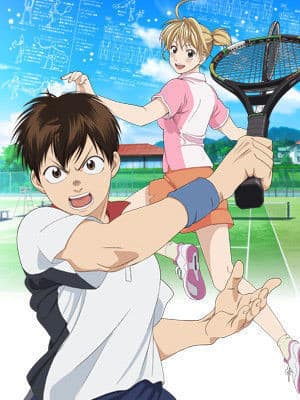
"Baby Steps 2" setzt die Geschichte von Eiichirō Maruo fort, einem ehemals fleißigen, aber unsportlichen Schüler, der durch Zufall mit Tennis in Berührung kommt. Die zweite Staffel vertieft seine Entwicklung vom Anfänger zu einem ernsthaften Konkurrenten in der Tenniswelt. Eiichirōs analytischer Ansatz und seine akribische Vorbereitung bleiben zentrale Elemente seines Spielstils, während er weiterhin an seiner körperlichen Fitness und technischen Fähigkeiten arbeitet.
Die Handlung konzentriert sich auf Eiichirōs Teilnahme an regionalen und nationalen Turnieren, wo er gegen immer stärkere Gegner antritt. Dabei wird seine Beziehung zu Natsu Takasaki, einer talentierten Tennisspielerin, die ihn inspiriert und unterstützt, weiter ausgebaut. Natsu steht ebenfalls vor eigenen Herausforderungen, da sie versucht, ihr Potenzial im Wettkampf auszuschöpfen und ihre Karriere voranzutreiben.
Eiichirōs Weg ist geprägt von Rückschlägen und Erfolgen, die seine Entschlossenheit und sein Wachstum als Spieler unterstreichen. Er lernt, mit Druck umzugehen, Strategien anzupassen und die mentale Stärke zu entwickeln, die für den Wettkampf erforderlich ist. Gleichzeitig wird die Dynamik innerhalb des Tennisclubs und die Beziehungen zu seinen Mitspielern weiterentwickelt, wodurch die Serie ein realistisches Bild des sportlichen Alltags und der zwischenmenschlichen Aspekte des Tennis vermittelt.
Die Charaktere werden durch ihre individuellen Stärken und Schwächen dargestellt, was ihre Glaubwürdigkeit und Identifikation erhöht. Eiichirōs Fortschritte sind nicht nur auf seine harte Arbeit zurückzuführen, sondern auch auf die Unterstützung seiner Freunde, Trainer und Rivalen, die ihn immer wieder herausfordern und motivieren. Die Serie bleibt dabei nah an den sportlichen Realitäten und vermeidet übertriebene Darstellungen, was sie zu einer authentischen und fesselnden Sportserie macht.
Die Handlung konzentriert sich auf Eiichirōs Teilnahme an regionalen und nationalen Turnieren, wo er gegen immer stärkere Gegner antritt. Dabei wird seine Beziehung zu Natsu Takasaki, einer talentierten Tennisspielerin, die ihn inspiriert und unterstützt, weiter ausgebaut. Natsu steht ebenfalls vor eigenen Herausforderungen, da sie versucht, ihr Potenzial im Wettkampf auszuschöpfen und ihre Karriere voranzutreiben.
Eiichirōs Weg ist geprägt von Rückschlägen und Erfolgen, die seine Entschlossenheit und sein Wachstum als Spieler unterstreichen. Er lernt, mit Druck umzugehen, Strategien anzupassen und die mentale Stärke zu entwickeln, die für den Wettkampf erforderlich ist. Gleichzeitig wird die Dynamik innerhalb des Tennisclubs und die Beziehungen zu seinen Mitspielern weiterentwickelt, wodurch die Serie ein realistisches Bild des sportlichen Alltags und der zwischenmenschlichen Aspekte des Tennis vermittelt.
Die Charaktere werden durch ihre individuellen Stärken und Schwächen dargestellt, was ihre Glaubwürdigkeit und Identifikation erhöht. Eiichirōs Fortschritte sind nicht nur auf seine harte Arbeit zurückzuführen, sondern auch auf die Unterstützung seiner Freunde, Trainer und Rivalen, die ihn immer wieder herausfordern und motivieren. Die Serie bleibt dabei nah an den sportlichen Realitäten und vermeidet übertriebene Darstellungen, was sie zu einer authentischen und fesselnden Sportserie macht.
Episodes
Staffel 1
1A New Challenge
Eiichirō Maruo returns to the Shōnan Tennis Club with a clear goal: qualifying for the All Japan Junior Tournament. He asks the head coach,Aoi, to take him on for full-time training, and Aoi accepts after seeing Eiichirō’s detailed match notebooks. The training regimen immediately shifts to physical conditioning, exposing Eiichirō’s lack of lower-body strength. He struggles to complete the drills, his legs cramping repeatedly, but he logs every failure in his notebook. Natsu Takasaki arrives at the club for her own practice and observes Eiichirō’s exhaustion without interrupting. Aoi Takuma, the coach’s son and a nationally ranked junior, briefly watches Eiichirō’s sessions and remarks that a player without natural athleticism will hit a ceiling. Eiichirō overhears the comment and later asks Aoi Takuma for a practice match. Aoi Takuma declines, stating that Eiichirō’s current stamina cannot keep up with even a casual set. Natsu privately challenges Eiichirō to a short match after hours, pushing him to apply his tactical analysis under physical stress. He wins a few points through placement but loses the set, acknowledging that his body cannot yet execute what his mind plans. The episode closes with Eiichirō committing to a daily strength regimen, while the All Japan Junior qualifying tournament appears on the calendar as the immediate deadline.
2A Vicious Circle is Lucky
Eiichiro Maruo continues his training at the Florida Tennis Academy. He struggles with a recurring pattern in his practice matches where he presses too hard at a critical moment,losing his advantage and ultimately the set. Coaches and fellow players observe this tendency as his primary obstacle. Eiichiro recognizes he has lost his confidence following recent defeats and needs to regain it to move forward. He works to close the performance gap between himself and the other academy players through repeated practice rounds. Alex, a player who becomes angry after losses, shares a similar struggle with pressure. The two begin forming a distant understanding based on their shared frustrations. Eiichiro applies his methodical approach by continuing to study techniques and his opponents during off-court sessions. His instructor develops a full training program tailored to his specific needs after analyzing his play style. Practice matches show incremental progress, with Eiichiro winning some sets but still losing matches due to his critical errors. The episode shows his resilience as he absorbs each loss and returns to his notebooks to refine his strategy. The training camp sets up continued matches against Alex and other players as Eiichiro fights to break his cycle of self-defeating pressure.
3Data for the Future
During the New Year's party at the Florida academy,Ike Souji arranges a practice match against Eiichiro Maruo. Eiichiro asks Ike what it means to be a professional player, and Ike responds that he will only answer if Eiichiro wins the match. Ike defeats Eiichiro 6-0, demonstrating the substantial gap between a professional and an amateur. Rather than feeling discouraged, Eiichiro immediately expresses his desire to improve and begins analyzing why Ike offered such a challenge. Ike's decisive victory serves as a concrete measure of the level Eiichiro must reach. Later, with his departure from Florida approaching, Eiichiro secures a three-set match against Alex O'Brien after Coach Mike approves the arrangement. Eiichiro relies on his detailed notes, which catalog Alex's playing patterns and tendencies from previous observations. He uses this data to predict Alex's shots and wins the first set 6-2. Alex realizes Eiichiro has studied his habits extensively and attempts to change his strategy. Eiichiro anticipates this adjustment as well, countering Alex's altered patterns and frustrating the professional player. The first set victory establishes Eiichiro's analytical approach as a viable method for competing against superior athletes, but Alex enters the second set determined to adapt and overcome Eiichiro's data-driven strategy.
4Awakening to Simplicity
On his final day in Florida,Eiichirō plays a best-of-three match against Alex. Alex realizes Eiichirō’s notebook details all his weaknesses and decides to change his playing style mid-match to escape the data. He deliberately drops the first set to acclimatize to a new stroke, leaving Eiichirō unable to adapt his strategy. In the second set, Alex successfully counters with his newly adjusted backhand and forehand, breaking Eiichirō’s serve to take the set. Facing a third set, Eiichirō abandons his reliance on note-taking and lets his body react instinctively, using his analytical mind only for data gathering while his instincts dictate attacks. The final set pushes both players to a tie-breaker. Eiichirō gains match point after holding his serves, but a cramp seizes his right leg. He hides the injury from the coach and continues, winning the match when Alex hesitates on a critical point. Coach Kevin scolds Eiichirō afterward for concealing the cramp, and Alex escorts him to the medical office. Before departing for the airport, Eiichirō thanks everyone for their support during his two-week stay. On the flight back to Japan, he finds messages left in his notebook by his Florida friends, including Alex’s note: "Baby steps to Giant strides." Returning home, Eiichirō carries the lesson of combining instinct with data, uncertain how the new approach will fare against Japanese competition.
5Takuma's Decision
Eiichirō returns to Japan after two weeks of training in Florida,and his coaches immediately observe his improved strength and control. The Kanagawa junior tournament approaches, and Coach Aoi assigns Eiichirō a strict new training regimen to prepare for the qualifiers. Coach Aoi also tasks Eiichirō with convincing Takuma to play a practice match against him. Eiichirō finds Takuma and requests the match, and Takuma accepts after some initial hesitation. The two begin playing, and Takuma dominates early with his powerful serves while Eiichirō holds his own service games through better control. Takuma notices Eiichirō’s rapid growth and mentally compares it to the progress he saw in Ike during the Florida trip. Eiichirō recognizes the importance of strong serves and attempts to imitate Takuma’s serve motion during his service games. After several failed attempts, Eiichirō successfully lands a powerful serve that forces Takuma to mistime his return and resort to a drop shot. Coach Aoi stops the match immediately after that point, citing concern that Eiichirō may injure himself if he continues serving with improper form. Eiichirō tries to persuade Takuma to resume the match, but Takuma refuses. The match ends prematurely with no resolution, leaving Eiichirō’s progress against Takuma untested and the rivalry unresolved.
6First Encounter by Scouting
Coach Aoi explains to Eiichirō why he stopped the match against Takuma. Eiichirō’s body lacks the development to perform Takuma’s serving motion without risking a career-ending injury. To safely incorporate the new serve into his game,Aoi assigns Eiichirō a strict training regimen focused on building arm muscle and increasing speed. Away from the courts, the school holds career counseling sessions for the seniors. Eiichirō declares his intention to turn pro, setting a condition: he will pursue college if he fails to win the All-Japan Junior tournament. The episode then shifts to a new tournament, the All-Japan Indoor Junior Championship. Natsu learns that the top seed on the girls’ side is a player named Shimizu, and she expresses her excitement at the prospect of facing her rival. When Natsu teases Eiichirō about paying attention to Shimizu, he reacts with visible panic. The episode uses these moments to contrast the focused tennis training with the personal dynamics among the players. It establishes the upcoming tournament as the new battleground and introduces Shimizu as a significant competitor for Natsu. The closing moments set up the immediate challenge of the tournament ahead.
7Revenge at the Critical Moment
The Kanagawa Prefectural tournament begins. Eiichirō Maruo arrives at the venue and encounters several past opponents who now view him as a rival and draw attention as a central figure at the event. Natsu Takasaki appears and her friendly interaction with Eiichirō visibly surprises the other players. Eiichirō faces Nishimura,a new underclassman of Hiroshi Araya, in his first match. Araya previously provided Nishimura with a detailed account of Eiichirō’s weaknesses from the previous year, giving Nishimura confidence in his strategy. Eiichirō relies on his data collection skills during the match, noting how players like Takuya Miyagawa have evolved since their last meetings. The episode highlights Eiichirō’s growth, showing he now belongs in the competitive sphere as acknowledged by his peers. His methodical approach contrasts with Nishimura’s confidence, setting up a test of whether Eiichirō has overcome his documented vulnerabilities. The match begins with Eiichirō facing an opponent armed with insider knowledge designed to exploit his past limitations.
8The Speed of Evolution
Eiichirō Maruo faces Takuya Miyagawa in the second round of the Kanagawa Prefectural tournament. Miyagawa enters the match knowing a loss would delay his path to becoming a professional and might force him to attend college first. Eiichirō carries the weight of his own ultimatum: defeat ends his chances of going pro entirely. The two players exchange powerful groundstrokes from the baseline,each refusing to give ground. Eiichirō relies on his accumulated data on Miyagawa, constructing points based on observed patterns and tendencies. Miyagawa counters by increasing the pace and targeting Eiichirō’s backhand, attempting to overpower his methodical play. The set progresses with neither player able to secure a decisive break. Eiichirō adjusts his positioning, stepping inside the baseline to take Miyagawa’s shots earlier and reduce the opponent’s reaction time. Miyagawa’s frustration grows as his powerful shots keep returning, his usual winners finding Eiichirō’s racket instead of open court. The match reaches a critical juncture where Eiichirō’s calculated adjustments begin to outpace Miyagawa’s raw power. After securing the victory, Eiichirō advances further in the tournament, while Miyagawa faces the reality of a prolonged road to the professional ranks. Coach Aoi observes Eiichirō’s performance but recognizes a new challenge awaits against opponents who rely on instinct rather than predictable patterns.
9Baffled by Intuition
Following his victory over Miyagawa,Eiichirō Maruo meets with Natsu Takasaki, and the two discuss his recent matches and his continued growth. Coach Ryuhei Aoi identifies a gap in Eiichirō’s game: he relies exclusively on data and lacks the ability to counter players who operate on pure instinct. To address this weakness, Aoi arranges a practice match between Eiichirō and Natsu, forcing the data-driven player to adapt to her intuitive and unpredictable style. During the match, Eiichirō struggles to read Natsu’s movements, but the experience begins to sharpen his ability to react without premeditated calculation. Aoi observes that the upcoming Kanagawa Prefectural tournament will likely bring Eiichirō into a rematch with Araya, a powerful opponent who defeated him in the past. Eiichirō accepts the challenge and uses the match against Natsu as motivation to intensify his training before the tournament resumes. The episode shifts to show Araya preparing for the same tournament, reinforcing his own commitment to turning professional. The contrast between Eiichirō’s joyful, competitive rally with Natsu and Araya’s solitary intensity highlights the different paths the two players follow. The episode ends with the tournament set to restart, positioning Eiichirō for a direct confrontation with Araya.
10Start With a Roar
Eiichirō Maruo faces Hiroshi Araya in the final of the Kanagawa Prefectural Tournament. Araya defeated Eiichirō in their previous meeting one year earlier. Both players hold serve through the opening games,and the score reaches 3-3. Eiichirō begins to feel persistent discomfort during rallies despite the score remaining even. He analyzes the situation and determines that Araya's left-handed playing style creates the difficulty. Coach Aoi observes from the stands and confirms that Eiichirō lacks sufficient experience against left-handed opponents. Eiichirō has only played Araya once before, leaving him without a developed strategy for the matchup. The first set continues with neither player able to break the other's serve. The match remains unresolved by the episode's end. Eiichirō must adjust his approach to overcome the unfamiliar challenge posed by Araya's left-handed play.
11決戦の日
Eiichirō Maruo faces Kanagawa rival Takuya Miyagawa in the STC Cup final. Miyagawa takes the first set with powerful baseline drives that force Eiichirō into defensive positions. Eiichirō adjusts by incorporating slice serves and varying the pace on his groundstrokes,disrupting Miyagawa’s rhythm. He wins the second set after breaking Miyagawa’s serve at 5–4 with a well-placed inside-out forehand. Miyagawa responds in the third set by stepping inside the baseline to attack Eiichirō’s shots earlier. Eiichirō saves two match points at 5–6 with sharp cross-court angles that push Miyagawa wide. The set reaches a tiebreak, where Eiichirō builds a 5–3 lead using his improved footwork and consistent depth. Miyagawa then wins four consecutive points by targeting Eiichirō’s backhand with heavy topspin and moving forward to the net. The match ends when Eiichirō’s return catches the net cord and lands out, giving Miyagawa the championship. Eiichirō collapses onto the court, exhausted, then rises to shake Miyagawa’s hand and thank his coach and parents in the stands. Later, he reviews his match notes and identifies his late-tiebreak lapse in concentration as the decisive factor. The episode closes with Eiichirō vowing to incorporate more aggressive net play to close out future matches against top-tier opponents.
12Full Force Toward Adversity
Eiichiro Maruo and Hiroshi Araya continue the Kanagawa Prefectural Final,each having won one set. The tournament enforces a no-tiebreak rule in the final set, requiring a player to win by two games. Both players hold serve through the early games of the third set, unable to break each other. Eiichiro’s mental focus begins to fade as the set progresses, forcing him to rely more on instinct than his usual data-driven strategy. Araya gains a slight advantage from Eiichiro’s growing fatigue and holds serve to take a 7-6 lead. Eiichiro manages to hold his own serve, tying the score at 7-7, but his mental exhaustion becomes total. Araya breaks Eiichiro’s serve and then holds his own to secure the match with a final score of 9-7. After the loss, Eiichiro hears cheers from the crowd and recognizes how much his play has improved, even in defeat. The defeat eliminates Eiichiro from the tournament but solidifies his growth as a player capable of pushing a top opponent to the limit. The immediate consequence of the loss forces Eiichiro to refocus on his larger goal of reaching the All-Japan Junior tournament.
13Gathering of Rivals
The characters begin their third and final year of high school. School administration separates Eiichirō Maruo and Natsu Takasaki into different classes. Eiichirō sits in a classroom surrounded by unfamiliar faces. Natsu observes her new classmates discussing their futures. Both notice their peers already focusing on cram school schedules and entrance examination preparations. The academic pressure intensifies as teachers move through lessons at a pace that assumes students have already decided their career paths. Eiichirō feels the growing distance between his tennis ambitions and the academic track his classmates follow. Natsu confronts the same conflict as she balances her tournament schedule with her studies. The episode establishes the stakes for both characters outside the tennis court. The time dedicated to academics now directly competes with their training regimens. Their shared uncertainty about how to manage these dual commitments creates a parallel struggle. The episode closes with the All-Japan Junior Tournament approaching as the next major obstacle where Eiichirō must prove himself to pursue a professional career.
14Moonlight and the Sound of Waves
Eiichiro plays a practice match against Takuma. Takuma wins the first set 6-2 and the second 7-5,but Eiichiro’s controlled play and change of pace challenge Takuma and earn him praise from his opponent and from Coach Miura, who notes Eiichiro’s rapid progress after only two years of tennis. Following the match, Eiichiro confirms the promise he made to his parents: if he does not win the All-Japan Junior tournament, he will give up his goal of becoming a professional. He travels with the STC members to Chiba for the Kanto Junior Tournament, the qualifying event that will determine his path forward. At the hotel, Eiichiro struggles with pre-tournament nerves. He encounters Natsu in the lobby, and she leads him to a nearby beach where other young players have gathered. Walking along the shore, Natsu tells Eiichiro she understands the words he had started to say to her previously, and she asks him to go out with her. Eiichiro insists on saying the words himself, confessing his feelings to her, and they agree to begin a relationship. The next morning, Eiichiro wakes in his hotel room with renewed focus, carrying the private acknowledgment of their new relationship into the tournament ahead. The episode ends with the Kanto Junior Tournament about to begin, with Eiichiro’s qualification for the All-Japan Junior and his professional aspirations at stake.
15A Hero and Loud Cheers
The Kanto Junior Tournament begins with Eiichiro Maruo facing Yakabe Tadanori in the first round. Eiichiro’s pre-match data on Yakabe proves useless because Yakabe has grown taller and altered his playing style. Eiichiro resets his approach during the match and secures the win. After the match,Eiichiro and Natsu Takasaki publicly reveal their new relationship to their friends at the STC club, prompting a range of surprised reactions. The episode then shifts to Eiichiro’s second-round match against the fifth-seeded Yoshiaki Ide. Ide fails to appear at the court five minutes before the scheduled start time. Eiichiro learns that Ide witnessed a car accident during his warm-up and accompanied the injured person to the hospital. Instead of accepting a default victory, Eiichiro asks the tournament staff to delay the match so he can face Ide. Ide arrives just before the forfeit time limit, and the match begins. A large crowd gathers specifically to cheer for Ide, recognizing his actions as heroic. The overwhelming support for Ide creates a hostile atmosphere that immediately puts Eiichiro on edge as the first points are played.
16スパッでギューン
The match between Eiichiro and Ide begins with Ide arriving just before the deadline after helping an injured friend. Eiichiro reacts to the loud cheers from Ide's supporters,a new type of crowd pressure he has not faced before. He wins the first game by applying his data-driven style, quickly finding holes in Ide's defense. Ide struggles to keep up with Eiichiro's constant changes in tempo. Eiichiro recalls the lesson from his match with Natsu to focus intently on observing his opponent. Ide attempts to counter by using unpredictable, intuitive plays to disrupt Eiichiro's rhythm. Ide also starts to tune out the external world in an effort to regain his concentration. Both players begin to enjoy the competitive exchange as Ide tries various new approaches to find a path to victory. Eiichiro falls into a see-saw battle but returns to his fundamental strategy to manage Ide's adjustments. The match remains undecided, with the outcome depending on which player can better maintain their focus under the mounting psychological pressure.
17Dramatic by Nature
Eiichiro Maruo struggles against Yoshiaki Ide's remarkable ability to adapt instantly to every play. Ide's intuitive style continues to disrupt Eiichiro's data-driven strategy,forcing Eiichiro to fall behind in their Kanto Junior Tournament match. During a break, Eiichiro pulls out his tennis notebooks and reviews all his collected data on Ide to regain his focus. The review sharpens his movements, allowing him to win the next game and begin mounting a comeback. The rallies grow more intense as both players fight to hold serve, with neither willing to yield. Eiichiro begins playing his own style, moving beyond simply responding to Ide's intuition. The crowd's overwhelming support for Ide creates psychological pressure, but Eiichiro's improved play forces some spectators to acknowledge his unique abilities. Ide reveals his motivation stems from a family member watching from a wheelchair who needs surgery, adding personal stakes to his quest for victory. The match reaches its climax when a sweaty grip causes Eiichiro's racket to slip, leading to a critical error that gives Ide an opening. The episode ends with the match still undecided, both players locked in a tight battle where fatigue and mental strength become deciding factors.
18Visualize the Pressure
Eiichiro and Ide enter the final set with the match tied at one set each. Ide faces Eiichiro's new strategy and data-driven plan,which pushes Ide to elevate his own game out of pure excitement for the competition. The crowd continues to roar in support of Ide, creating a pressure-filled atmosphere that begins to affect Eiichiro physically despite his mental focus. Eiichiro's body reacts to the one-sided cheering more than he consciously realizes, adding a layer of unanticipated strain. The two players engage in a tense back-and-forth, with neither willing to yield ground. Eiichiro draws support from the crowd, including Natsu, as he fights through the intense pressure he places on himself. He accelerates his serves, making a clear impact on Ide and shifting the momentum. The match reaches its climax with both players giving their all, wearing each other down while raising their intensity. Eiichiro secures victory with a final, spectacular play, concluding the hard-fought match. His win establishes him as a player whom longer-tenured competitors now view as a genuine threat. Following the match, Eitaro secures his own victory against Ide and sets his sights on the National Juniors.
19A Rude First Meeting
Eiichiro struggles to process his victory over Ide in the previous round after the intense match concludes. Coach Aoi explains to Eiichiro that he entered a state of complete focus,or "the zone," near the end of the match against Ide. Eiichiro qualifies for the All-Japan Junior tournament but learns he needs a strong performance in the Kanto Junior tournament to secure a favorable national ranking. He spends time decompressing with friends from the tennis club, discussing the weight of his recent matches. Later at the hotel, Eiichiro shares a quiet moment with Natsu, and their interactions show their relationship slowly deepening. The episode shows Eiichiro winning his third-round match quickly, with the outcome summarized in a brief sequence. Following this victory, Eiichiro advances to the fourth round where he faces Sakuya Takagi, the tournament's fourth seed. Takagi immediately displays a brash and insolent attitude toward Eiichiro during their first meeting on the court. Other players warn Eiichiro that Takagi possesses a unique and unorthodox playing style designed to disrupt his opponent's rhythm.
20Psychological Warfare and Self-Control
The Kanto Junior Tournament continues as Eiichiro Maruo steps onto the court for his match against Sakuya Takagi. Yukichi Fukasawa’s warning about Takagi’s unorthodox approach proves accurate from the opening points. Takagi employs tactics that disrupt standard rally rhythms,using deliberate pauses and unexpected shot selections. Eiichiro attempts to apply his usual data-gathering method, noting Takagi’s patterns and searching for exploitable weaknesses. Takagi’s style resists easy categorization, as he mixes legal but psychologically unsettling maneuvers into each game. Eiichiro finds his concentration tested not by power or speed alone, but by the constant need to recalibrate his expectations. The match forces Eiichiro to question whether his analytical preparation can counter an opponent who thrives on breaking down mental composure. Each point becomes a battle to maintain focus against Takagi’s calculated unpredictability. Eiichiro struggles to establish his own pace while Takagi dictates the flow of play through continual small disruptions. The first set progresses with Eiichiro fighting to hold serve while searching for an opening to break Takagi’s rhythm. Takagi’s unique style continues to create friction, leaving Eiichiro to adapt his strategies on the fly or risk losing ground entirely.
21善悪と規則
Eiichiro faces Takagi,whose tactics prioritize disrupting an opponent's rhythm over standard etiquette. Takagi's play includes intimidation and near hits that fluster Eiichiro, causing him to lose several points in the first set. Eiichiro attempts to channel his resulting anger into his game but recognizes that anger, unlike competitive pressure, leads only to impatience and self-destruction. He deliberately takes extra time to let the irritation subside, receiving a warning from the umpire for the delay. With a clear mind, Eiichiro shifts his focus entirely to his own strategy. He constructs rallies with a variety of shots, cornering Takagi and removing any opportunity for further disruptive moves. Eiichiro dominates the second set, securing a definitive victory through pure technical execution. After the match, Takagi acknowledges his own lack of a true playing identity, realizing he has only copied others' training methods. Coach Aoi steps in to advise Takagi to build a style around his natural stamina rather than rely on tricks. Nabae speaks with Takagi afterward, noting that while such tactics have their place, they cannot form the foundation of a sustainable game. With the quarterfinal concluded, the episode sets Eiichiro on a direct path to face Nabae in the semifinals.
22Existence is the Driving Force
Eiichiro defeats Takagi in the quarterfinals,securing his place in the semifinals. Natsu also wins her quarterfinal match in the women's division, advancing alongside him. After his match, Eiichiro watches Natsu compete from the stands. While observing her play, he experiences a shift in his perception of her. Takuma and Araya provide Eiichiro with strategic information about his next opponent, Nabae. Araya explains how racket manufacturers sponsor Nabae due to his high-profile success. Takuma reveals that Nabae frequently lost his temper as a child, a stark contrast to his current composed demeanor. Eiichiro uses this information to consider potential weaknesses in Nabae's mental game. The episode concludes with Eiichiro acknowledging his growing personal feelings for Natsu. This new awareness adds an emotional layer as he prepares to face the tournament's top competitor in the semifinals.
23Aggressive is Ideal
Eiichiro faces Nabae in the semifinals of the tournament. He enters a state close to being in the zone,similar to his previous match against Ide. Eiichiro quickly takes the lead by executing shots he had not attempted before and denying Nabae any opportunity to counter. Nabae recognizes that his opponent is playing at an optimal level. Even after dropping a game, Eiichiro maintains his confidence and remains in a focused state. Cracks begin to appear as Eiichiro becomes overly analytical, causing his rhythm to break. The match intensifies with both players exchanging games in a tense back-and-forth. Eiichiro responds to the pressure by taking greater risks and putting more force behind his shots. The episode ends with the match still undecided as Nabae continues to apply relentless pressure.
24Recklessness and Surprise
Eiichiro Maruo faces the national number one,Yuu Nabae, in the semifinals of the Kanto Junior Tennis Tournament. He captures the first set after a fierce struggle. His physical condition begins to decline as the second set progresses. Nabae exploits Maruo’s waning stamina and takes control of the match. Maruo’s carefully constructed data-based strategies falter against the top seed’s consistent play. He finds himself falling behind, risking the loss of the set and the match. Maruo pushes his limits, attempting to envision a path to victory despite the apparent disadvantage. Each point becomes a battle to hold his serve and find an opening against Nabae’s momentum. The match reaches a critical turning point as Maruo faces the possibility of elimination. He risks everything on a bold, unconventional approach to turn the tide. The semifinal escalates into a direct confrontation between Maruo’s resolve and Nabae’s skill. Maruo enters the final set with his tournament hopes hanging on every point.
25Final Set
Eiichiro Maruo and Yuu Nabae enter the third and final set of their Kanto Junior Tournament semifinal match. Maruo,having lost the second set, abandons his previous data-based play to adopt a more aggressive and unpredictable style. He forces Nabae to abandon his control over spin and shot placement, turning the set into a series of intense rallies. Nabae recognizes Maruo’s rapid evolution as a threat but also sees his aggression as a risk of overextension. Maruo aims to reverse the pressure on the final point by attacking boldly, betting that Nabae’s desire to close out the match will make him vulnerable. The final shot lands out, giving Nabae the victory in a close contest. After the match, both players show mutual respect for the battle they shared. Maruo privately processes the loss but resolves to use it as motivation to grow stronger. His coach introduces him to a racket manufacturer representative who offers him a contract as an equipment tester. The episode shows Natsu Takasaki continuing her own progress toward becoming a professional through a series of flashbacks. The tournament concludes with Araya defeating Nabae in the finals. Maruo’s close loss and subsequent scouting opportunity set the stage for his continued pursuit of a professional career.
Cast
- Takayuki Okada
- Sakuya Takagi
- Yoshiaki Ide
- Takuma Egawa
- Yū Nabae
- Yukichi Fukazawa
- Takuya Miyagawa
- Ryo Ōbayashi
- Sōji Ike
- Yūki Tajima
Comment(s)
Staff
- DirectorMasahiko Murata
- ScriptKatsuhiko ChibaNatsuko TakahashiJunki TakegamiShin Yoshida
- Episode DirectorHiroshi FukutomiMasahiko MurataMasaaki KumagaiTomoyuki KurokawaKiyoshi MurayamaNorihiko NagahamaYoshito HataYūsuke OnodaMaki OdairaMotohiro AbeTaisuke Mori
- Original creator
- Art DirectorKunihiko Inaba
- Animation DirectorHajime YoshidaShirō ShibataMasumi HattoriHiromi OkazakiMichiko YamamotoChiyuki TanakaKenji HattoriHiroaki KawaguchiMiho KawasakiMasayuki FujitaMakoto ShimojimaEiichi TokuraKazuya SaitōDaisuke TsumagariShigeki AwaiRyoichi MurataRetsu OhkawaraZenjirō UkuleleAnna YamaguchiTakayoshi HayashiHye-Ran ShinTetsurō TairaHaru WatanabeTadayoshi OkimuraKonomi SatōToshio FujiiNaoyuki Kanno
- Director of PhotographyNoriyuki Murakami
- Series CompositionKatsuhiko Chiba
- StoryboardHiroshi FukutomiMasahiko MurataKazuya KomaiMasaaki KumagaiYukihiro MatsushitaTomoyuki KurokawaToshinori NaritaMaki OdairaShunsuke Ishikawa
- MusicYōichirō YoshikawaKōhei Yamada
- Character DesignMasayuki Kouda
- Chief Animation DirectorMasayuki Kouda
- Sound DirectorHajime Takakuwa
- ProducerIzumi Nakazawa
Production
- ProductionNHKNHK Enterprises
- Animation ProductionStudio Pierrot