
Live action TV
Description
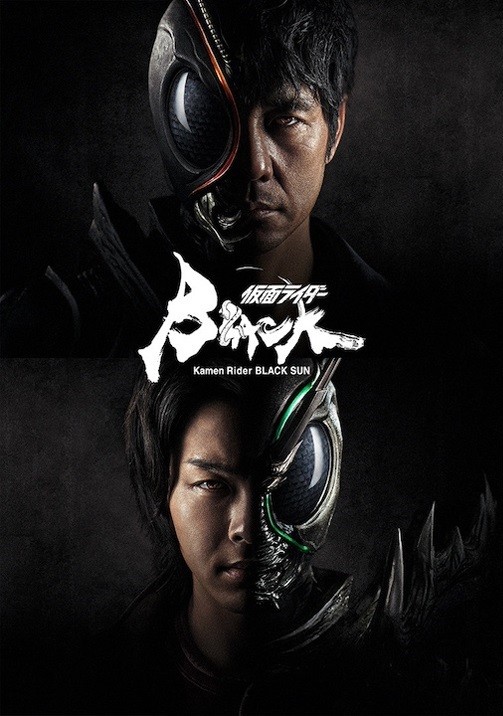
In 2022, Japan has been in a state of socio-political crisis for half a century. After the government declared a policy of coexistence between humans and Kaijin, altered humanoids created through classified experiments, society has fractured. Discrimination, violence, and terrorism are rampant, with hate groups clashing against activists demanding equal rights. In this chaotic world, a young and idealistic human rights activist named Aoi Izumi fights to end the persecution of Kaijin. Her quest for justice leads her to a fateful encounter with a weary, disillusioned man: Kotaro Minami.
Kotaro is a former member of Gorgom, a militant group that originally fought for Kaijin liberation but has since transformed into a political organization that reveres a dying, god-like entity known as the Creation King. Kotaro is not an ordinary human; he is a Kaijin known as Black Sun, a candidate chosen to become the next Creation King. His body houses one of two Kingstones, mystical objects of immense power. The other Kingstone belongs to his sworn brother, Nobuhiko Akizuki, who has been imprisoned and experimented on for fifty years and is known as Shadow Moon.
The narrative unfolds across three interconnected timelines. The first reveals the origins of the Kaijin in the mid-20th century, when the Japanese government, led by a calculating politician named Shinichi Tounami, conducted horrific biological weapon experiments on human subjects, creating the first Creation King. The second timeline follows Kotaro and Nobuhiko as children in the 1970s. After being adopted by a scientist connected to the project, the two boys are forcibly transformed into cyborgs and implanted with the Kingstones. They join a revolutionary group called Gorgom (originally named "Five Laws of Protection") to fight for Kaijin rights, but a violent confrontation with authorities leads to Nobuhiko's capture and Kotaro's escape, leaving him to wander for decades.
In the present day, Kotaro is a reluctant hero, haunted by his past and unwilling to engage in the escalating conflict. However, his meeting with Aoi, who wears a pendant containing a fragment of the Kingstones, reignites the struggle. Nobuhiko, having finally broken free from his captivity, seeks out Kotaro. Unlike his brother, Nobuhiko has not lost his resolve. He is determined to fulfill their old promise: to kill the suffering Creation King and permanently destroy the Gorgom system. To do this, he must forcibly extract Kotaro's Kingstone and merge it with his own.
The series explores the clashing ideologies of its two protagonists. Kotaro, having seen too much bloodshed, believes that killing the Creation King will only lead to more chaos and that true peace requires breaking the cycle of hatred, not just destroying its source. Nobuhiko, hardened by his half-century of torment, adopts a fascistic solution: he will use the power of the new Creation King to rule over both humans and Kaijin, forcing them into submission to achieve order. Their conflict is manipulated by the Gorgom Priests Darom, Bishium, and Baraom, who seek to maintain their power, and by Prime Minister Tounami, who views the Kaijin as disposable tools for political gain and military power.
As the struggle intensifies, Aoi finds herself caught between the two former brothers. She represents a third path, one of genuine coexistence and non-violent resistance, inspiring even cynical monsters like the Whale Kaijin and the Bat Kaijin to defy their masters. The story culminates in a brutal confrontation where Kotaro is forced to accept his destiny, not as a conqueror, but as a martyr. He allows himself to become the new Creation King, and in doing so, gives Aoi and the resistance the chance to end the cycle permanently by destroying him. The final act is a tragic deconstruction of the hero myth, questioning whether true justice can be achieved through power, and whether a monster can ever truly be free. The series concludes not with a celebration of victory, but with a sobering look at the lingering scars of prejudice and the long, difficult road toward genuine equality, suggesting that the real monsters are not the Kaijin, but the systems and ideologies that create them.
Kotaro is a former member of Gorgom, a militant group that originally fought for Kaijin liberation but has since transformed into a political organization that reveres a dying, god-like entity known as the Creation King. Kotaro is not an ordinary human; he is a Kaijin known as Black Sun, a candidate chosen to become the next Creation King. His body houses one of two Kingstones, mystical objects of immense power. The other Kingstone belongs to his sworn brother, Nobuhiko Akizuki, who has been imprisoned and experimented on for fifty years and is known as Shadow Moon.
The narrative unfolds across three interconnected timelines. The first reveals the origins of the Kaijin in the mid-20th century, when the Japanese government, led by a calculating politician named Shinichi Tounami, conducted horrific biological weapon experiments on human subjects, creating the first Creation King. The second timeline follows Kotaro and Nobuhiko as children in the 1970s. After being adopted by a scientist connected to the project, the two boys are forcibly transformed into cyborgs and implanted with the Kingstones. They join a revolutionary group called Gorgom (originally named "Five Laws of Protection") to fight for Kaijin rights, but a violent confrontation with authorities leads to Nobuhiko's capture and Kotaro's escape, leaving him to wander for decades.
In the present day, Kotaro is a reluctant hero, haunted by his past and unwilling to engage in the escalating conflict. However, his meeting with Aoi, who wears a pendant containing a fragment of the Kingstones, reignites the struggle. Nobuhiko, having finally broken free from his captivity, seeks out Kotaro. Unlike his brother, Nobuhiko has not lost his resolve. He is determined to fulfill their old promise: to kill the suffering Creation King and permanently destroy the Gorgom system. To do this, he must forcibly extract Kotaro's Kingstone and merge it with his own.
The series explores the clashing ideologies of its two protagonists. Kotaro, having seen too much bloodshed, believes that killing the Creation King will only lead to more chaos and that true peace requires breaking the cycle of hatred, not just destroying its source. Nobuhiko, hardened by his half-century of torment, adopts a fascistic solution: he will use the power of the new Creation King to rule over both humans and Kaijin, forcing them into submission to achieve order. Their conflict is manipulated by the Gorgom Priests Darom, Bishium, and Baraom, who seek to maintain their power, and by Prime Minister Tounami, who views the Kaijin as disposable tools for political gain and military power.
As the struggle intensifies, Aoi finds herself caught between the two former brothers. She represents a third path, one of genuine coexistence and non-violent resistance, inspiring even cynical monsters like the Whale Kaijin and the Bat Kaijin to defy their masters. The story culminates in a brutal confrontation where Kotaro is forced to accept his destiny, not as a conqueror, but as a martyr. He allows himself to become the new Creation King, and in doing so, gives Aoi and the resistance the chance to end the cycle permanently by destroying him. The final act is a tragic deconstruction of the hero myth, questioning whether true justice can be achieved through power, and whether a monster can ever truly be free. The series concludes not with a celebration of victory, but with a sobering look at the lingering scars of prejudice and the long, difficult road toward genuine equality, suggesting that the real monsters are not the Kaijin, but the systems and ideologies that create them.
Cast
- Hidetoshi Nishijima
- Baijaku Nakamura
- Pretty Ohta
- Tomoya Nakamura
- Whale Mutant
- Takahiro Miura
Comment(s)
Staff
- DirectorKazuya Shiraishi
- MusicKenta Matsukuma
- Executive producerShinichiro Shirakura
- Chief Executive ProducerFumio YoshimuraKeisuke FurusawaKunihiko Shibata
- Music ProductionSCRAMBLES
- Production CommitteeAkira ShimuraHaruhisa ŌyaMitsutaka InoueNaoyuki ShibataTakeshi KanekoYū Sakamoto
- SupervisionAkira Onodera
- Theme Song CompositionKenta MatsukumaRyūdō Uzaki
- Theme Song PerformanceChogakusei
- ScreenplayIzumi Takahashi
- Original creator
- ProducerHaruhiko HasegawaHirohisa MukujuMasahiko Sato
- Concept VisualShinji Higuchi
- PlanningTaisuke Furuya
- Special EffectsKiyotaka Taguchi
- Theme Song ArrangementEiji KawamuraSCRAMBLES
- Theme Song LyricsKenta MatsukumaYōko Aki
Production
- ProductionBandai Co., Ltd.Toei Company, Ltd.ADK Emotions
- Internet StreamingAmazon Prime Video
- DistributorToei Video Co., Ltd.
- Production StudioKadokawa Daiei Studio