Live action TV
Description
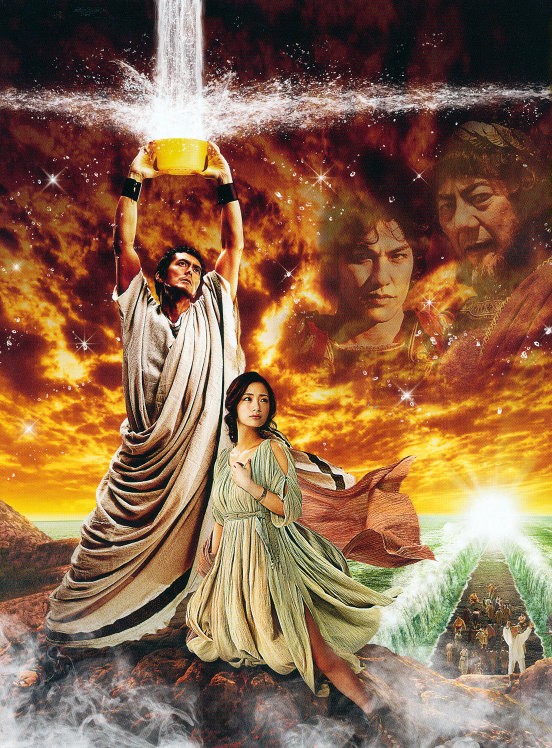
The live-action adaptation of Thermae Romae, released as two films in 2012 and 2014, centers on Lucius Modestus, a serious and accomplished bathhouse architect in ancient Rome during the reign of Emperor Hadrian. Despite his skill, Lucius suffers from creative stagnation, struggling to design innovative public baths that will impress the empire's citizens and its ruler. His frustration leads him to discover a mysterious underground passage connected to a bathhouse. When he submerges himself, he is inexplicably pulled through time and space, surfacing in a modern-day Japanese sento, a public bathhouse.
Lucius perceives the flat-featured Japanese people as a race of "slaves" and their advanced bathing culture as the work of geniuses. He is astonished by features like wall-mounted showers, small stools for scrubbing, intricate tile art, and cold bottles of fruit-flavored milk. After the vision ends and he returns to Rome, he incorporates these foreign concepts into his designs, which are met with great success and acclaim. This accidental time-slip becomes a recurring phenomenon; every time Lucius encounters a design problem, he is pulled into the future to a different facet of Japan's bathing world, from natural hot spring resorts to private home baths, which he then adapts for a Roman audience.
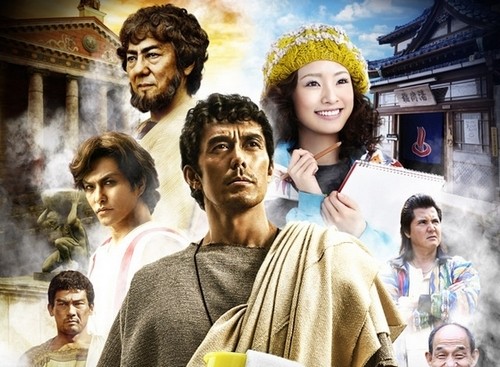
The central conflict arises from Luciuss inability to explain his genius, which leads his peers and Emperor Hadrian to suspect he is either insane or hiding secrets. His repeated travels put a strain on his personal life, costing him his marriage and creating dangerous political intrigue. In the live-action films, directed by Hideki Takeuchi, the tall and imposing Hiroshi Abe portrays Lucius as a stoic but deeply expressive Roman whose dignity is constantly undone by his awe of Japanese culture. The main Japanese character is Satsuki Odate, played by Aya Ueto, a museum curator and aspiring manga artist who is an expert in Roman history. She encounters Lucius in the bathhouse and, able to speak Latin, becomes his primary bridge to the modern world, helping him understand the culture he so frequently visits.
The narrative arcs follow Lucius as he uses his stolen innovations to rise from a struggling architect to the emperors personal bath designer. His projects range from building healing outdoor baths near Mount Vesuvius for a sickly consul to designing private, heated baths that allow Emperor Hadrian a quiet space to strategize military campaigns. Each solution is played for comedy, but the story also carries a sincere message about the universal power of bathing as a tool for relaxation, healing, and social bonding. The first film culminates with Lucius becoming a celebrated figure, while the sequel explores the consequences of his fame and his continued attempts to return to the future to reunite with Satsuki.
Lucius perceives the flat-featured Japanese people as a race of "slaves" and their advanced bathing culture as the work of geniuses. He is astonished by features like wall-mounted showers, small stools for scrubbing, intricate tile art, and cold bottles of fruit-flavored milk. After the vision ends and he returns to Rome, he incorporates these foreign concepts into his designs, which are met with great success and acclaim. This accidental time-slip becomes a recurring phenomenon; every time Lucius encounters a design problem, he is pulled into the future to a different facet of Japan's bathing world, from natural hot spring resorts to private home baths, which he then adapts for a Roman audience.
The central conflict arises from Luciuss inability to explain his genius, which leads his peers and Emperor Hadrian to suspect he is either insane or hiding secrets. His repeated travels put a strain on his personal life, costing him his marriage and creating dangerous political intrigue. In the live-action films, directed by Hideki Takeuchi, the tall and imposing Hiroshi Abe portrays Lucius as a stoic but deeply expressive Roman whose dignity is constantly undone by his awe of Japanese culture. The main Japanese character is Satsuki Odate, played by Aya Ueto, a museum curator and aspiring manga artist who is an expert in Roman history. She encounters Lucius in the bathhouse and, able to speak Latin, becomes his primary bridge to the modern world, helping him understand the culture he so frequently visits.
The narrative arcs follow Lucius as he uses his stolen innovations to rise from a struggling architect to the emperors personal bath designer. His projects range from building healing outdoor baths near Mount Vesuvius for a sickly consul to designing private, heated baths that allow Emperor Hadrian a quiet space to strategize military campaigns. Each solution is played for comedy, but the story also carries a sincere message about the universal power of bathing as a tool for relaxation, healing, and social bonding. The first film culminates with Lucius becoming a celebrated figure, while the sequel explores the consequences of his fame and his continued attempts to return to the future to reunite with Satsuki.
Cast
- AntoniusKai Shishido
- OP Narration
- Antonino
- Ceionio
- Supervisore Showroom
- Shuzo Yamakoshi
- Il Nonno
- Mami Yamakoshi
- Centurione
- Yumi YamakoshiMidoriko Kimura
- Il Professore
Comment(s)
Staff
- DirectorHideki Takeuchi
- MusicNorihito Sumitomo
- ProducerKaoru MatsuzakiMiyoshi KikuchiNaoto Inaba
- ScreenplayShōgo Mutō
- Original creator
- ProductionAtsushi TeradaChihiro KameyamaHirokazu HamamuraMinami Ichikawa
Production
- ProductionTOHOFuji Television NetworkEnterbrainDentsu Inc.2012 「Thermae Romae」 Production Committee