
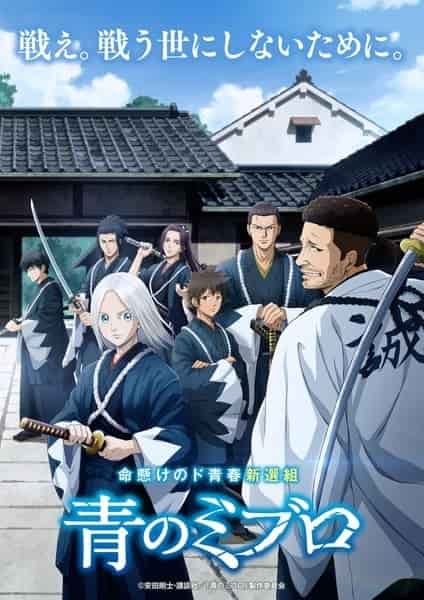
TV-Series
Description
"The Blue Wolves of Mibu" is set during the Bakumatsu period in Japan, a time of political upheaval and social change as the Tokugawa shogunate nears its end. The story centers on Nio, a young orphan raised in the slums of Kyoto, who becomes entangled with the Shinsengumi, a group of elite swordsmen tasked with maintaining order and protecting the shogunate. Nio’s life takes a dramatic turn when he encounters the charismatic and ruthless Hijikata Toshizo, the vice-commander of the Shinsengumi, who recognizes Nio’s potential as a fighter. Drawn into the world of the Shinsengumi, Nio must navigate the complexities of loyalty, honor, and survival in a time of chaos.
The narrative explores the internal and external conflicts faced by the Shinsengumi as they strive to uphold their ideals amidst the crumbling social order. Nio’s journey is one of self-discovery, as he grapples with his own moral compass and the harsh realities of war. The series delves into the relationships between the Shinsengumi members, particularly the bond between Nio and Hijikata, as well as the group’s interactions with rival factions, such as the Ishin Shishi, who seek to overthrow the shogunate. Themes of duty, sacrifice, and the cost of violence are central to the story, as characters are forced to confront the consequences of their actions in a rapidly changing world.
The plot is driven by historical events and fictionalized elements, blending action, drama, and political intrigue. Key historical figures, such as Kondo Isami and Okita Soji, are portrayed alongside original characters like Nio, creating a dynamic interplay between fact and fiction. The series highlights the tension between personal desires and collective responsibility, as the Shinsengumi struggle to maintain their unity and purpose in the face of betrayal and loss. Through its exploration of loyalty, ambition, and the human cost of revolution, "The Blue Wolves of Mibu" offers a compelling portrayal of a pivotal era in Japanese history.
The narrative explores the internal and external conflicts faced by the Shinsengumi as they strive to uphold their ideals amidst the crumbling social order. Nio’s journey is one of self-discovery, as he grapples with his own moral compass and the harsh realities of war. The series delves into the relationships between the Shinsengumi members, particularly the bond between Nio and Hijikata, as well as the group’s interactions with rival factions, such as the Ishin Shishi, who seek to overthrow the shogunate. Themes of duty, sacrifice, and the cost of violence are central to the story, as characters are forced to confront the consequences of their actions in a rapidly changing world.
The plot is driven by historical events and fictionalized elements, blending action, drama, and political intrigue. Key historical figures, such as Kondo Isami and Okita Soji, are portrayed alongside original characters like Nio, creating a dynamic interplay between fact and fiction. The series highlights the tension between personal desires and collective responsibility, as the Shinsengumi struggle to maintain their unity and purpose in the face of betrayal and loss. Through its exploration of loyalty, ambition, and the human cost of revolution, "The Blue Wolves of Mibu" offers a compelling portrayal of a pivotal era in Japanese history.
Cast
- Isami Kondō
- Jutarō Komura
- Genzaburo Inoue
- Hound
- Gorō Hirayama
- Yōtarō Kyohachi
- Shinpachi Nagakura
- Agitator
- Sanosuke Harada
- Yūichirō Umehara
- Firework Maker
- Kenji Noguchi
- Tarō Tanaka
- Kintomo Anegakōji
- Snake
- Fiend
- Sōji Okita
- Keisuke Yamanami
- Ayame
- Seto
- Sakura
- Jusuke Hirama
- Iroha Chirinu
- Heisuke Todo
Comment(s)
Staff
- DirectorKumiko Habara
- Original creator
- Sound DirectorToshiki Kameyama
- Art DirectorSatoshi Shibata
- Director of PhotographyYukina Nomura
- Series CompositionKenta Ihara
- Character DesignMiyako NishidaYūko Ōba
- MusicYūki Hayashi
- Cgi DirectorDick Ogahara
- ProducerSatoshi SuzukiHiroya NakataHarumi Satō
Production
- Animation ProductionMaho Film
News2


Relations
Recommendations based on shared tags.
Anime overview

Manga overview

Music
Opening