TV-Series
Description
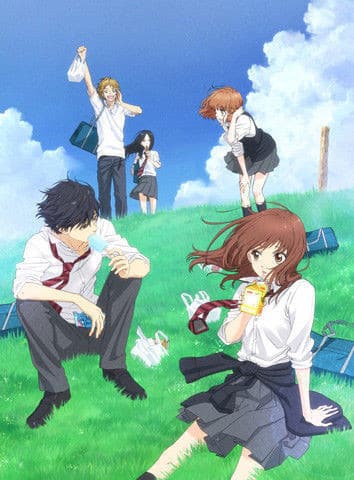
"Ao Haru Ride" centers on Futaba Yoshioka, a high school student who struggles with her identity and relationships. In middle school, Futaba was popular among boys but disliked by girls due to her tomboyish appearance and outgoing personality. To fit in, she suppressed her true self, adopting a more reserved demeanor. During this time, she developed feelings for Kou Tanaka, a quiet and introspective classmate. Their mutual attraction led to a tentative connection, but Kou abruptly transferred schools without explanation, leaving Futaba heartbroken.
Years later, Futaba enters high school determined to avoid romantic entanglements and maintain a low profile. However, she unexpectedly reunites with Kou, who now goes by the name Kou Mabuchi. His personality has changed significantly; he is more aloof and distant, with a hardened demeanor. Despite this, Futaba remains drawn to him and seeks to understand what caused his transformation. As they reconnect, it becomes clear that Kou’s past is marked by personal loss and emotional turmoil, particularly the death of his mother, which shaped his current outlook on life.
The narrative explores their evolving relationship, as well as the complexities of their interactions with other characters. Yuri Makita, a kind and supportive friend, becomes a confidante for Futaba, while Shuko Murao, a classmate with her own insecurities, adds depth to the group dynamic. Kou’s childhood friend, Aya Kominato, also plays a significant role, revealing further layers of Kou’s past and his struggles with guilt and self-worth.
Throughout the series, themes of self-discovery, forgiveness, and the impact of past experiences on present relationships are prominent. Futaba grapples with reconciling her authentic self with societal expectations, while Kou confronts his emotional barriers and learns to open up. Their journey is marked by moments of vulnerability, misunderstandings, and gradual growth, as they navigate the challenges of adolescence and the lingering effects of their shared history. The story balances emotional depth with lighthearted moments, creating a nuanced portrayal of teenage life and the complexities of human connection.
Years later, Futaba enters high school determined to avoid romantic entanglements and maintain a low profile. However, she unexpectedly reunites with Kou, who now goes by the name Kou Mabuchi. His personality has changed significantly; he is more aloof and distant, with a hardened demeanor. Despite this, Futaba remains drawn to him and seeks to understand what caused his transformation. As they reconnect, it becomes clear that Kou’s past is marked by personal loss and emotional turmoil, particularly the death of his mother, which shaped his current outlook on life.
The narrative explores their evolving relationship, as well as the complexities of their interactions with other characters. Yuri Makita, a kind and supportive friend, becomes a confidante for Futaba, while Shuko Murao, a classmate with her own insecurities, adds depth to the group dynamic. Kou’s childhood friend, Aya Kominato, also plays a significant role, revealing further layers of Kou’s past and his struggles with guilt and self-worth.
Throughout the series, themes of self-discovery, forgiveness, and the impact of past experiences on present relationships are prominent. Futaba grapples with reconciling her authentic self with societal expectations, while Kou confronts his emotional barriers and learns to open up. Their journey is marked by moments of vulnerability, misunderstandings, and gradual growth, as they navigate the challenges of adolescence and the lingering effects of their shared history. The story balances emotional depth with lighthearted moments, creating a nuanced portrayal of teenage life and the complexities of human connection.
Episodes
Staffel 1
1Page. 1
Futaba Yoshioka enters high school determined to shed her middle school image. She acts unrefined,speaks bluntly, and distances herself from femininity to avoid repeating past ostracism. On the first day, she meets Kou Mabuchi, but he now goes by the name Kou Tanaka. He recognizes her immediately but shows no interest in rekindling their middle school connection. Futaba initially does not recognize him because his demeanor has shifted from kind and warm to aloof and detached. She later discovers a familiar name on a library book and realizes he is the same person who helped her during a past incident. Kou explains that his parents divorced, causing his surname change and his move away from their middle school town. Futaba attempts to maintain her new persona while Kou observes her efforts with apparent indifference. During a school event, she helps him retrieve a lost item, and he thanks her with a brief smile. After school, Kou reveals that he has known her identity since the start and remarks that her forced behavior does not suit her. He walks away, leaving Futaba unsettled by his directness and her own unresolved feelings. The episode ends with Futaba deciding she cannot ignore her past connection to him, setting up their gradual re-acquaintance against her carefully constructed social facade.
2Page.2
Futaba Yoshioka and Kou Tanaka serve together on the library committee,a duty that forces them into regular contact. While organizing books, Futaba finds a copy with an old library card bearing the name Mabuchi, confirming Kou’s identity from middle school. She confronts him about his changed surname and his distant attitude. Kou admits he lost his mother a few years ago and now lives by a philosophy of avoiding things that cause regret. He tells Futaba he does not want to become close to her because he fears hurting her as he did in the past. Futaba refuses to accept his rejection, insisting she wants to understand him regardless. During a quiet moment after school, Kou shows a brief, softer reaction when Futaba recalls their shared memories. He quickly withdraws again, leaving her frustrated but more determined. The episode ends with Futaba deciding to continue reaching out, even as Kou’s guarded behavior remains unchanged. Her persistence sets up a direct challenge to his self-imposed isolation.
3Love Triangle
Futaba and her friends Yuri,Makoto, and Aya attend a summer festival. Kou arrives late after initially declining the invitation. The group plays a pairing game that assigns partners at random. Kou draws Yuri, and Futaba draws Tanaka, a classmate who has openly liked her. During their walk, Tanaka confesses his feelings to Futaba, asking her to consider him. Yuri uses her time with Kou to ask why he changed since middle school, but Kou gives evasive answers. After the group reunites, Kou tells Futaba she should not wait for him, stating he is no longer the person she remembers. Futaba responds that she wants to know who he is now. Kou’s refusal to elaborate leaves the distance between them unresolved. Futaba decides to continue approaching him despite his resistance. The episode ends with Futaba reaffirming her intent to break through Kou’s emotional walls.
4Page 4
The class 2-5 decides to perform Cinderella for the cultural festival. Futaba is cast as Cinderella,and Kou receives the role of the prince. During rehearsals, Futaba struggles to stay composed when Kou stands close to her during their scenes. Kou notices her tension and offers to practice lines with her after school. In their private practice, Kou delivers the prince’s lines with unexpected intensity, causing Futaba to freeze and forget her own lines. Futaba later confronts Kou directly, asking why he changed so much since middle school. Kou explains that he misinterpreted his mother’s actions after his parents’ divorce and began keeping people at a distance. He also admits that he saw Futaba waiting for him at the middle school festival but chose not to appear, believing he no longer deserved to meet the version of her that remembered him. On the day of the cultural festival, the class performs the play. In the final scene, Kou deviates from the script, using the prince’s lines to tell Futaba that she makes him want to become a better version of himself. After the play, Futaba finds Kou alone and tells him she cannot stop thinking about him. Kou asks her not to leave him again, leaving both their feelings openly acknowledged but unresolved.
5Liar
After Kou rejects her confession,Futaba distances herself from him and spends more time with Murao and Shuuko. Murao invites Futaba to the summer festival, and Futaba agrees to attend with them. At the festival, Futaba sees Kou among the crowd and tries to avoid him, but Murao pushes her to speak with him directly. Futaba confronts Kou and asks whether he truly meant he could not fall for the same person twice. Kou admits that he had feelings for her in middle school, but he says he has changed since then and no longer believes those feelings can return. He calls himself a liar for not being honest about his own emotions. Futaba presses him further, questioning whether he is lying to himself about his current feelings. Kou does not give a clear answer, leaving his true intentions ambiguous. Despite his words, he stays near Futaba for the rest of the evening, and they watch the fireworks together. Futaba recognizes that her own feelings have not faded and that Kou’s actions contradict his stated detachment. The episode ends with Futaba deciding to stop running from her emotions, setting up a direct challenge to Kou’s unresolved and self-contradictory stance.
6Episode 6
Futaba Yoshioka arrives at the summer festival determined to speak with Kou Mabuchi about his sudden distance. She finds him standing alone,and he briefly mentions being unable to attend the study session without explaining why. Before she can press further, a former middle school classmate, Makoto, approaches Kou and confronts him about a past incident where Kou supposedly hurt someone. Kou does not deny it, and Futaba watches the exchange silently. After Makoto leaves, Kou tells Futaba that she should stay away from him because he is not the person she remembers. He walks off, leaving her at the festival. The next day at school, Futaba notices that Kou continues to isolate himself. She consults with her friends, Aya Kominato and Shuko Murao, who urge her to be direct rather than wait for Kou to explain. Futaba confronts Kou in the classroom after everyone else has left. She states that she wants to understand him, not the version from middle school. Kou reveals that he transferred schools after middle school because a fight he was involved in escalated, forcing his family to move. He admits he has been keeping others at a distance to avoid repeating that situation. Futaba tells him that isolating himself will not undo the past and that she accepts his decision to keep his distance if that is what he truly wants, but she will not pretend she does not care. The confrontation clears the immediate tension between them. Kou begins to reintegrate with the group, joining Futaba, Aya, and Shuko for lunch. However, a new development emerges when Aya reveals that a student from Kou’s previous school, Yuusuke Kominato, is transferring to their class. Aya explains that Yuusuke is her older brother and that he knows Kou from the incident that led to Kou’s transfer. Kou’s expression darkens at the news, signaling unresolved history arriving at their school.
7Page.7
The second-year class travels to Nagasaki for the school trip. Futaba watches Kou spend most of his free time with Murao,who keeps to herself and shows little interest in group activities. During a break, Futaba follows Kou when he wanders off alone, and they miss the group’s return bus. Left together in an unfamiliar part of the city, Kou admits he has been avoiding places that remind him of his mother, who died during his middle school years. He tells Futaba that returning to memories only makes him feel stuck. Futaba responds by saying she does not want to lose him again and that she has been trying to understand his changes rather than forcing him to be the person he was. Kou listens but does not offer a direct reply. When they rejoin the others, he again keeps his distance, leaving Futaba uncertain whether their conversation changed anything. Yuri notices Futaba’s quiet frustration and urges her to act on her feelings instead of waiting. Futaba resolves to keep pressing forward rather than stepping back. The episode ends with Kou watching Futaba from across the room, his expression unreadable, leaving the question of whether he will meet her effort unresolved.
8Episode 8
Futaba,Kou, Yuuri, and their classmates attend the summer festival. Kou keeps his distance from Futaba, responding to her attempts at conversation with short answers. When the group splits, Futaba searches for him and finds him sitting alone. She convinces him to walk with her, but he remains reserved. A crowd separates them, and Futaba waits by a shrine. Kou finds her and confesses that he has been avoiding her because he blames himself for his mother’s death. He explains that he stopped attending middle school after she fell ill and that he pushed everyone away to avoid burdening them. Futaba listens and tells him she wants to stay by his side. Kou touches her hair and smiles, a rare display of openness. The next day, however, he resumes his distant behavior, leaving Futaba uncertain. Yuuri observes her distress and confronts Kou, demanding that he stop toying with Futaba’s feelings. Kou walks away without responding, leaving his stance unclear.
9Page 9
Futaba and Yuri notice Kou’s detachment from classmates and his failing midterm grades. Concerned,they discuss ways to help him. Kominato confronts a group of Kou’s former classmates who taunt Kou over his academic decline, aggressively defending his friend. The incident deepens the friendship between Kou and Kominato, surprising Kou with the display of loyalty. Yuri, feeling threatened by Kou’s lingering familiarity with Futaba, attempts to close the distance between herself and Kou. Futaba seeks out Kou in the library to discuss his situation, but Toma arrives and interrupts their conversation, physically pulling Futaba away. At the cultural festival, the group navigates their shifting dynamics. Uchimiya asks Makita to date him, and she accepts, forming a new couple within the friend group. Meanwhile, Toma’s pursuit of Futaba becomes more overt, displaying a possessiveness that alarms her. Frustrated by Kou’s mixed signals and the ongoing misunderstanding involving Narumi, Futaba faces Toma’s direct confession. She agrees to date him, a decision driven by her desire to suppress her unresolved feelings for Kou. The episode concludes with Kou witnessing this new relationship begin, leaving him to confront the consequences of his own inaction.
10Page
Futaba arrives at the station before noon and waits alone for Kou. Kou appears thirty minutes later,offering no reason for the delay. At the aquarium, Kou stares at the fish tanks without speaking, and Futaba’s attempts to start a conversation meet only brief replies. Futaba directly asks why he seems so distant, and Kou admits that Narumi crossed his mind that morning. When Futaba questions whether his feelings for Narumi remain, Kou says he cannot simply erase them. They leave the aquarium and walk through a summer festival where Futaba tries to hold Kou’s hand, but he withdraws after a few seconds. Kou explains that he wants to move forward with Futaba yet needs time to settle his own emotions before committing. Futaba tells him she will wait, accepting his uncertainty. The final scene shows Kou standing apart from the crowd, watching Futaba from a distance, his jaw tight and his hands in his pockets.
11Page.11
Futaba works at the class café during the cultural festival’s second day while watching for a chance to speak with Kou. Kou continues to distance himself,preoccupied with memories of his mother and his unresolved guilt. Futaba resolves to confess her feelings directly, deciding she no longer wants to avoid the truth. She goes to the rooftop to find Kou but instead witnesses Narumi confessing to him. Narumi tells Kou she has liked him since middle school, and Kou responds by stating his feelings are already directed at someone else. Futaba only hears Kou’s refusal to see her and flees, believing he rejected her. Kou later learns of her misunderstanding and searches for her. They meet in the classroom, where Futaba forces herself to voice her confession clearly despite her fear. Kou admits he has been running away from his own feelings because he thought he did not deserve happiness. He then closes the distance and kisses Futaba, accepting her confession. The episode ends with the two agreeing to face their relationship together, leaving the upcoming challenge of how their friends and classmates will react to their new dynamic.
12Page.12
Futaba volunteers to serve as the cultural festival executive,taking on extra responsibilities to occupy her thoughts after Kou’s withdrawal. Kou continues to isolate himself, declining to participate in class activities and avoiding direct interaction with Futaba. During the festival, Futaba discovers Kou sitting alone on the school rooftop. Kou tells her about the period after his mother’s illness, explaining that he felt powerless to help her and that her death left him convinced he should not allow himself happiness. He states that he pushed people away to avoid causing them pain. Futaba responds by stating she will not stop pursuing him and that she wants to stay by his side regardless of his past. Kou asks if she will accept him knowing everything, and she affirms. They hold hands, and Kou expresses his intent to face the future with her. The two return to the festival together, walking side by side through the crowd. The episode concludes with Futaba and Kou agreeing to move forward from that point, leaving their earlier uncertainties behind.
13PAGE.13
Cast
- Yōichi Tanaka
- Shuuko Murao
- Shuko Murao
- Yūri MakitaSophie Tavert
Comment(s)
Staff
- Director
- ScriptTomoko KonparuMiharu HiramiYuka Yamada
- Episode DirectorShinpei MiyashitaYoshiyuki IchihashiShinya WatadaTomoyuki KawamuraToshiharu KudōTakumi DōyamaHidetoshi TakahashiTakatoshi Suzuki
- Original creator
- Art DirectorYūji Kaneko
- Animation DirectorKazuchika KiseMayumi WatanabeMinoru MoritaSayuri SugitōHiroki FujiwaraJunko NakamuraHitomi MiyazakiNahoko IiyamaShōko HagiwaraKana FujishiroTomoyo NakayamaYōko KubaraSeiji TachikawaTomomi KakutaniYūko HaribaKoichi KonnoReina Igawa
- Cgi DirectorKenji Isobe
- ProducerTomoyuki ŌwadaHiroyuki OkinoNorie ShimizuKatsuhiro TakeiHiroo Maruyama
- Series CompositionTomoko Konparu
- StoryboardHiroshi FukutomiShinpei MiyashitaShinobu TagashiraHiroki FujiwaraYōichi FujitaYoshiyuki IchihashiShinya WatadaToshiharu KudōTakatoshi Suzuki
- MusicHiroaki TsutsumiKeiko OsakiShota Hashimoto
- Character DesignReina Igawa
- Chief Animation DirectorSeiji TachikawaReina Igawa
- Sound DirectorYukio Nagasaki
- Director of PhotographyYukiko Matsumoto
Production
- ProductionMOVICMainichi Broadcasting SystemProduction I.GTOHOHakuhodo DY Media PartnersShueishaNippon BS Broadcasting CorporationAnimaticSony Music EntertainmentSony PCLAo Haru Ride Production Committee
- Animation ProductionProduction I.G
Relations
Manga overview