
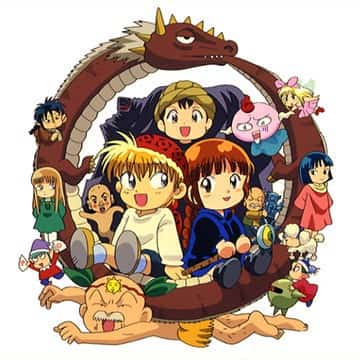
TV-Series
Description
"Doki Doki Densetsu Mahōjin Guru Guru" is a fantasy-comedy anime series that blends traditional RPG tropes with humor and adventure. The story centers on Nike, a young boy who dreams of becoming a hero, and Kukuri, a cheerful and naive girl training to be a Magical Princess. Together, they embark on a quest to defeat the Demon King and restore peace to their world. Their journey is guided by the "Guru Guru" scroll, a magical artifact that provides instructions for casting spells, which Kukuri must learn to master.
The narrative unfolds in a world heavily inspired by classic role-playing games, complete with turn-based combat, leveling systems, and dungeon exploration. Nike and Kukuri encounter a variety of eccentric characters, including rival adventurers, quirky monsters, and townsfolk with their own peculiar problems. The duo often finds themselves in absurd and comedic situations, such as battling sentient vegetables or navigating convoluted puzzles, all while staying true to their mission.
Nike, despite his aspirations, is often clumsy and lacks the typical traits of a hero, relying more on luck and determination than skill. Kukuri, on the other hand, is kind-hearted and optimistic, though her inexperience with magic frequently leads to unpredictable outcomes. Their dynamic is a key element of the series, as their contrasting personalities create both comedic and heartfelt moments.
The overarching plot involves collecting magical rings scattered across the world, which are essential for confronting the Demon King. Along the way, Nike and Kukuri face challenges that test their resolve and teamwork. The series balances its comedic tone with occasional moments of tension and character growth, particularly as the stakes rise in their quest.
"Doki Doki Densetsu Mahōjin Guru Guru" is notable for its playful parody of RPG conventions, offering a lighthearted yet engaging take on the fantasy genre. The story’s episodic structure allows for a mix of standalone adventures and overarching plot progression, making it accessible while maintaining a sense of continuity. The series appeals to fans of both comedy and fantasy, delivering a whimsical and entertaining narrative.
The narrative unfolds in a world heavily inspired by classic role-playing games, complete with turn-based combat, leveling systems, and dungeon exploration. Nike and Kukuri encounter a variety of eccentric characters, including rival adventurers, quirky monsters, and townsfolk with their own peculiar problems. The duo often finds themselves in absurd and comedic situations, such as battling sentient vegetables or navigating convoluted puzzles, all while staying true to their mission.
Nike, despite his aspirations, is often clumsy and lacks the typical traits of a hero, relying more on luck and determination than skill. Kukuri, on the other hand, is kind-hearted and optimistic, though her inexperience with magic frequently leads to unpredictable outcomes. Their dynamic is a key element of the series, as their contrasting personalities create both comedic and heartfelt moments.
The overarching plot involves collecting magical rings scattered across the world, which are essential for confronting the Demon King. Along the way, Nike and Kukuri face challenges that test their resolve and teamwork. The series balances its comedic tone with occasional moments of tension and character growth, particularly as the stakes rise in their quest.
"Doki Doki Densetsu Mahōjin Guru Guru" is notable for its playful parody of RPG conventions, offering a lighthearted yet engaging take on the fantasy genre. The story’s episodic structure allows for a mix of standalone adventures and overarching plot progression, making it accessible while maintaining a sense of continuity. The series appeals to fans of both comedy and fantasy, delivering a whimsical and entertaining narrative.
Episodes
Staffel 1
1Delightful! The morning of an Adventure
2Go Go! Dragon's Service
3Come, Come! Kukuri's Shop
4Why, Why!? Hero Is a Thief
5Kira Kira! The Light Sword is the Proof of a Hero
6Big Big Find! Migu Migu Tribe's Ruins
7Guruguru! The Only Dancer of God
8Appeared! Appeared! Yon Yon the Legendary Bird
9Zoku Zoku Appears! The Monsters are Nuisances
10Kusa Kusa! Mogeru, the Spirit of Grass
11There it is again! Scary Face
12Really Really!? Resurrection of Demon Siren
13Floaty Floaty! The Children Who Can Fly
14Afraid Afraid! Disciple? Thief Gang Gaba
15What What! Chestnut Bun and Cricket!?
16Where Where!? Secret Dream Treasure Banana Moon
17Mixed Up Party! This is the Best?
18About time, invision of Gopal castle!
Cast
- Kokori
- Cristina Hernandez
- President
Comment(s)
Staff
- DirectorJun Takagi
- ScreenplayAya MatsuiHideki Mitsui
- Episode DirectorJun TakagiShinji SakaiHiromitsu MoritaTakayoshi SuzukiKouichi SasakiHideaki UeharaAtsushi NakayamaWaruo SuzukiRiki FukushimaRyō Tachiba
- Original creator
- Art DirectorNoriko Tsutsui
- Sound DirectorSatoshi KatōKeiichirō Miyoshi
- Executive producerKōichi Motohashi
- Series CompositionHideki Mitsui
- StoryboardJun TakagiShinji SakaiHiromitsu MoritaTakeo KitaharaTakayoshi SuzukiHidetsugu HirayamaKouichi SasakiHideaki UeharaAtsushi NakayamaHideaki ŌbaKazuhisa ŌnoRiki FukushimaRyō Tachiba
- MusicNobuyuki Nakamura
- Character DesignMasahiro Kase
- Animation DirectorTakeo KitaharaMasayuki HiraokaMasahiro KaseToshio NittaTomoki MizunoToshiaki MikiMasaru HamadaJunko FunatsukaHisatoshi MotokiJōji YanaseShinichirō KajiuraTaizō Noguchi
- Director of Photography
- ProducerFukashi AzumaShinjiro YokoyamaShigeo Endō
Production
- ProductionSotsu Co., Ltd.Nippon Animation
Relations
Anime overview
Music
Opening
Ep. 1-31
Ep. 31-45