
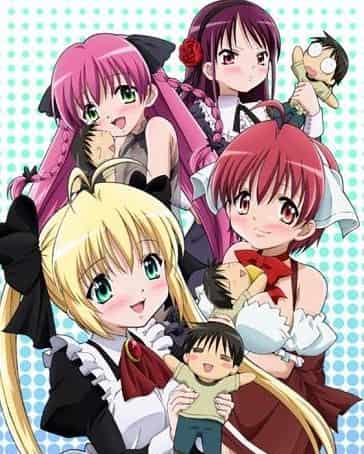
OVA
Description
"Indian Summer" is a historical drama anime set in the late 19th century, blending elements of romance, adventure, and cultural exploration. The narrative centers on a young Japanese woman named Haru, who travels to the United States during the Meiji era, a period marked by Japan's rapid modernization and opening to the West. Haru's journey is driven by her desire to learn about Western culture and bring knowledge back to her homeland, reflecting the broader societal shifts occurring in Japan at the time.
Upon arriving in America, Haru encounters a diverse cast of characters, including Thomas, a kind-hearted but struggling farmer, and Emily, a spirited journalist advocating for women's rights. The interactions between Haru and these individuals highlight the cultural contrasts and mutual learning between East and West. Haru's experiences range from adapting to rural American life to navigating the complexities of industrialization and societal change. Her growing friendship with Thomas and Emily becomes a focal point, as they support each other through personal and collective challenges.
The plot intertwines Haru's personal growth with broader historical events, such as the expansion of the American frontier and the evolving roles of women in society. Themes of identity, perseverance, and cross-cultural understanding are explored as Haru balances her Japanese heritage with her newfound experiences in America. The series also delves into the struggles of the American working class, the impact of technological advancements, and the tensions between tradition and progress.
"Indian Summer" is characterized by its attention to historical detail and its portrayal of the interconnectedness of global cultures during a transformative era. The anime presents a nuanced depiction of the Meiji era's influence on Japan and the reciprocal impact of Japanese perspectives on the West, offering a rich narrative that appeals to fans of historical fiction and character-driven storytelling.
Upon arriving in America, Haru encounters a diverse cast of characters, including Thomas, a kind-hearted but struggling farmer, and Emily, a spirited journalist advocating for women's rights. The interactions between Haru and these individuals highlight the cultural contrasts and mutual learning between East and West. Haru's experiences range from adapting to rural American life to navigating the complexities of industrialization and societal change. Her growing friendship with Thomas and Emily becomes a focal point, as they support each other through personal and collective challenges.
The plot intertwines Haru's personal growth with broader historical events, such as the expansion of the American frontier and the evolving roles of women in society. Themes of identity, perseverance, and cross-cultural understanding are explored as Haru balances her Japanese heritage with her newfound experiences in America. The series also delves into the struggles of the American working class, the impact of technological advancements, and the tensions between tradition and progress.
"Indian Summer" is characterized by its attention to historical detail and its portrayal of the interconnectedness of global cultures during a transformative era. The anime presents a nuanced depiction of the Meiji era's influence on Japan and the reciprocal impact of Japanese perspectives on the West, offering a rich narrative that appeals to fans of historical fiction and character-driven storytelling.
Episodes
Staffel 1
1Don't Look At Me Like I'm A Pig
2I'm just a left over...
3Onee-sama... Huh?
Cast
Comment(s)
Staff
- DirectorTakayuki Inagaki
- ScriptTakayuki InagakiTakashi Aoshima
- Unit DirectorKazuhiro OzawaTakayuki InagakiYūichirō Miyake
- Original creatorTakehito Mizuki
- Animation DirectorShinji OchiMasaki TanigawaMasakazu SaitōMakoto SawazakiTomoyuki KitamuraYoshiaki ŌkumaTakayuki IidaMasahiko ŌtaKōji Ogawa
- Director of PhotographyKatsushi Tanabe
- Series CompositionTakashi Aoshima
- StoryboardKazuhiro OzawaTakayuki InagakiYūichirō MiyakeKenichi Yatagai
- Music
- Art DirectorNariyuki Ogi
- Sound DirectorJin Aketagawa
Production
- ProductionAT-XShowgateGeneon Universal EntertainmentASCII Media Works
- Animation ProductionDaume
Relations
Recommendations based on shared tags.

Music