
TV-Series
Description
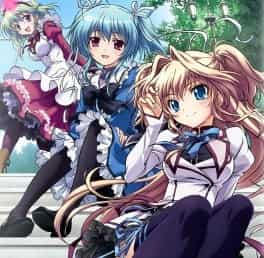
"Mashiroiro Symphony - The Color of Lovers" is a romantic drama anime centered around Shingo Uryū, a male student at the co-ed Yuihime Girls' Academy, which has recently begun admitting boys. Shingo is selected to participate in a trial integration program aimed at fostering harmony between the male and female students. The story explores his interactions with the female students as he navigates the challenges of this new environment.
The narrative begins with Shingo transferring to Yuihime Academy, where he is assigned to live in the school dormitory. He quickly becomes acquainted with several key female characters, each representing distinct archetypes within the romance genre. These include Airi Sena, a reserved and diligent classmate; Sakuno Uryū, Shingo's adoptive sister who harbors complex feelings for him; Miu Amaha, a cheerful and outgoing girl; Sana Inui, a shy and introverted student; and Angela Takatsukasa, a half-Japanese transfer student with a strong sense of justice.
As the integration program progresses, Shingo's relationships with these characters deepen, leading to moments of emotional tension and personal growth. The story delves into themes of love, friendship, and self-discovery, with each character confronting their own insecurities and desires. Airi, for instance, struggles with her feelings of inadequacy and her growing affection for Shingo, while Sakuno grapples with her conflicting emotions as both a sister and a potential romantic interest.
The plot unfolds through a series of episodic encounters, with Shingo often finding himself at the center of various misunderstandings and heartfelt moments. The anime balances lighthearted comedic elements with more serious, introspective scenes, creating a dynamic narrative that keeps the audience engaged. The integration program serves as a backdrop for exploring the complexities of human relationships, as the characters learn to overcome their differences and form meaningful connections.
By the conclusion of the series, the relationships between Shingo and the female characters reach a resolution, with some romantic arcs culminating in mutual understanding and others remaining open-ended. The anime emphasizes the importance of communication and empathy in fostering genuine relationships, leaving viewers with a sense of closure while acknowledging the ongoing nature of personal growth.
The narrative begins with Shingo transferring to Yuihime Academy, where he is assigned to live in the school dormitory. He quickly becomes acquainted with several key female characters, each representing distinct archetypes within the romance genre. These include Airi Sena, a reserved and diligent classmate; Sakuno Uryū, Shingo's adoptive sister who harbors complex feelings for him; Miu Amaha, a cheerful and outgoing girl; Sana Inui, a shy and introverted student; and Angela Takatsukasa, a half-Japanese transfer student with a strong sense of justice.
As the integration program progresses, Shingo's relationships with these characters deepen, leading to moments of emotional tension and personal growth. The story delves into themes of love, friendship, and self-discovery, with each character confronting their own insecurities and desires. Airi, for instance, struggles with her feelings of inadequacy and her growing affection for Shingo, while Sakuno grapples with her conflicting emotions as both a sister and a potential romantic interest.
The plot unfolds through a series of episodic encounters, with Shingo often finding himself at the center of various misunderstandings and heartfelt moments. The anime balances lighthearted comedic elements with more serious, introspective scenes, creating a dynamic narrative that keeps the audience engaged. The integration program serves as a backdrop for exploring the complexities of human relationships, as the characters learn to overcome their differences and form meaningful connections.
By the conclusion of the series, the relationships between Shingo and the female characters reach a resolution, with some romantic arcs culminating in mutual understanding and others remaining open-ended. The anime emphasizes the importance of communication and empathy in fostering genuine relationships, leaving viewers with a sense of closure while acknowledging the ongoing nature of personal growth.
Episodes
Staffel 1
1White-Colored Meeting
2Rejection-Colored Cooking
3Frustration-Colored Palpitation
4Airi-Colored Secret
5You-Colored Maid
6Groping-Colored Bath Time
7Twilight-Colored Swing
8Kitten-Colored Black and White
9Same-Colored Couple
10Tears-Coloured Amayadori
11Pure White-Colored Symphony
12Beginning-Colored Season
Cast
Comment(s)
Staff
- DirectorEiji Suganuma
- StoryboardAkira Satō
- MusicNijine
- Character DesignToshie Kawamura
- Chief Animation DirectorToshie Kawamura
- Sound DirectorSatoshi Yano
- ProducerYuka SakuraiShinsaku TanakaSatoshi Fukao
- Series CompositionTeam RIKKA
- Episode DirectorMitsutaka NoshitaniAkira Satō
- Original Character DesignTsubasu Izumi
- Art DirectorAyumi Satō
- Animation DirectorMakoto KogaToshie KawamuraMasami KobayashiAkemi KobayashiShinichi ShigematsuSachiko SugimotoChiyoko SakamotoShinji YamamotoManabu NiiRyo HagaMasaaki YamamotoRyōta FurukawaHitoshi MiyajimaShūichi FurukawaEmi HiranoSeok Pyo HongYuu FujimoriShō YamamotoNaoaki HōjōRyuji Tsuzuku
- Director of Photography
Production
- ProductionFrontier WorksLantisMedia Factory
- Animation ProductionManglobe
Relations
Recommendations based on shared tags.


Music
Insert songs