
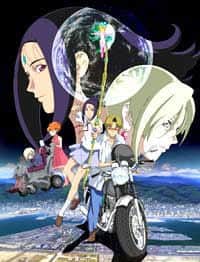
TV-Series
Description
"Earth Girl Arjuna" is a 13-episode anime series that blends science fiction, environmentalism, and spiritual themes. The story centers on Juna Ariyoshi, a high school girl who dies in a motorcycle accident but is revived by a group of mysterious beings known as the Raaja. These entities grant her the power to perceive and combat environmental degradation, appointing her as the "Avatar of Time" to save Earth from ecological collapse. Juna's newfound abilities allow her to see the world's suffering, including the pain of animals, the destruction of ecosystems, and the invisible pollution caused by human activity.
As Juna begins her mission, she encounters Chris Hawken, a scientist and environmental activist who becomes her mentor and guide. Together, they confront the Raaja, alien entities that manifest as destructive forces representing humanity's exploitation of nature. Juna struggles with the emotional and psychological toll of her role, as her heightened awareness exposes her to the overwhelming scale of environmental devastation. The series explores her internal conflict between her desire to live a normal life and her responsibility to protect the planet.
Throughout the narrative, Juna learns about the interconnectedness of all life and the consequences of humanity's actions. The story delves into themes of sustainability, spirituality, and the balance between technological progress and environmental preservation. Juna's journey is marked by encounters with various characters, including her childhood friend Tokio Oshima, who provides emotional support, and Teresa Wong, a fellow Avatar who offers insight into the challenges of their shared mission.
The series incorporates elements of Hindu mythology, particularly the concept of the avatar, as well as references to quantum physics and ecological science. The Raaja are depicted as both antagonists and manifestations of humanity's collective impact on the planet, serving as a metaphor for the consequences of unchecked industrialization and consumerism. Juna's growth as a character is central to the narrative, as she evolves from a reluctant savior to a determined advocate for Earth's future.
"Earth Girl Arjuna" presents a thought-provoking exploration of environmental issues, blending a personal coming-of-age story with a broader critique of modern society's relationship with nature. The series emphasizes the urgency of addressing ecological crises while highlighting the emotional and spiritual dimensions of environmental activism.
As Juna begins her mission, she encounters Chris Hawken, a scientist and environmental activist who becomes her mentor and guide. Together, they confront the Raaja, alien entities that manifest as destructive forces representing humanity's exploitation of nature. Juna struggles with the emotional and psychological toll of her role, as her heightened awareness exposes her to the overwhelming scale of environmental devastation. The series explores her internal conflict between her desire to live a normal life and her responsibility to protect the planet.
Throughout the narrative, Juna learns about the interconnectedness of all life and the consequences of humanity's actions. The story delves into themes of sustainability, spirituality, and the balance between technological progress and environmental preservation. Juna's journey is marked by encounters with various characters, including her childhood friend Tokio Oshima, who provides emotional support, and Teresa Wong, a fellow Avatar who offers insight into the challenges of their shared mission.
The series incorporates elements of Hindu mythology, particularly the concept of the avatar, as well as references to quantum physics and ecological science. The Raaja are depicted as both antagonists and manifestations of humanity's collective impact on the planet, serving as a metaphor for the consequences of unchecked industrialization and consumerism. Juna's growth as a character is central to the narrative, as she evolves from a reluctant savior to a determined advocate for Earth's future.
"Earth Girl Arjuna" presents a thought-provoking exploration of environmental issues, blending a personal coming-of-age story with a broader critique of modern society's relationship with nature. The series emphasizes the urgency of addressing ecological crises while highlighting the emotional and spiritual dimensions of environmental activism.
Episodes
Staffel 1
1The Girl Who Watched Time
High school student Juna rides on the back of Tokio’s motorcycle along a coastal road. A truck swerves into their lane,and the bike crashes through a guardrail. Juna’s soul separates from her body at the moment of impact. She watches her own body fall toward the water below. A boy named Chris appears beside her and explains that she has died but can still choose to return. He shows her a vision of Earth’s timeline, revealing the accelerating decay of the planet’s ecosystems. Juna sees the consequences of human industry, resource depletion, and pollution unfolding in rapid succession. She accepts Chris’s offer to return to life, and her soul reenters her body. Paramedics revive her at the scene of the accident. After waking in a hospital, Juna discovers that her perception has changed: she now sees a shimmering, fluid energy surrounding all living things. When she looks at the city, she perceives the same energy bleeding out from cracks in the ground and swirling around power lines. Tokio visits her, but she recoils when she sees a dark, insect-like creature feeding on the energy emanating from him. Chris appears again and tells her that these creatures are drawn to imbalance and that she has become an "Arjuna," one who can sense and confront them. She protests that she only wants a normal life, but Chris leaves her with the warning that ignoring the creatures will allow them to multiply. The episode closes with Juna standing at her hospital window, watching the city’s energy fray at the edges while a swarm of the creatures gathers in the distance.
2The Blue Light
A Raaja attacks a nuclear power plant,forcing the organization SEED to respond. Teresa and her colleagues struggle against the creature as the plant’s director looks on. Juna arrives at the scene but loses control when fear overwhelms her. She receives the Holy Bow Gandiva, a weapon meant to aid her in battle. Panic causes her to summon Ashura, the many-armed Protector of Time, who fights the Raaja in her place. Chris confronts Juna after the clash and corrects her understanding of her role. He explains that her task is not to destroy the Raaja but to purify them. Chris takes over the fight to demonstrate the proper method. Juna resists standing aside and insists she can contribute without causing further destruction. Her struggle to master her power and her fear leaves her caught between her desire to help and her inability to act without intervention. The episode closes with Juna determined to prove she can control her abilities and fulfill her mission on her own terms.
3Tears of the Forest
Chris forces Juna to undergo body purification by helicopter,dropping her alone in a remote mountain range. Tokio argues against the decision, but Chris counters that the Earth’s condition no longer allows prioritizing individual human safety. Unable to stop the plan, Tokio resolves to find Juna himself. He first visits Juna’s mother, who accuses him of becoming a liar like everyone else associated with the organization. Alone in the wilderness, Juna begins to perceive the natural world’s rhythms, gradually learning to resonate with her surroundings. Tokio’s search leads him to a landfill on the mountain, where he detects a Raaja concealed within the waste. The presence of the Raaja introduces a direct physical threat to Juna’s unsupervised training. While Juna deepens her connection with the forest, Tokio faces the immediate danger of confronting the creature without her knowledge. The episode concludes with the Raaja’s emergence, forcing Tokio to act before the monster reaches Juna.
4Episode 4
5The Small Voices
Juna and Tokio return to Kobe after their time in the mountains. Juna experiences sudden,painful visions in the city, a side effect from the amulet Chris gave her. Teresa informs her SEED commander about a virus spreading across western Japan from genetically engineered agriculture. At a fast food restaurant, the perils of Juna's new ability become clear when she sees the suffering behind the food. Tokio contracts the virus, which manifests as a Raaja attacking from inside his body. Juna enters Tokio's body to fight the Raaja directly. She confronts the Raaja that lurks within both of them to save Tokio's life. The battle forces Juna to use her powers in a deeply personal way, moving beyond external threats. She destroys the Raaja inside Tokio and stabilizes his condition. The experience leaves Juna aware that human bodies and the environment are inseparably linked. Juna faces the immediate consequence of her friend's vulnerability and the growing scale of the Raaja's infiltration through modern food systems.
6First one
Juna returns home as summer break ends and reunites with her father,who is unaware of the transformation she underwent after her accident. Her newly heightened senses immediately clash with the artificial environment of her everyday life. In the classroom, she perceives the teachers' words as hollow and struggles to tolerate the robotic manner in which her classmates follow lessons. Her growing unease isolates her from her peers, and she fears becoming an outcast due to her inability to conform. A Raaja infiltrates the school, forcing Juna to confront a threat that blurs the line between the physical world and the social structures around her. The episode frames modern education itself as a form of pressure that Juna can no longer accept without resistance. Her conflict shifts from fighting external monsters to questioning the manufactured reality of human society. The tension within her family escalates as her changed perspective creates distance between her and her father. Juna faces the direct consequence of her transformation: the easy path of fitting in is no longer available to her. The episode closes with her standing apart from the very community she once belonged to, setting up a deeper examination of what it costs to be the first person to change.
7Chrysalis
Juna and Chris track a raika swarm to a coastal facility where scientists prepare to destroy the creatures with sonic weapons. Juna enters a massive chrysalis-like raika against Chris’s warnings,and the organism envelops her. Inside, she experiences visions of Earth’s primordial biology and learns that the raika naturally absorb and neutralize human-generated pollution. The raika’s assimilation grants Juna a direct perception of the planet’s systemic functions. Meanwhile, Tokio accepts a pill from a classmate that induces euphoria and numbs physical sensation. His friend Kimura warns him of the drug’s dependency and dissociation risks, but Tokio continues using it to suppress guilt over a previous accident. Juna emerges from the raika with a transformed understanding, seeing the creatures as part of Earth’s immune response rather than an enemy. She interrupts the scientists’ attack, forcing them to halt their operation. When Juna returns home, she finds Tokio emotionally withdrawn and reliant on the drug, their growing distance setting up a confrontation between her new awareness and his escape into artificial relief.
8The Distant Rain
The strain of Juna’s role as the chosen one pushes her relationship with Tokio toward breaking point. Juna watches Tokio meet with Sayuri,her rival, and the sight unsettles her. Cindy appears and questions Juna directly about whether her relationship with Tokio is already over. Cindy tells Juna that since childhood, even before birth, Juna possessed the ability to sense the joy and pain of others. Juna struggles to accept memories from when she was an embryo. Cindy claims she can hear the cries of unborn children who never received life in this world. Juna’s thoughts remain divided between Tokio and Sayuri despite her lingering feelings for Tokio. The episode portrays Juna as both the wielder of the holy bow Gandiva and a teenager caught in romantic turmoil. Rain falls throughout, reflecting the emotional distance opening between the characters. The immediate consequence leaves Juna isolated, her heart torn between her mission and her personal attachments. The rift with Tokio widens, setting the stage for her next confrontation with forces tied to his family.
9Episode 9
Juna and Chris travel to India to investigate the source of a seismic disturbance tied to the Raaja. They arrive in a rural region where a multinational corporation has expanded oil drilling operations. Local villagers show signs of poisoning from contaminated water supplies,and children fall ill with unexplained symptoms. Juna uses her connection to the Earth to sense the underground damage, discovering that the drilling has ruptured a subterranean aquifer. She attempts to purify the water with her powers but collapses from the effort, revealing that the pollution carries a concentrated manifestation of human greed and disregard. Chris confronts the corporation’s local supervisor, who dismisses the villagers’ suffering as an unavoidable cost of progress. Juna encounters the Asura—a collective entity born from the region’s accumulated despair—which challenges her belief that she can heal the land alone. She realizes that her power requires deeper understanding of the interconnected harm caused by industrial extraction. The episode closes with Juna accepting that stopping the destruction demands confronting the systemic forces behind it, not merely treating its symptoms.
10The Flickering Genes
Juna senses an imminent disaster at the biochemistry plant where Tokio’s father works. She attempts to warn Tokio and his father,but both dismiss her concerns and refuse to halt the experiments. Juna enters the laboratory alone, discovering that the facility conducts hazardous genetic experiments on human subjects. Tokio’s father confronts her and defends his work, arguing that his research carries scientific importance that a young girl cannot understand. Tokio arrives and engages his father in a heated argument that exposes their opposing worldviews. The father defends practical experience and scientific progress, while Tokio challenges the ethical costs and potential consequences of the experiments. Juna observes the clash and recognizes that the fundamental differences in their perceptions and values make resolution impossible. Cindy perceives Tokio’s emotional confusion and sees through his internal turmoil regarding his relationship with Juna and his father’s work. A massive Raaja approaches the biolab, confirming Juna’s premonition and transforming the ideological dispute into an immediate physical threat. The creature’s arrival forces Juna to prepare for a direct confrontation to protect the facility and everyone inside.
11The Day of No Return
Juna travels alone to a research laboratory facing an imminent biohazard disaster. The facility’s director dismisses her warnings as the vague visions of a child. He refuses to halt operations despite the escalating risk. Tokio arrives at the laboratory to find his father in charge of the facility. The confrontation between father and son quickly becomes tense. Tokio’s father remains unmoved by his son’s arguments and Juna’s evidence. Their debate reveals a deep ideological rift over responsibility and environmental safety. Juna struggles to make the laboratory director understand the severity of the threat. Tokio’s presence only intensifies the clash,leaving the situation unresolved. The laboratory remains operational, with the biohazard danger unresolved and the personal conflicts among the characters deepening.
12The Death of a Nation
Multiple Raaja attack simultaneously,plunging Japan into chaos as people flee in panic. The PDB bacteria released previously combines with the Raaja to break down modern chemicals and materials, causing widespread infrastructure collapse. Food and water become scarce, and starvation spreads across the country. The international community, including the SEED organization, abandons Japan to its fate. Tokio believes he can do nothing to change the situation but decides to rush and help Sayuri and others anyway. The US SEED quarters place Juna under house arrest because her ability to resonate with earth forces makes her a person of interest. She believes she cannot do anything for Tokio or her family and suffers from feeling useless. While confined, she struggles with the inability to act as destruction spreads across her homeland. The episode contrasts Tokio's decision to act despite his powerlessness with Juna's forced isolation from the crisis. Juna's captivity ends with her attempting to break free to reach Tokio and the others.
13The Here and Now
Massive swarms of Raaja invade Japan,plunging the human population into chaos. Tokio refuses to accept that hope is lost and resolves to save Sayuri and others caught in the disaster. Meanwhile, the SEED organization holds Juna effectively captive at its American branch, preventing her from returning home. Juna anguishes over her inability to protect Tokio, her mother, and her sister. She breaks free from SEED’s control and flies back to Japan to confront the Raaja infestation. Juna battles the Raaja across the country, but her efforts prove futile. The Raaja, having fed extensively on modern chemicals and the PDB bacteria, have grown invincible. The combined force of the Raaja and the bacteria begins breaking down all synthetic materials, causing society’s infrastructure to collapse. People face starvation and mass death as the modern world crumbles. Juna’s direct assaults fail to reverse the tide, leaving her overwhelmed by the scale of destruction. The episode concludes with a mixed resolution that underscores the cost of humanity’s imbalance with nature, leaving Juna to confront the consequences of her failure in the here and now.
Cast
- TokioKim Hasper
- Teresa Wong
- Leonardo Camilo
- Tokio Oshima
- President of the United States
- Sayuri Shirakawa
Comment(s)
Staff
- Director
- Script
- Episode DirectorHidekazu SatōYūsuke YamamotoYoshitaka FujimotoIchirō ItanoTakahiro ŌmoriAtsushi YanoTomokazu TokoroKazuo TakigawaHiroyuki TsuchiyaKenichi TakeshitaMasato KitagawaNorio MatsumotoYasuyuki ShimizuEiji KurokawaYutaka Yamahata
- Original creator
- Art DirectorMasaru OhtaMasanobu Nomura
- Art design
- Director of PhotographyShinji NasuShuichi Heishi
- Series CompositionHiroshi Ōnogi
- StoryboardKōichi ChigiraHidekazu SatōShinsaku SasakiSumio WatanabeTakahiro ŌmoriKiyotaka OhataKenichi TakeshitaKazuma MizukusaYasuyuki Shimizu
- MusicTsuneo ImahoriKeishi UrataHitoshi WatanabeMatarou MisawaHideyo TakakuwaYasuo SanoOtohiko Fujita GroupMasatsugu Shinozaki GroupJoe Kato GroupGavyn Wright StringsSeiichi TakuboSyunsuke Sakamoto
- Character DesignTakahiro Kishida
- Animation DirectorDaisuke NakayamaTetsuya KumagaiHideyuki MoriokaHiroshi ŌkuboKenji MizuhataYasuhiro SeoKōji MatsuyamaHaruo SotozakiFumitoshi OizakiMiyako YatsuMasaki HinataManabu FukazawaNorio MatsumotoMasaharu MorinakaKenichi NagataMei-Hua Chen
- Sound DirectorMasafumi Mima
- ProducerMinoru TakanashiFukashi AzumaAtsushi YukawaHidenori Itahashi
Production
- ProductionSotsu Co., Ltd.SatelightTV TokyoBandai Visual"Arjuna" production committee
- Animation ProductionSatelight
Relations
Recommendations based on shared tags.



Music
Ending
Ep. 1-2, 5-6, 8, 11