TV-Series
Description
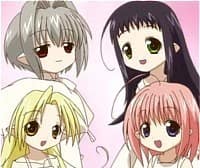
"Bottle Fairy" is a 12-episode anime series that revolves around four tiny fairies—Kururu, Chiriri, Sarara, and Hororo—who live inside bottles in a human home. Each fairy represents a season: Kururu (spring), Chiriri (summer), Sarara (autumn), and Hororo (winter). Their primary goal is to learn about the human world and eventually become human themselves. The series is episodic, with each episode focusing on the fairies' attempts to understand various aspects of human life, often leading to humorous and whimsical situations.
The fairies' interactions with their human caretaker, Sensei, serve as a central element of the narrative. Sensei, a college student, provides guidance and answers their questions, though their interpretations of his explanations often result in misunderstandings. The fairies' curiosity drives them to explore concepts such as holidays, technology, food, and cultural traditions, which they frequently misinterpret due to their limited understanding. These explorations are presented in a lighthearted and comedic manner, with the fairies' innocence and naivety creating much of the humor.
Throughout the series, the fairies' personalities are distinct and contribute to their dynamic interactions. Kururu is cheerful and optimistic, embodying the spirit of spring. Chiriri is energetic and impulsive, reflecting the vibrancy of summer. Sarara is calm and thoughtful, representing the tranquility of autumn. Hororo, the most reserved and logical of the group, symbolizes the coldness of winter. Their differing traits often lead to playful conflicts and collaborative efforts as they navigate their quest for knowledge.
The episodic structure allows for a variety of themes and topics to be explored, from everyday activities like cooking and cleaning to more abstract concepts like dreams and emotions. Despite their frequent misunderstandings, the fairies' earnest efforts to learn and grow highlight their endearing qualities. The series maintains a gentle, slice-of-life tone, with occasional moments of heartfelt reflection as the fairies ponder their ultimate goal of becoming human.
"Bottle Fairy" is characterized by its charming simplicity and focus on the fairies' journey of discovery. The narrative emphasizes their growth and the bonds they share with each other and with Sensei, creating a warm and engaging story that appeals to viewers seeking a lighthearted and whimsical experience.
The fairies' interactions with their human caretaker, Sensei, serve as a central element of the narrative. Sensei, a college student, provides guidance and answers their questions, though their interpretations of his explanations often result in misunderstandings. The fairies' curiosity drives them to explore concepts such as holidays, technology, food, and cultural traditions, which they frequently misinterpret due to their limited understanding. These explorations are presented in a lighthearted and comedic manner, with the fairies' innocence and naivety creating much of the humor.
Throughout the series, the fairies' personalities are distinct and contribute to their dynamic interactions. Kururu is cheerful and optimistic, embodying the spirit of spring. Chiriri is energetic and impulsive, reflecting the vibrancy of summer. Sarara is calm and thoughtful, representing the tranquility of autumn. Hororo, the most reserved and logical of the group, symbolizes the coldness of winter. Their differing traits often lead to playful conflicts and collaborative efforts as they navigate their quest for knowledge.
The episodic structure allows for a variety of themes and topics to be explored, from everyday activities like cooking and cleaning to more abstract concepts like dreams and emotions. Despite their frequent misunderstandings, the fairies' earnest efforts to learn and grow highlight their endearing qualities. The series maintains a gentle, slice-of-life tone, with occasional moments of heartfelt reflection as the fairies ponder their ultimate goal of becoming human.
"Bottle Fairy" is characterized by its charming simplicity and focus on the fairies' journey of discovery. The narrative emphasizes their growth and the bonds they share with each other and with Sensei, creating a warm and engaging story that appeals to viewers seeking a lighthearted and whimsical experience.
Episodes
Staffel 1
1Bottle Fairy
Four fairies named Kururu,Chiriri, Sarara, and Hororo live inside small bottles placed on a high school student's desk. The fairies wish to learn about the human world to eventually become human themselves. The episode takes place in April, the start of the Japanese school year. The human they live with, called Senseisan, announces he will attend a school entrance ceremony. The fairies do not understand what an entrance ceremony means. They seek information from Tamachan, a first-grade girl who lives next door. Tamachan provides an explanation, but her knowledge is unreliable and she misunderstands the event herself. The fairies take Tamachan's words as fact and act out what they believe happens at a ceremony. Their interpretation leads them to mimic behaviors associated with drinking alcohol. The episode concludes with the fairies becoming drunk from their imagined recreation of the ceremony. The next conflict emerges as the fairies prepare to apply their flawed understanding of human customs to the following month, May.
2May
Tamachan reminds the four fairies that Golden Week has arrived. The fairies misunderstand the concept of consecutive holidays and imagine various scenarios about how humans spend this time. Each fairy develops a different theory about what Golden Week celebrates,leading them to question Kururu's identity. Chiriri, Sarara, and Hororo each speculate that Kururu might actually be a boy based on their incomplete understanding of human customs. Kururu herself becomes confused and uncertain about her own nature from their suggestions. Tamachan interrupts their discussion to introduce a new concept called "May sickness." She explains that many humans feel tired and unmotivated after the holiday period ends. The fairies attempt to understand this condition by relating it to their own experiences of exhaustion. Their misconceptions about human life continue to pile up as they try to apply fairy logic to adult problems. The episode concludes with the four fairies and Tamachan sharing tea and donuts together. The next episode moves to June, where a love letter on Senseisan's desk introduces the fairies to romantic relationships and June brides.
3Autumn
The four fairies watch maple leaves turn red and fall from trees. Kururu picks up a leaf and attempts to eat it,but Chiriri explains that leaves change color in autumn. A squirrel gathers acorns and stores them in a tree hollow. The fairies collect additional acorns and place them near the hollow to help the squirrel. Sarara suggests holding a moon viewing party to celebrate the harvest moon. The fairies prepare rice dumplings and set up a wooden platform in the garden. Rain clouds cover the moon shortly after they begin the party. Hororo points out that the rain prevents any moon viewing. The fairies wait inside the bottle while the rain continues. The rain stops near midnight, and the fairies see the moon emerge from behind the clouds. They sit quietly on the platform and watch the moon until dawn. The next morning, they find the dumplings soaked by rain, but they remember the clear moon they saw. The fairies notice the first frost on the grass, signaling the arrival of winter.
4Winter
The four fairies wake to find frost on the window and the room unusually cold. Kururu proposes building a fire. Chiriri wraps herself in a blanket. Sarara declares that winter has arrived. Hororo sneezes and complains about the temperature. The boy explains that winter brings shorter days and longer nights. The fairies decide to try winter activities. Kururu goes outside and attempts to catch snowflakes on her tongue. Chiriri tries to knit a scarf but tangles the yarn repeatedly. Sarara builds a snowman in the garden. Hororo hides under the kotatsu and refuses to move. The fairies argue over the kotatsu’s heat setting. The boy mediates by setting a timer,giving each fairy a turn to control the temperature. Sarara turns the heat too high, melting a nearby snowball. Kururu cries over the lost snowball. The boy suggests making snow cones indoors using shaved ice. The fairies enjoy the snow cones and learn that winter offers unique pleasures. As night falls, the boy frowns at the increased heating bill. The fairies offer to reduce their kotatsu time to save money. A stronger cold front arrives, threatening to break their compromise.
5Episode 5
6Tanabata
The four fairies Kururu,Chiriri, Sarara, and Hororo gather bamboo branches from the garden. The boy brings strips of colored paper for writing Tanabata wishes. Kururu writes a wish for unlimited sweets. Chiriri wishes for a handsome prince to marry. Sarara writes a wish for the boy's continued health and happiness. Hororo wishes for a clearer telescope to observe the stars. The fairies hang their tanzaku on the bamboo. They argue that each other's wishes are too selfish. The boy explains that Tanabata commemorates the stars Orihime and Hikoboshi, who meet only once per year. He suggests they wish for the stars' reunion instead. The fairies erase their original wishes. They write new wishes asking for clear skies so Orihime and Hikoboshi can cross the Milky Way. That night, they place the bamboo outside. Clouds clear, revealing Altair and Vega shining brightly. The fairies celebrate as the two stars become visible. The next morning, rain soaks the bamboo decorations, forcing the fairies to learn how the rainy season affects their festival plans.
7October
The four fairies organize a poetry contest for the month of October. They ask Tamachan to judge which poem is best. Tamachan ignores the request and continues playing her video game. Hororo suspects that Tamachan is not paying attention and voices her doubt. Tamachan then proposes settling the contest with an obstacle course instead of judging poems. The fairies proceed to compete in relay races,cavalry battles, tug-of-war, pole pulling, and other athletic events. Chiriri senses that something has gone wrong with the competition. After the events conclude, Kururu asks who actually won the contest. Sarara answers that everyone won against their own weak hearts. The competition produces no clear winner among the fairies. Senseisan arrives with sweet potatoes that he bought for the group. The fairies eat the sweet potatoes and find them delicious. The episode ends with the fairies enjoying the food rather than resolving the poetry contest or the obstacle course results. The next episode moves into November, where the fairies will encounter a flower that refuses to bloom.
8November
9December
The episode opens on New Year's Eve with Kururu dressing as Santa Claus. Tamachan discovers the four fairies have completed none of their assigned household chores. She becomes visibly upset at their negligence. The fairies had spent their time on other activities instead of cleaning or helping around the house. The episode includes a soap opera segment that the fairies watch or participate in. The story also features tazukuri,the traditional New Year's dish of dried sardines in soy sauce, prepared in rice fields. The fairies continue their daily attempts to learn about human customs and behaviors. Their failure to perform chores creates direct tension with Tamachan, who acts as their supervisor. The unfinished work leaves the household in disarray as the year ends. The episode does not resolve the chore conflict but carries it forward. The fairies face the immediate consequence of Tamachan's anger with no clear resolution. The episode ends with the story continuing directly into January, leaving the fairies' punishment or redemption uncertain.
10January
11February
12March
13And Then
Cast
- Senseisan
- Sensei-san
- Tama-chan
- Mari Daniel
Comment(s)
Staff
- DirectorYoshiaki Iwasaki
- ScriptHideki ShiraneNoboru KimuraTakashi KawaiMakoto Uezu
- Episode Director
- Original creator
- Art DirectorToshihisa Koyama
- Sound DirectorHiromi Kikuta
- ProducerYukinao ShimojiAtsushi MoriyamaNobuhiro Ōsawa
- Series CompositionHideki Shirane
- Storyboard
- MusicSora Izumikawa
- Character DesignMasahide Yanagisawa
- Animation DirectorYoshiaki Iwasaki
- Director of PhotographyKatsutoshi Hirose
Production
- ProductionEnterbrainStudio OrpheeBottle Fairy Production Committee
- Animation ProductionXebec
Relations
Recommendations based on shared tags.