TV-Series
Description
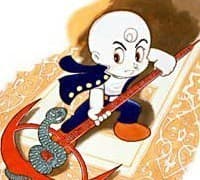
"The Three-eyed One" is a supernatural adventure anime centered around Sharaku Hosuke, a seemingly ordinary boy with a mysterious third eye hidden beneath a bandage on his forehead. This third eye, when revealed, grants him immense knowledge and power, connecting him to an ancient civilization known as the Three-Eyed Tribe. Sharaku’s life takes a dramatic turn when he discovers his true heritage as the last prince of this advanced, long-lost race. His dual identity—part human, part Three-Eyed Tribe—becomes the driving force of the narrative as he navigates the challenges of his newfound abilities and the responsibilities tied to his lineage.
The story unfolds as Sharaku embarks on a quest to uncover the secrets of his tribe and prevent the resurgence of their ancient enemies, who seek to exploit the tribe’s knowledge for destructive purposes. Alongside him is his loyal friend and protector, Hoi Hoi, a mechanical doll created by the Three-Eyed Tribe. Hoi Hoi serves as both a guide and a guardian, aiding Sharaku in his journey while providing comic relief and emotional support. The dynamic between Sharaku and Hoi Hoi is a key element of the series, balancing the high-stakes adventure with moments of levity.
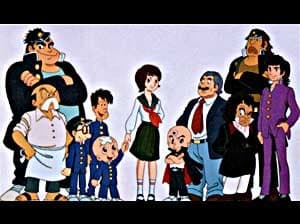
As Sharaku delves deeper into his heritage, he encounters a variety of allies and adversaries, each with their own motivations tied to the legacy of the Three-Eyed Tribe. The narrative explores themes of identity, power, and the moral implications of wielding advanced knowledge. Sharaku’s internal struggle between his human emotions and the cold, calculating nature of his Three-Eyed persona adds depth to his character, making his journey one of self-discovery as much as external conflict.
The series is structured around episodic adventures that gradually build toward a larger, overarching plot. Each episode often features Sharaku and Hoi Hoi solving mysteries, battling enemies, or uncovering relics tied to the Three-Eyed Tribe. These smaller arcs contribute to the world-building, revealing the vast influence and technological prowess of the ancient civilization while advancing Sharaku’s understanding of his role in preserving its legacy. The anime blends elements of action, mystery, and science fiction, creating a narrative that is both engaging and thought-provoking.
Throughout the series, Sharaku’s growth is marked by his increasing mastery of his abilities and his evolving sense of responsibility. The stakes escalate as he confronts powerful foes who seek to harness the tribe’s knowledge for their own gain, culminating in high-stakes battles that test his resolve and ingenuity. The interplay between Sharaku’s human side and his Three-Eyed persona becomes a central conflict, highlighting the tension between emotion and logic, compassion and ambition.
"The Three-eyed One" is a compelling exploration of identity and legacy, wrapped in a narrative filled with adventure, intrigue, and supernatural elements. Its blend of episodic storytelling and overarching plot ensures a balance between self-contained adventures and a cohesive, evolving storyline. The characters, particularly Sharaku and Hoi Hoi, are well-developed, with their interactions and growth driving the emotional core of the series. The anime’s focus on the duality of its protagonist and the moral complexities of wielding power makes it a standout in the genre.
The story unfolds as Sharaku embarks on a quest to uncover the secrets of his tribe and prevent the resurgence of their ancient enemies, who seek to exploit the tribe’s knowledge for destructive purposes. Alongside him is his loyal friend and protector, Hoi Hoi, a mechanical doll created by the Three-Eyed Tribe. Hoi Hoi serves as both a guide and a guardian, aiding Sharaku in his journey while providing comic relief and emotional support. The dynamic between Sharaku and Hoi Hoi is a key element of the series, balancing the high-stakes adventure with moments of levity.
As Sharaku delves deeper into his heritage, he encounters a variety of allies and adversaries, each with their own motivations tied to the legacy of the Three-Eyed Tribe. The narrative explores themes of identity, power, and the moral implications of wielding advanced knowledge. Sharaku’s internal struggle between his human emotions and the cold, calculating nature of his Three-Eyed persona adds depth to his character, making his journey one of self-discovery as much as external conflict.
The series is structured around episodic adventures that gradually build toward a larger, overarching plot. Each episode often features Sharaku and Hoi Hoi solving mysteries, battling enemies, or uncovering relics tied to the Three-Eyed Tribe. These smaller arcs contribute to the world-building, revealing the vast influence and technological prowess of the ancient civilization while advancing Sharaku’s understanding of his role in preserving its legacy. The anime blends elements of action, mystery, and science fiction, creating a narrative that is both engaging and thought-provoking.
Throughout the series, Sharaku’s growth is marked by his increasing mastery of his abilities and his evolving sense of responsibility. The stakes escalate as he confronts powerful foes who seek to harness the tribe’s knowledge for their own gain, culminating in high-stakes battles that test his resolve and ingenuity. The interplay between Sharaku’s human side and his Three-Eyed persona becomes a central conflict, highlighting the tension between emotion and logic, compassion and ambition.
"The Three-eyed One" is a compelling exploration of identity and legacy, wrapped in a narrative filled with adventure, intrigue, and supernatural elements. Its blend of episodic storytelling and overarching plot ensures a balance between self-contained adventures and a cohesive, evolving storyline. The characters, particularly Sharaku and Hoi Hoi, are well-developed, with their interactions and growth driving the emotional core of the series. The anime’s focus on the duality of its protagonist and the moral complexities of wielding power makes it a standout in the genre.
Episodes
Staffel 1
1Debut of the Three-eyed Boy: I am Sharaku
2Ramen War! An Angry Blow
3The Cute Little Baby is an Invader
4Looking for the Missing UFO
5Pursue the High-tech Speeding Car
6Is the Pretty Girl a Snake's Messenger?
7Sharaku Haunted
8A Three-eyed Dog is Born
9The Secret of the Three-Rock Mountain
10No Kidding? Sharaku is a Devil?
11Protect my Treasure! (Capital in Underground, pt 1)
12Protect the Underground Capital (Capital in Underground, pt 2)
13Protecting the Third Eye (Capital in Underground, pt 3)
14Space Power Explodes!
15Psychic Power vs. Super Magic
16The Legendary Monster is Discovered!
17School Entrance Examinations and Peace?
18The Mysterious Bird called Moa
19The Ancient Devil Awakened
20Open your Mind, Ancient Devil
213, 2, 1, Bang!
22Challenge of the Mysterious Thief Ozuma
23Messenger from the Ancient Times (Mystery of the Three-eyed Family, pt 1)
24Secret Under the Bottom of the Lake (Mystery of the Three-eyed Family, pt 2)
25Search for the Treasure (Mystery of the Three-eyed Family, pt 3)
26Secret Mission (Mystery of the Three-eyed Family, pt 4)
27Sharaku in Wonderland
28Villain Bumpuku Appears
29Another Sharaku (Ancient Prince Godal, pt 1)
30Look for the Ultimate Weapon! (Ancient Prince Godal, pt 2)
31Activate Gomora! (Ancient Prince Godal, pt 3)
32Earth Hijacking Plan (Ancient Prince Godal, pt 4)
33Get Back the Soul! (Ancient Prince Godal, pt 5)
34Bumpuku Reappears
35Seven Pillars Appear! (Wearied Plant Bolbocc, pt 1)
36The Mysterious Girl Moegi (Wearied Plant Bolbocc, pt 2)
37Shadow Lurking Under the Ground (Wearied Plant Bolbocc, pt 3)
38The Land Starts To Move (Wearied Plant Bolbocc, pt 4)
39Showdown; Sharaku vs. Bolbocc! (Wearied Plant Bolbocc, pt 5)
40The Monkey Speaks! (Easter Island Voyage, pt 1)
41Landing on Devil Island (Easter Island Voyage, pt 2)
42Marriage of Pogo and Sharaku? (Easter Island Voyage, pt 3)
43Goodbye, Pogo (Easter Island Voyage, pt 4)
44Going After Moa
45Big Battle Over the Mexican Sky
46Assassination Plan Against Moa
47Super Bolbocc is Revived!
48Goodbye, Sharaku Hosuke - Pledge for Tomorrow
Cast
Comment(s)
Staff
- DirectorHidehito Ueda
- Script
- MusicToshiyuki Watanabe
- Character DesignKazuhiko Udagawa
- ArtToshio KawaguchiJunji KobayashiToshi NomaKaoru KanoShinji TakeuchiShinji SeyaMasayoshi NishidaYasuhiko OgataMidori YamakuboYoshio ChataniYoshinori TanabeMasaki YoshimuraAtsuya MiuraJunichi KigawaKazunori TakahashiYuya KawaiYoshiyuki ItōKeiichirō MochizukiShigeru Katō
- Mechanical designKimitoshi Yamane
- Series CompositionMayori Sekijima
- StoryboardHidehito UedaHiroyuki YokoyamaTakaaki IshiyamaMineo FujiYoshino ShinodaTsuyoshi SerizawaKenjiro AotaShinichi MatsumiKeiichirō MochizukiYūsaku Saotome
- Original story
- Art DirectorKazuo OkadaTomoaki Matsumoto
- Animation DirectorTeruo HandaKazuhiko UdagawaEiji UemuraToshi Shishikura
- ProducerKuniaki OhnishiMitsunobu KonagaToshishige Arai
Production
- ProductionTezuka Productions
Relations
Anime overview
Manga overview