
TV-Series
Description
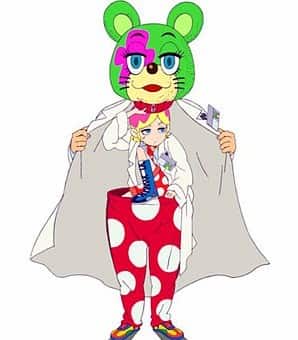
"Welcome to Irabu's Office" is a psychological anime series that revolves around the eccentric psychiatrist Dr. Ichiro Irabu and his unconventional methods of treating patients. The narrative is structured as a series of episodic cases, each focusing on a different patient who visits Irabu's clinic seeking help for their mental health issues. Dr. Irabu, a peculiar and childlike figure with a penchant for sweets and a mysterious past, employs unorthodox and often surreal techniques to guide his patients toward self-awareness and healing. His methods frequently blur the line between therapy and absurdity, creating a unique and thought-provoking atmosphere.
The series introduces a diverse cast of patients, each grappling with distinct psychological struggles, ranging from anxiety and depression to more complex conditions like dissociative identity disorder. Through their interactions with Dr. Irabu, the patients confront their inner demons, often in ways that challenge their perceptions of reality. The clinic itself serves as a surreal backdrop, with its whimsical and dreamlike aesthetic reflecting the unpredictable nature of the therapeutic process.
Assisting Dr. Irabu is Mayumi, his composed and pragmatic nurse, who often provides a grounded counterbalance to his eccentric behavior. Mayumi’s role is crucial in maintaining the clinic’s operations and occasionally offering her own insights into the patients’ conditions. The dynamic between Dr. Irabu and Mayumi adds depth to the narrative, highlighting the contrast between his chaotic approach and her methodical demeanor.
The series delves into themes of mental health, identity, and the human psyche, exploring how individuals cope with trauma and societal pressures. Each episode is self-contained, focusing on a specific patient’s journey, but recurring motifs and subtle connections between cases create an overarching narrative cohesion. The storytelling is both introspective and surreal, blending psychological depth with moments of dark humor and absurdity.
"Welcome to Irabu's Office" stands out for its innovative approach to portraying mental health issues, offering a mix of psychological insight and surreal storytelling. The series does not shy away from the complexities of the human mind, presenting its themes in a manner that is both accessible and thought-provoking. Through its unique characters and episodic structure, the anime provides a compelling exploration of the challenges and triumphs inherent in the process of self-discovery and healing.
The series introduces a diverse cast of patients, each grappling with distinct psychological struggles, ranging from anxiety and depression to more complex conditions like dissociative identity disorder. Through their interactions with Dr. Irabu, the patients confront their inner demons, often in ways that challenge their perceptions of reality. The clinic itself serves as a surreal backdrop, with its whimsical and dreamlike aesthetic reflecting the unpredictable nature of the therapeutic process.
Assisting Dr. Irabu is Mayumi, his composed and pragmatic nurse, who often provides a grounded counterbalance to his eccentric behavior. Mayumi’s role is crucial in maintaining the clinic’s operations and occasionally offering her own insights into the patients’ conditions. The dynamic between Dr. Irabu and Mayumi adds depth to the narrative, highlighting the contrast between his chaotic approach and her methodical demeanor.
The series delves into themes of mental health, identity, and the human psyche, exploring how individuals cope with trauma and societal pressures. Each episode is self-contained, focusing on a specific patient’s journey, but recurring motifs and subtle connections between cases create an overarching narrative cohesion. The storytelling is both introspective and surreal, blending psychological depth with moments of dark humor and absurdity.
"Welcome to Irabu's Office" stands out for its innovative approach to portraying mental health issues, offering a mix of psychological insight and surreal storytelling. The series does not shy away from the complexities of the human mind, presenting its themes in a manner that is both accessible and thought-provoking. Through its unique characters and episodic structure, the anime provides a compelling exploration of the challenges and triumphs inherent in the process of self-discovery and healing.
Cast
- Fukuicchi
Comment(s)
No entries available.
Staff
- Director · Kenji Nakamura
- Series Composition · Manabu Ishikawa
- Script · Manabu Ishikawa
- Script · Isao Murayama
- Script · Tomoko Taguchi
- Storyboard · Yukio Kaizawa
- Storyboard · Kenji Nakamura
- Storyboard · Takayuki Chiba
- Storyboard · Hiroyuki Kakudou
- Storyboard · Kimitoshi Chioka
- Storyboard · Kiyotaka Suzuki
- Episode Director · Hidehito Ueda
- Episode Director · Yukio Kaizawa
- Episode Director · Kenji Nakamura
- Episode Director · Kiyoshi Fukumoto
- Episode Director · Hiroyuki Kakudou
- Episode Director · Kouhei Hatano
- Episode Director · Kimitoshi Chioka
- Episode Director · Kouji Ogawa
- Music · Hideharu Mori
- Original creator · Hideo Okuda
- Character Design · Takashi Hashimoto
- Art Director · Shoji Tokiwa
- Chief Animation Director · Takashi Hashimoto
- Animation Director · Akira Takata
- Animation Director · Shinichi Sakuma
- Animation Director · Tatsuya Oka
- Animation Director · Takashi Hashimoto
- Animation Director · Megumi Ishihara
- Animation Director · Sayuri Sugifuji
- Animation Director · Natsuki Watanabe
- Animation Director · Hideoki Kusama
- Animation Director · Odahiro Watanabe
- Sound Director · Yukio Nagasaki
- Cgi Director · Nobuhiro Morita
- Director of Photography · Kazuhiro Yamada
- Producer · Takashi Washio
- Producer · Makoto Seino
- Producer · Kōji Yamamoto
Production
- Animation Production · Toei Animation
- Production · Toei Animation
- Production · Fuji TV
- Production · Asmik Ace Entertainment, Inc.
- Production · Dentsu Inc.
- Production · Sony Music Entertainment
- Production · Bunshun