OVA
Description
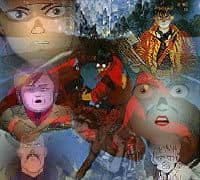
"Malice@Doll" is a surreal and dystopian anime that explores themes of identity, transformation, and existentialism within a bleak, mechanized world. The narrative centers on Malice, a robotic prostitute living in a desolate city populated entirely by mechanical beings. These robots, devoid of human presence, exist in a state of monotony, performing their programmed roles without purpose or emotion. Malice, however, begins to experience a glimmer of self-awareness, setting her apart from the other automatons.
The story takes a dramatic turn when Malice encounters a mysterious, organic creature that infects her with a strange virus. This infection triggers a transformation, turning her into a human-like being. As she grapples with her new form and the emotions it brings, Malice becomes a catalyst for change in the city. The virus begins to spread, infecting other robots and causing them to undergo similar transformations. These changes disrupt the established order, leading to chaos and confusion among the mechanical inhabitants.
As Malice navigates this shifting world, she encounters other key characters, including Doll, a fellow robot who becomes infected and transformed, and the enigmatic Overseer, a powerful entity that seeks to maintain control over the city. The Overseer views the virus as a threat to the mechanical society and attempts to suppress the transformations, leading to a conflict between the old order and the emerging humanity of the infected robots.
The narrative delves into the psychological and philosophical implications of the robots' transformations, exploring questions of free will, identity, and the nature of humanity. The city itself serves as a metaphor for a sterile, emotionless existence, while the virus represents the disruptive force of change and the potential for rebirth. The story culminates in a climactic confrontation between Malice and the Overseer, as the fate of the city and its inhabitants hangs in the balance.
"Malice@Doll" is characterized by its dark, atmospheric tone and its exploration of complex themes. The series challenges viewers to consider the boundaries between machine and human, the nature of consciousness, and the impact of change on a rigidly structured society. Through its unique premise and thought-provoking narrative, the anime offers a compelling and unsettling vision of a world in transition.
The story takes a dramatic turn when Malice encounters a mysterious, organic creature that infects her with a strange virus. This infection triggers a transformation, turning her into a human-like being. As she grapples with her new form and the emotions it brings, Malice becomes a catalyst for change in the city. The virus begins to spread, infecting other robots and causing them to undergo similar transformations. These changes disrupt the established order, leading to chaos and confusion among the mechanical inhabitants.
As Malice navigates this shifting world, she encounters other key characters, including Doll, a fellow robot who becomes infected and transformed, and the enigmatic Overseer, a powerful entity that seeks to maintain control over the city. The Overseer views the virus as a threat to the mechanical society and attempts to suppress the transformations, leading to a conflict between the old order and the emerging humanity of the infected robots.
The narrative delves into the psychological and philosophical implications of the robots' transformations, exploring questions of free will, identity, and the nature of humanity. The city itself serves as a metaphor for a sterile, emotionless existence, while the virus represents the disruptive force of change and the potential for rebirth. The story culminates in a climactic confrontation between Malice and the Overseer, as the fate of the city and its inhabitants hangs in the balance.
"Malice@Doll" is characterized by its dark, atmospheric tone and its exploration of complex themes. The series challenges viewers to consider the boundaries between machine and human, the nature of consciousness, and the impact of change on a rigidly structured society. Through its unique premise and thought-provoking narrative, the anime offers a compelling and unsettling vision of a world in transition.
Episodes
Staffel 1
1Hard Fresh
2Oral Infection
3Perverted Organism
Cast
Comment(s)
Staff
- ScriptChiaki J. Konaka
- Character DesignShinobu Nishioka
- Original storyChiaki J. Konaka
- DirectorKeitarō Motonaga
Production
- ProductionGAGA CommunicationsSōeishinsha
Relations
Recommendations based on shared tags.