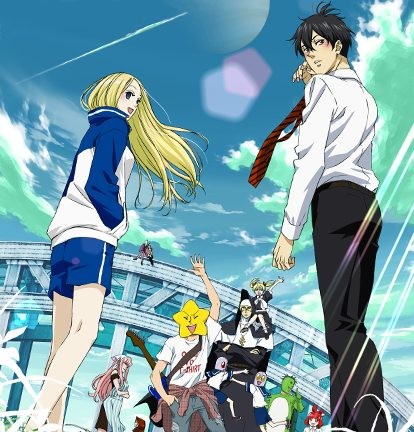
TV-Series
Description
"Arakawa Under the Bridge" centers on Kou Ichinomiya, a wealthy and prideful young man raised with the belief that he must never be indebted to anyone. This principle is tested when he is rescued from a near-drowning incident by Nino, a mysterious girl living under the Arakawa Bridge in Tokyo. Feeling obligated to repay her, Kou moves under the bridge to live alongside Nino and the eccentric community of outcasts who reside there. The series explores Kou’s attempts to adapt to this unconventional lifestyle while navigating the quirks and dynamics of the bridge’s inhabitants.
The bridge community is populated by a colorful cast of characters, each with their own peculiarities. Nino, Kou’s rescuer, claims to be from Venus and exhibits a detached, otherworldly demeanor. The self-proclaimed village chief, known simply as "Chief," wears a kappa costume and insists he is a real kappa. Other residents include Sister, a guitar-wielding nun with a violent streak; Star, a former soldier obsessed with military tactics; and Maria, a stoic woman who runs a makeshift bar. Each character contributes to the surreal and comedic atmosphere of the series.
As Kou integrates into the community, his interactions with Nino and the others challenge his rigid worldview and force him to confront his own vulnerabilities. The narrative unfolds through a series of episodic adventures, blending absurd humor with moments of introspection. Kou’s growing affection for Nino becomes a central thread, as he grapples with her enigmatic nature and his own feelings of inadequacy. The series balances its comedic tone with subtle explorations of themes such as identity, belonging, and the meaning of family.
The plot is driven by the juxtaposition of Kou’s privileged background with the chaotic, free-spirited lifestyle of the bridge dwellers. His attempts to impose order and logic on the community often lead to comedic misunderstandings, while the residents’ unconventional perspectives gradually influence his outlook. The series maintains a lighthearted tone, punctuated by surreal gags and visual humor, but also delves into the emotional complexities of its characters. Through its eccentric cast and offbeat storytelling, "Arakawa Under the Bridge" presents a unique blend of comedy and heartfelt moments, anchored by Kou’s journey of self-discovery and his evolving relationships with the bridge’s inhabitants.
The bridge community is populated by a colorful cast of characters, each with their own peculiarities. Nino, Kou’s rescuer, claims to be from Venus and exhibits a detached, otherworldly demeanor. The self-proclaimed village chief, known simply as "Chief," wears a kappa costume and insists he is a real kappa. Other residents include Sister, a guitar-wielding nun with a violent streak; Star, a former soldier obsessed with military tactics; and Maria, a stoic woman who runs a makeshift bar. Each character contributes to the surreal and comedic atmosphere of the series.
As Kou integrates into the community, his interactions with Nino and the others challenge his rigid worldview and force him to confront his own vulnerabilities. The narrative unfolds through a series of episodic adventures, blending absurd humor with moments of introspection. Kou’s growing affection for Nino becomes a central thread, as he grapples with her enigmatic nature and his own feelings of inadequacy. The series balances its comedic tone with subtle explorations of themes such as identity, belonging, and the meaning of family.
The plot is driven by the juxtaposition of Kou’s privileged background with the chaotic, free-spirited lifestyle of the bridge dwellers. His attempts to impose order and logic on the community often lead to comedic misunderstandings, while the residents’ unconventional perspectives gradually influence his outlook. The series maintains a lighthearted tone, punctuated by surreal gags and visual humor, but also delves into the emotional complexities of its characters. Through its eccentric cast and offbeat storytelling, "Arakawa Under the Bridge" presents a unique blend of comedy and heartfelt moments, anchored by Kou’s journey of self-discovery and his evolving relationships with the bridge’s inhabitants.
Episodes
Staffel 1
11 BRIDGE
22 BRIDGE
33 BRIDGE
44 BRIDGE
55 BRIDGE
66 BRIDGE
77 BRIDGE
88 BRIDGE
99 BRIDGE
1010 BRIDGE
1111 BRIDGE
1212 BRIDGE
1313 BRIDGE
Cast
- Shimazaki
- Village Chief
- Toru "Shiro" Shirai
- SisterCarlo Christopher Caling
- Seki Ichinomiya
- Terumasa Takai
Comment(s)
Staff
- Series DirectorYukihiro Miyamoto
- Series CompositionDeko Akao
- StoryboardKiyoko SayamaShinji SatōSatoshi KuwabaraShinichi OmataToshinori NaritaSayo YamamotoYusuke KamataToshimasa SuzukiYoshihiro MoriNaoyuki TatsuwaHisatoshi ShimizuTomoyuki Itamura
- Unit DirectorNaoyuki Tatsuwa
- Original creator
- Art DirectorKohji Azuma
- Animation DirectorKazuyuki IkaiNatsuko SuzukiMasaichi IshikawaMamoru YokotaMegumi NodaYuka TakemoriSatomi MatsuuraKōsuke MurayamaJoji YanagiseYasutoshi IwasakiMichio HasegawaKazuyuki YamayoshiNobuhiro SugiyamaYoshino HondaKazuhiko Tamura
- Director of PhotographyShouhei Uchimura
- DirectorAkiyuki Simbo
- ScriptDeko Akao
- Episode DirectorShinichi OmataToshinori NaritaYusuke KamataNobukage KimuraYukihiro MiyamotoYoshihiro MoriTomoyuki ItamuraSusumu EndōYoshito Mikamo
- MusicMasaru Yokoyama
- Character DesignNobuhiro Sugiyama
- Chief Animation DirectorNobuhiro Sugiyama
- Sound DirectorYōta Tsuruoka
- ProducerGou Shukuri
Production
- ProductionKing RecordsSquare EnixArakawa UB Production Team
- Animation ProductionSHAFT
Relations