TV-Series
Description
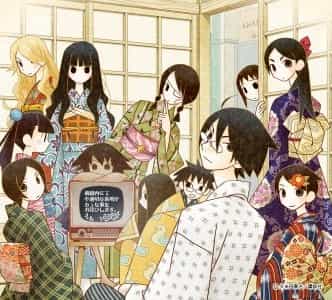
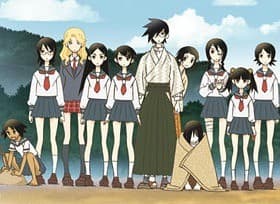
"Sayonara, Zetsubou-Sensei" centers on Nozomu Itoshiki, a high school teacher with an overwhelmingly pessimistic worldview. His name, when written with different kanji, can mean "despair," reflecting his constant state of hopelessness. Despite his bleak outlook, he is surrounded by a diverse group of students, each embodying exaggerated traits or societal archetypes. These students include Kafuka Fuura, an eternally optimistic girl who interprets every situation positively, and Abiru Kobushi, who hides her face due to extreme shyness. Other notable students include Chiri Kitsu, a perfectionist with obsessive tendencies, and Meru Otonashi, who thrives on spreading rumors and gossip.
The series unfolds in a series of episodic vignettes, often satirizing modern Japanese society, cultural norms, and human behavior. Nozomu frequently attempts to impart his nihilistic philosophy to his students, but their eccentric personalities and interactions often lead to absurd, comedic situations. The classroom becomes a microcosm of societal issues, with each episode tackling themes such as conformity, identity, and the absurdity of everyday life. The narrative frequently employs dark humor, wordplay, and surreal imagery to underscore its commentary.
Nozomu's interactions with his students are central to the story, as their contrasting perspectives create a dynamic tension between hope and despair. Kafuka, in particular, serves as a foil to Nozomu, challenging his pessimism with her unwavering optimism. The series also delves into the personal lives of the students and Nozomu, revealing the quirks and traumas that shape their behaviors. Recurring motifs, such as Nozomu's repeated attempts at suicide (often thwarted in comedic fashion), highlight the show's blend of humor and existential themes.
The plot is largely non-linear, with episodes often featuring self-contained stories that explore specific themes or character dynamics. However, recurring gags and running jokes create a sense of continuity. The series also incorporates meta-commentary, breaking the fourth wall and referencing its own production, adding another layer of satire. Through its eccentric characters and absurd scenarios, "Sayonara, Zetsubou-Sensei" offers a sharp critique of societal norms while maintaining a darkly comedic tone.
The series unfolds in a series of episodic vignettes, often satirizing modern Japanese society, cultural norms, and human behavior. Nozomu frequently attempts to impart his nihilistic philosophy to his students, but their eccentric personalities and interactions often lead to absurd, comedic situations. The classroom becomes a microcosm of societal issues, with each episode tackling themes such as conformity, identity, and the absurdity of everyday life. The narrative frequently employs dark humor, wordplay, and surreal imagery to underscore its commentary.
Nozomu's interactions with his students are central to the story, as their contrasting perspectives create a dynamic tension between hope and despair. Kafuka, in particular, serves as a foil to Nozomu, challenging his pessimism with her unwavering optimism. The series also delves into the personal lives of the students and Nozomu, revealing the quirks and traumas that shape their behaviors. Recurring motifs, such as Nozomu's repeated attempts at suicide (often thwarted in comedic fashion), highlight the show's blend of humor and existential themes.
The plot is largely non-linear, with episodes often featuring self-contained stories that explore specific themes or character dynamics. However, recurring gags and running jokes create a sense of continuity. The series also incorporates meta-commentary, breaking the fourth wall and referencing its own production, adding another layer of satire. Through its eccentric characters and absurd scenarios, "Sayonara, Zetsubou-Sensei" offers a sharp critique of societal norms while maintaining a darkly comedic tone.
Episodes
Staffel 1
1Goodbye, Zetsubo Sensei
2When I Came Out Of The Tunnel It Was White
3Go Fly Over That Country
4From Elbow to knee
5Measuring Social Standing
6Leap Before Exchanging Looks
7As Gregor Samsa awoke one morning, he found himself on a bandwagon.
8I'm a Social Outcast by Fate
9The Evening Primroses on Fuji are Wrong
10You Mustn't Burn the Raw Yatsuhashi
11Hey, You Can't Do That! Isn't There An Original
12Really, That's Annoying!
Cast
Comment(s)
Staff
- Series CompositionKenichi Kanemaki
- StoryboardMichio FukudaMinoru TanakaTatsuya OishiKazuhiro ŌtaYusuke KamataKazuya ShiotsukiHiroki YamamuraKeita ShimizuYoshihiro MoriNaoyuki TatsuwaShūji Miyazaki
- Unit DirectorTatsuya OishiKazuhiro ŌtaYukihiro MiyamotoNaoyuki Tatsuwa
- Original creator
- Art DirectorHiroshi Katō
- Chief Animation DirectorYoshiaki ItōHiroki Yamamura
- Sound DirectorToshiki Kameyama
- ProducerAtsushi Moriyama
- ScriptMasashi KubotaKenichi KanemakiKatsuhiko Takayama
- Episode DirectorMasayuki IimuraYusuke KamataHideyuki YoshidaYukihiro MiyamotoYoshihiro MoriTomoyuki Itamura
- MusicTomoki Hasegawa
- Character DesignHideyuki Morioka
- ArtMotoi Sakai
- Animation DirectorHideyuki MoriokaMinoru TanakaKazuhiro ŌtaMiyako NishidaKazuya ShiotsukiNoboru JitsuharaHiroki YamamuraHideki FurukawaKōsuke Murayama
- Director of PhotographyRei Egami
- DirectorAkiyuki Simbo
Production
- ProductionKing Records
- Animation ProductionSHAFT
Relations
Manga overview