TV-Series
Description
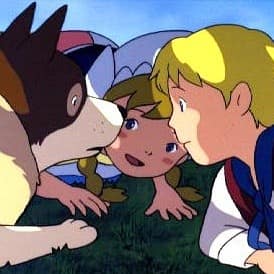
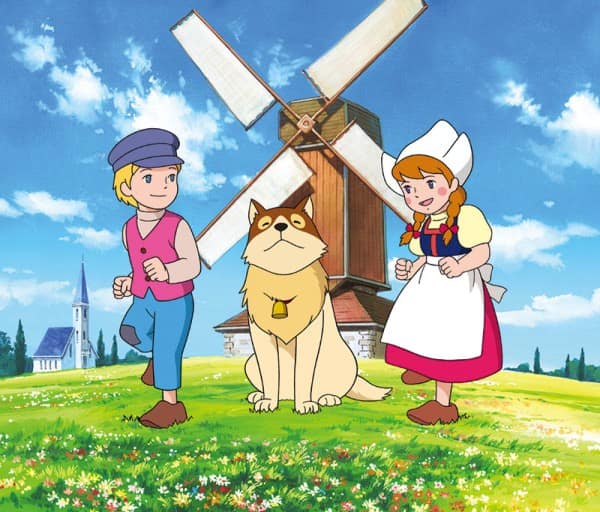
"A Dog of Flanders" is a poignant tale set in 19th-century Belgium, centered on the life of Nello, a young orphan boy, and his loyal dog, Patrasche. Nello lives with his grandfather, Jehan Daas, in a small village near Antwerp. The two lead a humble life, struggling to make ends meet by delivering milk. Patrasche, a dog they rescue from an abusive owner, becomes an integral part of their lives, helping with their work and forming a deep bond with Nello.
Nello is an artistic and kind-hearted boy who dreams of becoming a painter, inspired by the works of the renowned artist Peter Paul Rubens. Despite his talent, Nello faces numerous hardships, including poverty and societal prejudice. His friendship with Alois, the daughter of a wealthy miller, provides some solace, but their differing social statuses create tension, particularly with Alois's father, who disapproves of their relationship.
The story takes a tragic turn when Jehan Daas passes away, leaving Nello alone and destitute. Nello's struggles intensify as he faces eviction and the loss of his livelihood. Despite these challenges, he remains determined to pursue his artistic aspirations. The narrative reaches its emotional climax when Nello and Patrasche, exhausted and freezing, seek refuge in the Antwerp Cathedral. There, Nello gazes at Rubens's masterpiece, finding solace in the beauty of art before succumbing to the cold. Patrasche, ever loyal, lies beside him, and both are found together the next morning.
The story explores themes of perseverance, friendship, and the harsh realities of social inequality. Nello's unwavering spirit and his bond with Patrasche highlight the enduring power of love and loyalty, even in the face of adversity. The narrative's emotional depth and historical setting have made it a timeless classic, resonating with audiences across generations.
Nello is an artistic and kind-hearted boy who dreams of becoming a painter, inspired by the works of the renowned artist Peter Paul Rubens. Despite his talent, Nello faces numerous hardships, including poverty and societal prejudice. His friendship with Alois, the daughter of a wealthy miller, provides some solace, but their differing social statuses create tension, particularly with Alois's father, who disapproves of their relationship.
The story takes a tragic turn when Jehan Daas passes away, leaving Nello alone and destitute. Nello's struggles intensify as he faces eviction and the loss of his livelihood. Despite these challenges, he remains determined to pursue his artistic aspirations. The narrative reaches its emotional climax when Nello and Patrasche, exhausted and freezing, seek refuge in the Antwerp Cathedral. There, Nello gazes at Rubens's masterpiece, finding solace in the beauty of art before succumbing to the cold. Patrasche, ever loyal, lies beside him, and both are found together the next morning.
The story explores themes of perseverance, friendship, and the harsh realities of social inequality. Nello's unwavering spirit and his bond with Patrasche highlight the enduring power of love and loyalty, even in the face of adversity. The narrative's emotional depth and historical setting have made it a timeless classic, resonating with audiences across generations.
Episodes
Staffel 1
1Nello
The episode opens with the daily routine of Nello and his grandfather, Jehan, as they transport milk by cart from their village to the city of Antwerp. This journey establishes their modest life and the strong bond between the boy and his grandfather. While in the city, Nello witnesses a man brutally beating a dog that is harnessed to a cart. The dog, which viewers later learn is named Patrasche, is shown to be exhausted and suffering from its mistreatment. The incident serves as a sharp turning point in the episode, as it profoundly distresses the compassionate Nello. His primary motivation becomes a deep desire to help the suffering animal, a feeling that stays with him after they return home. Jehan is aware of his grandson's empathy but they continue with their day. The episode focuses on establishing the central conflict between Nello's inherent kindness and the cruelty he witnesses. It introduces the core motivation that will drive the character's actions for the rest of the series: his connection to the abused dog. The immediate consequence of this event is Nello's persistent preoccupation with the dog's fate, setting the stage for his future efforts to find and befriend it. The episode concludes with Nello unable to forget the animal, cementing the emotional foundation for the story to come.
2With Alois in the Forest
The episode begins with a departure from the established routine, as Grandfather Jehan undertakes the milk delivery to Antwerp alone. This allows Nello to spend the day with his friend Alois, and the two children decide to go into the forest to pick strawberries. Their excursion is a simple, self-directed adventure, motivated by the prospect of a shared activity and the small reward of finding fruit. The tranquility of their search is shattered by the sudden arrival of a thunderstorm, which serves as the central conflict of the episode. Forced to react quickly to the dangerous weather, the children seek refuge in the hut of Michel, a woodcutter. This turning point introduces a new character and removes the children from their usual domestic settings. While Nello and Alois are safe with Michel, a separate but concurrent conflict unfolds back in the village. Alois's parents become increasingly worried upon realizing their daughter's whereabouts are unknown. This parallel narrative highlights the contrasting perspectives of childhood freedom and parental responsibility. The immediate consequence of the children's adventure is the anxiety felt by Alois's family, a reaction that underscores the social boundaries and concerns that exist outside of Nello and Alois's innocent friendship. The episode effectively builds tension by juxtaposing the children's sheltered experience in the woodcutter's home with the growing alarm in the village. It establishes the forest as a place of both potential danger and unexpected sanctuary, while also foreshadowing the societal concerns that may later impact the children's bond.
3At the Town of Antwerp
Nello accompanies his grandfather Jehan on the milk delivery to Antwerp, but his focus shifts from their task upon arriving in the city. In front of the grand cathedral, Nello becomes captivated by a painter at work and seizes the opportunity to learn from him, receiving an impromptu lesson in the art of painting. This encounter marks a significant step in Nello's burgeoning desire to become an artist, as he actively seeks knowledge and guidance from a practicing painter. The episode contrasts the bustling city life, with its opportunities for learning and observation, against the quiet simplicity of Nello's village existence. Upon returning home, Nello's mind remains preoccupied with the day's events in Antwerp. He reflects on the painter's techniques and the inspiring sights of the city, but these thoughts are interwoven with a persistent and troubling memory. The image of the mistreated dog he had witnessed on a previous trip to the city continues to haunt him, revealing his deep capacity for empathy. Nello's internal conflict is established between his newfound artistic aspirations and his growing concern for the suffering animal. His thoughts are not merely idle daydreams but a processing of two powerful experiences that will shape his motivations. The kindness of the painter provides a positive counterpoint to the cruelty shown by the dog's owner, presenting Nello with contrasting models of human behavior. This episode serves to solidify Nello's dual ambitions: to pursue the path of an artist and to somehow aid the dog in distress. The seeds are planted for future actions, as his compassionate nature, stirred by the dog's plight, is now coupled with a concrete artistic inspiration derived from his city encounter. The evening concludes with Nello carrying these thoughts into his sleep, setting the stage for the decisions he will make in subsequent days.
4New Friends
Nello's world expands beyond his familiar routines as he ventures out to go fishing, leading to a pivotal encounter at a local canal. It is here that he first meets George and Paul, two boys who initially present themselves as antagonists by teasing him. This interaction introduces a social conflict for Nello, testing his character in an unfamiliar situation outside the security of his home with Grandfather Jehan. The dynamic between the boys shifts dramatically when Paul accidentally falls into the water, creating a moment of immediate danger. Nello reacts without hesitation, cooperating with a passing bargeman to successfully rescue Paul from the canal. This act of bravery and quick thinking serves as the episode's central turning point, directly transforming the nature of his relationship with the other boys. The initial mockery and distrust dissolve, replaced by a newfound respect and camaraderie. Consequently, Nello's courageous deed earns him the gratitude and friendship of George and Paul. The episode concludes with the three boys having formed a bond, effectively ending Nello's social isolation and granting him his first same-aged friends. This development establishes a new support network for him, which will likely influence his future adventures and his ongoing life in the village. The core motivations stem from Nello's desire for a simple, enjoyable day and his innate decency, which compels him to help someone in peril despite their earlier behavior.
5Patrasche
6Don't Give Up, Patrasche
The episode focuses on the challenging recovery of Patrasche, the dog Nello rescued from severe abuse and exhaustion. Nello and his grandfather, Jehan, continue to provide constant care, with Nello's primary motivation being the dog's complete return to health. A significant conflict arises from the skepticism of some villagers, including Alois's father, who question the wisdom of investing limited resources in a sick animal. Their doubts reflect the broader societal pressures of poverty and pragmatism that the characters must navigate. Despite these external judgments, Nello remains steadfast in his commitment, demonstrating a mature sense of responsibility. A turning point occurs when Patrasche shows the first signs of improvement, slowly regaining enough strength to stand and eat on his own. This progress is not immediate, requiring Nello to exercise patience and persistence through several setbacks. The bond between the boy and the dog deepens through this ordeal, moving from one of simple rescue to mutual trust. The episode establishes that Patrasche's recovery is not just physical but also psychological, as he begins to overcome the trauma of his past mistreatment. This foundation of restored health and loyalty sets the stage for Patrasche to eventually integrate into Nello and Jehan's daily work and life. The immediate consequence is a strengthened family unit, now including Patrasche as a resilient and grateful member.
7Episode 7
8The Day of the Race
The episode centers on the village sled race, an event Alois has eagerly anticipated. Her primary motivation is to win the race, seeing it as a chance to prove her capability and perhaps earn her grandfather's pride. Nello, wanting to support her, enters the race as well, using a sled loaned by Jehan. The race begins with Alois in the lead, driven by her fierce determination. However, a critical turning point occurs when another young competitor, Hans, crashes his sled and is injured. Nello immediately stops to help him, sacrificing his own position in the race to ensure Hans is safe. This act of compassion directly contrasts with Alois's single-minded focus on victory. Although Alois goes on to win the race, her triumph is undercut by the knowledge that Nello did not finish. She initially struggles to understand why he would abandon the competition. The consequence is a moment of emotional distance between them, as Alois's celebration feels hollow without Nello there. Later, Alois's grandfather offers a quiet perspective, suggesting that helping others is its own kind of victory. The episode concludes with Alois reflecting on his words, beginning to grasp the value of Nello's choice. The narrative highlights the differing values of personal ambition and selfless kindness.
9Episode 9
10Alois's Brooch
Alois is distressed upon realizing she has lost her cherished brooch, a gift from her aunt in England. The loss creates a significant conflict for the girl, who fears her father's reaction to the disappearance of the valuable item. Nello, observing his friend's anguish, becomes determined to assist her in the search. He dedicates himself to retracing their steps, demonstrating his deep concern for Alois's feelings and his willingness to act on her behalf. The search takes Nello through various familiar locations from their recent outings, highlighting his close observation of their shared activities. Meanwhile, the brooch's absence creates a palpable tension within the Cojez household, as Alois's mother, Elina, also becomes aware of the situation. Nello's quest to find the brooch underscores the material and social divide between his humble circumstances and the expectations of Alois's family. His motivation stems purely from friendship, seeking to alleviate Alois's worry without any thought of personal reward. The immediate consequence of the episode is the reinforcement of the bond between the two children through Nello's selfless efforts. The episode progresses the series' exploration of Nello's character, showcasing his integrity and proactive kindness in the face of a problem affecting someone he cares about. The fate of the brooch and its impact on Alois's standing with her father remain central to the episode's rising action.
11Episode 11
12Grampa's Piggy Bank
The episode centers on the practical and emotional bonds within Nello's small family. After Patrasche demonstrates his eagerness to contribute by pulling the milk cart, Grandfather Jehan creates a custom pulling harness for the dog, enabling him to work alongside them. This new routine is soon disrupted when the abusive ironmonger, the dog's former owner, spots Patrasche in the village. The man confronts Jehan, making a legal claim for the dog's return and demanding payment. This conflict places Jehan in a difficult position, as the money demanded would be a significant strain on their meager resources. The grandfather's primary motivation becomes protecting Nello not only from losing his beloved companion but also from the painful knowledge of the ironmonger's threat. Jehan manages to gather the required sum, drawing from his small savings, which the episode's title references. He successfully pays the ironmonger, thereby securing Patrasche's place with them permanently. A key consequence of this transaction is Jehan's conscious decision to shield Nello from the entire ordeal. The episode concludes with the grandfather's quiet relief, having resolved the crisis while preserving the boy's peace of mind and his cherished friendship with the dog. The narrative underscores Jehan's selfless dedication and the secure, if humble, home he maintains for Nello.
13Episode 13
After being turned away from the mill, Nello walks alone through the snow toward Antwerp, driven by his desire to see the Rubens paintings. At the mill, a festive atmosphere prevails as the family celebrates Christmas, and Baas Cogez speaks warmly of his intentions to befriend Nello. Patrasche, though welcomed as a cherished guest and offered comfort and food, remains fixated on the absence of his master. Seizing an opportunity when a visitor leaves the door ajar, the dog slips out into the bitterly cold night to follow Nello. Despite his age, hunger, and the painful ice under his paws, Patrasche laboriously tracks the boy's nearly obliterated footprints through the snow-covered roads. His journey takes him past midnight into the dark, frozen streets of Antwerp, following the scent to the steps of the great cathedral. An unlocked portal, left carelessly open after midnight mass, allows Patrasche to enter and find Nello lying on the stone floor before the chancel gates. The boy awakens and embraces his dog, and they lie down together in the immense, freezing cold of the cathedral. As a moonbeam briefly illuminates the Rubens masterpieces, Nello sees the paintings he longed for, crying out in ecstasy before the light fades and he succumbs to the cold, holding Patrasche close. The episode concludes with them lying still together, having found their final solace in each other's presence and in Nello's long-desired vision.
14Episode 14
15Episode 15
1610-centime Picture Album
17Under theTree on top of the Hill
18Episode 18
19The Day the Snow Melted
In the episode, Nello and his dog Patrasche traverse the frozen countryside to deliver milk in Antwerp, a task made arduous by the deep snow and biting cold. Nello's motivation is to earn money for his grandfather, who has fallen ill and cannot accompany him. While in the city, they notice a small girl crying alone near the cathedral, evidently lost and frightened. Nello puts aside his own errands to comfort her and attempts to find her home, questioning passersby without success. Patrasche, picking up a scent, leads them through winding streets until they reach a house where the girl's parents are frantically searching. The family is overjoyed and offers Nello a reward, which he politely declines, stating that helping others is its own reward. This delay, however, means Nello returns home later than usual, and he frets about his grandfather's condition. Upon arriving, he finds his grandfather resting but weak, and the old man reassures him that he managed. Outside, the weather shifts: the snow begins to melt, and water drips from the rooftops, a sign of spring's approach. The next day, the thaw allows grandfather to step outside for the first time in weeks, and they share a quiet moment watching the landscape transform. The episode ends with Nello reflecting that the melting snow brings hope for better times ahead.
20As Far as Possible
21Une rumeur injuste
The episode centers on the immediate aftermath of the fire at the windmill. Kortez, having seen Nello near his daughter Alois shortly before the incident, becomes a primary source of suspicion against the boy. Simultaneously, the villager Bohman actively spreads the rumor that Nello is responsible for the arson. This confluence of circumstantial evidence and malicious gossip swiftly turns the community against Nello. The boy finds himself subjected to open hostility and cold stares from the very people he has lived among. His attempts to assert his innocence are drowned out by the prevailing current of public opinion, which has already decided his guilt. In the face of this widespread condemnation, Nello's isolation becomes more acute and painful than ever. The episode reaches its turning point not with a resolution of the accusation, but with a moment of personal solace. Aunt Nulette and Nello's grandfather, Jehan, arrive to offer him comfort and support, providing a private counter to the public persecution. Their loyalty underscores the stark divide between the boy's few true supporters and the judgmental village majority. Consequently, the episode concludes with Nello drawing strength from his family while the external threat of the false accusation and its consequences looms unresolved.
22Episode 22
23Episode 23
24Alois' Portrait
Nello assists Alois's father with the labor of the hay harvest, demonstrating his willingness to work and remain in the good graces of the man who disapproves of his friendship with Alois. The task occupies most of his day, delaying the promised opportunity to sketch Alois. When Nello's grandfather, Jehan, arrives to take over his shift, Nello is finally relieved of his duties and can proceed with the portrait. He devotes his attention to capturing Alois's likeness, an activity that underscores his primary aspiration to become a painter. Following the completion of the drawing, Alois's father attempts to compensate Nello with a coin for his earlier help in the fields. Nello's refusal of the payment is a significant character moment, revealing that his motivation for assisting was not financial gain but his connection to the family and his desire to draw Alois. This act of refusal maintains the established social distance between Nello's poverty and Alois's more prosperous family, yet it also earns a measure of respect. The episode focuses on the quiet, personal interactions between Nello, Alois, and her father within the rural work cycle. The immediate consequence is the successful creation of the portrait, strengthening the bond between the two children through Nello's artistic dedication.
25Alois is Gone
Alois makes the drastic decision to run away from home to avoid being sent to England by her father. Her departure is a direct reaction to her father's plan, which she views as an unwanted separation from her life and friends in the village. Patrasche, Nello's loyal dog, manages to track down the missing girl, leading Nello to her hiding place. Upon finding Alois, Nello is faced with the task of convincing her to return home. He explains to her that her father's decision, while painful, is ultimately made with her best interests and future in mind. This argument presents a turning point, as Alois must weigh her own immediate desires against her father's intentions for her well-being. Nello's successful persuasion highlights his acceptance of a situation he cannot change, prioritizing Alois's long-term welfare over their current happiness. The core conflict of the episode is therefore not resolved by a change in the father's plan, but by Alois's reluctant acquiescence to it. The immediate consequence is the sorrowful parting of the two children, who are fully aware that they will miss each other deeply. This separation sets the stage for the emotional fallout and the challenges both will face living apart, with their friendship now tested by distance.
26再見了! 艾諾
The final episode depicts the conclusion of Nello and Patrasche's journey. Having been turned away from the village and consumed by the harsh winter, Nello seeks shelter with his dog. Their physical deterioration reaches its peak as they struggle against the cold and exhaustion. Nello's primary motivation throughout the episode is to reach the Antwerp Cathedral to see the works of Rubens, a lifelong dream that has driven him despite his poverty and hardship. His determination remains undiminished even as his body fails, highlighting his deep devotion to art. Patrasche, loyal and protective, remains by Nello's side, sharing his body heat and refusing to abandon him. The turning point arrives when they find their way into the cathedral, providing a moment of peace and fulfillment. Before the cathedral's paintings, Nello experiences a quiet epiphany, finally achieving the artistic communion he has always sought. The immediate consequence of this fulfillment is a sense of profound calm and release for both characters. The episode focuses on the intimate bond between Nello and Patrasche in their final moments. Their deaths are portrayed not as a tragedy of circumstances but as a peaceful end to their shared struggle. The narrative emphasizes that they are together, having achieved a form of transcendence through the realization of Nello's dream. The episode closes on the image of the two friends, finally at rest, united in their devotion to one another.
27Christmas without Alois
28A Kind Lady
Nello travels alone to Antwerp, acting on the suggestion in Alois's letter to meet at the cathedral. His primary motivation is to connect with his friend, but the journey shifts his focus to the city's cultural heart. Within the cathedral, he encounters a woman who takes a genuine interest in him. This meeting is presented as a significant turning point, as the woman's kindness offers Nello a new form of support outside his familiar village circle. Her attention is particularly poignant given his recent isolation following the events surrounding the fire at the mill. The woman engages with Nello, likely showing interest in his artistic aspirations, which have been a central part of his character. This interaction provides a contrast to the suspicion and rejection he faces from the villagers, including Alois's father. The episode establishes a new relationship that will have important consequences for Nello's journey. It reinforces the theme that empathy can appear from unexpected sources, offering a glimmer of hope. The encounter also deepens the connection between Nello's personal dreams and the artistic heritage of Antwerp, represented by the cathedral. This meeting sets the stage for future developments, as the lady's influence is noted to become very important for him.
29Episode 29
30Promise in the Snow
31父と子の絆
The episode opens with Nello's grandfather, Jehan, bedridden due to a severe illness. Nello attempts to continue his daily milk deliveries to support them, but his worry for his grandfather hampers his focus. The local doctor, after examining Jehan, informs Nello that proper medicine and nourishment are needed, but the family lacks the funds. Determined to help, Nello decides to sell one of his cherished drawings in the nearby city of Antwerp. Meanwhile, Patrasche stays by Jehan's side, providing comfort and warmth. In Antwerp, Nello approaches several art dealers, but they dismiss his work, leaving him dejected. He encounters a kind stranger who offers him a small sum for a drawing, providing enough to purchase some medicine. Returning home, Nello administers the medicine, but Jehan's condition shows only slight improvement. The episode emphasizes the deep emotional bond between Nello and his grandfather through their quiet interactions and shared memories. As night falls, Nello vows to find a way to earn more money, while Jehan weakly expresses his pride in Nello. The villagers, aware of the family's plight, offer what little help they can, but it is insufficient. The episode ends with Nello and Patrasche huddled together, facing an uncertain future.
32Episode 32
33Episode 33
34Episode 34
Aunt Nulette prepares to leave the village, with her belongings already loaded onto a wagon. George informs Nello that he must return early to help with the move, but when Nello and his friends arrive at Aunt Nulette's house, they find the task nearly complete. During the final checks, the family realizes the ducks have been forgotten, and upon checking the shed, they discover that the duck Kuro is missing. Andre spots Kuro near the bridge close to Hans' house, where the duck has run to meet Nello, who is approaching from the other side. Despite Claude's urging to depart before nightfall, Aunt Nulette hesitates to leave because Kuro and Nello have not returned. Nello brings Kuro back, and upon learning that Kuro came to find him and Patrasche, Aunt Nulette asks Nello to take care of the duck, believing Kuro does not want to be separated from them. Nello accepts the responsibility with a gesture of approval from Jehan Nello, and the group accompanies Aunt Nulette's wagon to the tree-lined road beyond the drawbridge. That evening, Nello finds Kuro lying on the bed in Aunt Nulette's empty house, recognizing the duck's loneliness and assuring him that she will visit when she is well. The next day, Hans begins demolishing the shed at the now-vacant house, causing Kuro to flee, but George and Paul's request to preserve it is met with Hans's unreasonable demand that they pay rent for it. Upon returning home, Jehan suggests clearing out the old shed in their own yard to create a new home for Kuro, and while doing so, the children discover a wooden pony toy that Nello and Alois once played on together. After preparing the shed with straw for Kuro, the children play with the toy on a hill, and Andre brings news that Alois is returning home, leaving Nello with a feeling of happiness.
35Episode 35
36Episode 36
37Episode 37
38The Final Moment
During a severe winter, Nello and his dog Patrasche travel to Antwerp with the sole intention of viewing the Rubens paintings at the Cathedral of Our Lady before their scheduled viewing period ends. Nello's physical condition deteriorates significantly due to the biting cold and his prolonged lack of proper nourishment, yet his internal motivation to see the artworks remains undiminished. Patrasche consistently stays close to Nello, offering bodily warmth and silent companionship throughout their arduous journey through the snow-covered streets. Upon reaching the cathedral, they find it already closed for the evening and are initially prevented from entering by a stern sexton who dismisses them. Nello, driven by his deep-seated and lifelong desire, discovers an unlocked door at the side of the building and quietly enters the cathedral after darkness has fully fallen. Inside the quiet, dimly lit space illuminated only by candlelight, Nello finally beholds the Rubens triptychs, experiencing a moment of profound fulfillment and emotional release. The extreme cold of the cathedral's stone interior, however, rapidly exacerbates Nello's already weakened physical state, and he is unable to generate enough body heat to survive the night. Patrasche, refusing to leave Nello's side even as conditions worsen, curls up against him and also ultimately perishes from the cold. The following morning, a priest arriving to open the cathedral for services discovers their bodies lying peacefully before the altar, prompting an immediate gathering of local residents. The community gradually learns the identity of the pair and recognizes the depth of sacrifice made for the pursuit of artistic beauty and the unbreakable bond between the boy and his dog. This episode depicts the culmination of Nello's artistic aspirations and the ultimate test of his enduring friendship with Patrasche, set against the backdrop of Antwerp's winter. The narrative concludes with the quiet aftermath of their passing, leaving the townspeople to reflect on the events and the legacy of the two companions.
39Episode 39
40Grampa's Whistling
Jehan takes on work at the Antwerp vegetable market to support the household financially, a fact he has kept from Nello. Nello learns of his grandfather's secret labor from Alois's father, Kozetsu, and is deeply shocked to realize the extent of Jehan's hidden hardships. The revelation creates an internal conflict for Nello, who immediately wishes to alleviate his grandfather's burden. When confronted, Jehan responds by whistling and reassuring Nello that he finds the work enjoyable and not at all taxing. This reassurance is a pivotal moment, highlighting Jehan's self-sacrificing nature and his primary motivation to protect Nello from worry. Despite his grandfather's words, Nello is motivated to act and begins secretly helping Jehan with the tasks in the days that follow. However, Jehan discovers Nello's efforts and disapproves, as his own motivation is to shield Nello from labor so he can focus on the upcoming painting competition. The episode's turning point lies in this clash of their mutual, yet unspoken, desires to care for one another. The immediate consequence is a reinforced, albeit strained, dedication from Nello to honor his grandfather's wishes by concentrating on his art. The episode deepens the emotional bond between the characters while simultaneously foreshadowing the physical toll that Jehan's hidden work may be taking on him.
41Episode 41
42Episode 42
Grandfather Jehan's health takes a turn for the worse, confining him to his bed once again. The narrative focus shifts to the family's deteriorating financial stability as a direct result of his illness. A new neighbor arrives in the village and begins offering to transport the local farmers' milk into town free of charge. This undercuts the small income Nello and his grandfather previously earned by performing this same service. The boy's ability to support his household is severely compromised, as this development leaves him with only a single remaining customer. Nello's primary motivation throughout the episode is to care for his ailing grandfather and maintain their livelihood. However, the combined pressure of Jehan's worsening condition and the loss of income creates a growing sense of isolation. The actions of the new neighbor, while practical, unintentionally place Nello in a more precarious position. The episode establishes a turning point where the characters' already fragile economic situation moves closer to a crisis. This chain of events underscores the immediate consequence of Jehan's illness extending beyond his personal suffering to threaten their home. The conflict is not one of malice, but of circumstance, as the boy struggles against forces beyond his control.
43Alois's Help
Nero begins working at the docks, a physically demanding job secured for him by his friend George, to supplement the family's income as milk delivery work has decreased. He deliberately conceals this new employment from his grandfather, Jehan, wanting to spare the elderly man from worry about their financial situation. While Nero is away, Alois offers to keep Jehan company, a gesture of kindness that places her in a position of unintended consequence. During her visit, Alois inadvertently mentions Nero's work at the docks, revealing the secret Nero had worked so hard to keep. The disclosure introduces a new strain in the household, as Jehan must confront the reality that his grandson is taking on additional burdens to support them. Nero's motivation throughout the episode is clearly rooted in his deep sense of responsibility and love for his grandfather, driving him to shoulder more labor despite his youth. Alois's motivation is equally pure; she seeks to be helpful and caring, first by sitting with Jehan and then by sharing what she sees as innocuous news about Nero's day. The turning point of the narrative is the accidental revelation, which shifts the dynamic from one of silent, individual sacrifice to a shared, though tense, awareness of their collective hardship. The episode explores the theme of self-imposed burdens and the difficulty of protecting loved ones from difficult truths. It concludes with the emotional consequences of the secret's exposure, leaving the characters to navigate the new, uneasy understanding between them.
44Grampa's Gift
45Nello Is Alone
Following the death of his grandfather Jehan, the episode opens with Nello in a state of profound grief. Accompanied by his faithful dog, Patrasche, he makes his way to the village cemetery to visit the grave. The narrative contrast is stark, as this day also marks Alois's birthday, a celebration for which she eagerly anticipates Nello's arrival. Alois waits in vain for her friend, unaware of the tragedy that has befallen him. The central conflict of the episode arises from this collision of celebration and mourning, isolating Nello in his sorrow while the village carries on with its festivities. Alois's concern eventually prompts her to investigate Nello's absence, leading her to discover the reason he did not come. Her search culminates at the cemetery, where she finds Nello and Patrasche at the grandfather's final resting place. This meeting at the graveside serves as the episode's turning point, transitioning Nello's experience from solitary grief to a shared moment of understanding with his friend. The immediate consequence for Nello is the stark realization of his new reality: he is now an orphan, alone in the world with only Patrasche for constant companionship. Alois, for her part, is confronted with the harshness of loss that exists outside her own life's celebrations. The episode solidifies Nello's profound isolation, setting the stage for the difficult decisions and challenges he will now have to face on his own.
46Grampa's Face
Following the death of Jehan, the episode opens with Nello alone in his grandfather's cottage, accompanied only by his dog Patrasche and their cat, Blacky. The immediate aftermath of the funeral leaves the boy to confront the profound silence and emptiness of his new reality. In the village, Uncle Michel learns of Jehan's passing from Alois, who brings him the sad news. Michel is moved by concern for Nello's welfare and resolves to intervene, believing the boy cannot live by himself. He approaches Nello with an offer to leave the old neighborhood and come live with him, proposing a new living arrangement that would provide the child with supervision and care. However, Nello finds himself unable to accept this proposal. His motivation stems from a powerful, newfound artistic calling: the urgent need to draw his grandfather's face. This desire to capture Jehan's likeness on paper becomes the central conflict of the episode, as it directly opposes the practical necessity of leaving his solitary life behind. Nello understands that to fulfill this artistic impulse, he must remain in the home filled with his grandfather's memory, at least for a while longer. The episode thus establishes a poignant turning point where Nello's grief transforms into a determined artistic mission. His decision to stay, rooted in love and remembrance, sets the stage for his immediate future, prioritizing an emotional and creative obligation over the security offered by Uncle Michel. The episode focuses tightly on Nello's internal state and the quiet resolution he forms amidst his loss.
47Episode 47
The episode opens with Nello and Patrasche making their way through the snowy landscape of Hoboken, carrying a small amount of milk to sell in the village. Nello's grandfather, Jehan, remains at home, weakened by illness and unable to work, which places the full burden of earning on the boy. In the village, Nello attempts to sell his milk but faces indifference from most customers, highlighting the family's precarious financial situation. He then encounters Michel, the miller's son, who mocks Nello's artistic aspirations and poverty, reinforcing the social divide between them. Nello visits the cathedral, where he gazes at Rubens's paintings, his motivation to become an artist undiminished despite external discouragement. Later, Nello learns that his entry for the upcoming art competition has been rejected due to its perceived lack of skill, a turning point that threatens his dream. Patrasche remains a constant companion, providing emotional support as Nello grapples with this disappointment. The episode portrays Nello's internal conflict between persevering in his art and accepting the harsh realities of his circumstances. Meanwhile, Alois, the wealthy girl who befriended Nello, is shown being prepared for a future away from him, emphasizing the class barriers that separate them. Nello returns home to find Jehan's condition worsening, compounding the episode's immediate consequences with increased urgency for income and care. The episode ends with Nello and Patrasche huddled together against the cold, the future uncertain yet their bond unbroken.
48No More Work
The consequences of the mill fire and the subsequent accusation against Nello fully manifest in this episode, as the community's hostility solidifies. The villagers, influenced by Hanse's allegation, openly turn against Nello, subjecting him to isolation and suspicion. This collective animosity directly leads to Nello losing his primary source of income, as his customers and employers in the village sever ties with him. The social ostracism extends to his friendship with Alois, as her father strictly forbids her from associating with Nello, effectively removing his closest human companion. Confronted with this wave of rejection and the destruction of his standing in the community, Nello is pushed into a state of profound despair. His thoughts turn to his deceased grandfather, Jehan, and the unwavering kindness of Uncle Michel and Aunt Noulette, who represent his few remaining connections. These memories of genuine love and support serve as a crucial counterpoint to the cruelty he faces, preventing him from succumbing entirely to hopelessness. Drawing strength from this internal consolation, Nello makes a conscious decision to resist the forces arrayed against him. He channels his emotional turmoil and renewed sense of purpose into his art, the one pursuit that remains his own. The episode concludes with Nello recommitting himself to his painting for the competition, transforming his suffering into a determined act of creation and defiance against the village's condemnation.
49I Finished the Painting, Grampa
Nello completes the painting he has dedicated to the memory of his late grandfather, Jehan. The work represents the culmination of his efforts and emotional focus following the personal hardships he has endured. Accompanied by his friend Paul, Nello travels to Antwerp to submit the piece to the town hall for the competition. The act of delivering the painting marks a significant turning point, as Nello physically separates from his creation and places his future in the judgment of others. Upon returning home, he finds Uncle Michel waiting for him. Michel has arrived with the intention of taking Nello away to live with him and Aunt Noulette, a plan born from concern for the boy's welfare now that he is alone. Nello, however, is firmly resolved to remain in his childhood home until the competition results are announced. This decision creates a point of tension between his need for stability and the genuine care being offered by his relatives. The episode focuses on Nello's quiet determination and the emotional weight of waiting. His motivation is clear: seeing the competition through is a way to honor his grandfather's belief in him and to see his own dream to its end. The immediate consequence is a period of enforced patience and uncertainty for Nello, as he must now endure the days leading to the award ceremony, his fate hanging on the outcome. Michel's presence serves as a reminder of the practical realities Nello faces, regardless of the artistic verdict.
50Day of the Announcement
The episode centers on the long-awaited day when the winner of the painting competition is announced in Antwerp. Nello arrives in the city, carrying the hope that his entry might be recognized and provide a way out of his deepening poverty. At the ceremony, he observes Alois in the company of George, which serves as a visual reminder of the social distance between his life and hers. Their presence in his world of artistic aspiration highlights the different paths their lives have taken. Following the public event, Nello encounters Hanse, who delivers the ultimatum that rent is due and he will be forced from his home if he cannot pay. This immediate threat of homelessness compounds the pressure he already feels from the competition's outcome. When the prizes are announced, Nello learns he has not won first place, a crushing disappointment that extinguishes the last source of optimism he possessed. The failure to secure the prize, combined with the eviction notice, creates a convergence of hopeless circumstances. Consequently, Nello's motivation to continue his struggle in the village collapses, as both his artistic validation and his basic shelter are stripped away in a single day. The episode portrays his gradual surrender to despair, setting the stage for the tragic decisions that follow.
51Two Thousand Francs
Peter, Alois's father, loses a bag containing a significant sum of two thousand francs, casting a shadow of worry over his household. The faithful dog Patrasche discovers the lost money, and Nello, embodying his honest nature, immediately takes steps to return it to its rightful owner. This act of integrity creates a pivotal shift in their relationship, as Peter finds himself indebted to the boy he had previously regarded with suspicion. The miller is compelled to acknowledge Nello's character, owing him a profound debt of gratitude for the recovery of his finances. This turn of events stands in stark contrast to the recent accusations and hardships Nello has faced from the villagers. The returned money alleviates a serious crisis for the miller's family, directly impacting their stability. For Nello, the incident momentarily bridges the social divide between himself and Alois's family, offering a glimmer of acceptance. However, the relief is temporary, as deeper conflicts regarding Nello's place in the community and his future remain unresolved. The focus on Peter's loss and subsequent gratitude underscores the precariousness of Nello's position, where his fate is often swayed by the perceptions and fortunes of others.
52Picture of the Angels
Following Nello's despair after being falsely accused and losing all hope, he leaves a suicide note and disappears into the night, setting the central conflict of the episode in motion. Patrasche, sensing his master's distress, instinctively sets out to find the missing boy, driven by the unwavering bond between them. The village community, despite previous misunderstandings, joins the search for Nello, revealing their underlying concern for the boy who has been wronged. The search culminates at Antwerp Cathedral, a location of profound significance to Nello as it houses the Rubens paintings he always yearned to see. It is here that Patrasche finally locates Nello, who has sought refuge in the cold, sacred space. In his weakened and desperate state, Nello experiences a wonderful dream, a poignant turning point that offers him a vision of peace and beauty beyond his earthly struggles. The immediate consequence is the quiet, final reunion of the boy and his loyal dog within the cathedral. The episode, written by Ryūzō Nakanishi and originally aired on December 28, 1975, brings the series narrative to its conclusion. The focus remains on the culmination of Nello's hardships and Patrasche's ultimate act of devotion, providing a definitive end to their story.
Cast
- Christian Bey
- Luisita Soler
- Bernd Stephan
- AnekaAlana Horrigan
- Marta EstebanSara Vivas
- Pedro Sempson
- Christian Alvear
Comment(s)
Staff
- DirectorYoshio Kuroda
- StoryboardIsao TakahataYoshio KurodaShûji YamazakiKazuyoshi YokotaHajime ShibataHideo NishimakiWataru MizusawaMasahiro SasakiMinoru Yokitani
- Original creator
- Animation DirectorToshiyasu OkadaShunichi SakaiYukiyoshi Hane
- Executive producerKōichi Motohashi
- Art DirectorKazue Itō
- ScriptYoshiaki YoshidaTakayuki KaseYukiko TakayamaRyūzō NakanishiMichio Satō
- MusicTakeo Watanabe
- Character Design
- Director of PhotographyKeishichi Kuroki
- ProducerShigehito TakahashiJunzō NakajimaTakaji Matsudo
Production
- ProductionNippon AnimationFuji Television NetworkZuyô Eizô
Relations
Anime overview