
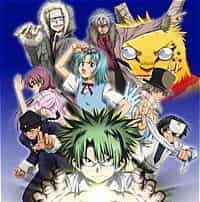
TV-Series
Description
Kousuke Ueki, a middle school student, is chosen by Candidate Kobayashi to participate in a supernatural tournament where individuals wield unique powers granted by their sponsors. The tournament’s purpose is to determine the next King of the Celestial World, with each candidate selecting a human representative to fight on their behalf. Ueki is granted the ability to turn trash into trees, a seemingly mundane power that he creatively uses in combat. His sponsor, Kobayashi, is a laid-back and eccentric figure who provides guidance but often leaves Ueki to rely on his own ingenuity.
The narrative unfolds as Ueki and his classmates, including his close friend Ai Mori, become entangled in the tournament’s battles. Ueki’s primary motivation is to protect his friends and uphold his sense of justice, which often clashes with the morally ambiguous nature of the competition. As the story progresses, Ueki faces a variety of opponents, each possessing distinct and often bizarre abilities, such as transforming objects into iron or manipulating sound waves. These battles test not only Ueki’s combat skills but also his resolve and moral compass.
A significant subplot involves Ueki’s discovery of the darker aspects of the tournament. Many participants are coerced into fighting, and losing can result in severe consequences, including the erasure of one’s talents or even their existence. Ueki’s determination to challenge this system and protect his friends drives much of the narrative tension. Along the way, he forms alliances with other participants, such as Rinko Jerrard and Hideyoshi Soya, who share his ideals and contribute their unique abilities to the group’s efforts.
The series balances action-packed battles with moments of character development and humor. Ueki’s growth as a fighter and a person is central to the story, as he learns to harness his powers more effectively and confronts increasingly formidable opponents. The tournament’s structure allows for a diverse array of antagonists, each with their own motivations and backstories, adding depth to the conflicts.
As the tournament progresses, Ueki uncovers the true intentions of the Celestial World and the manipulative forces behind the competition. The final arcs focus on Ueki’s confrontation with the tournament’s overseers and his efforts to dismantle the oppressive system. The resolution ties together the themes of justice, friendship, and perseverance, culminating in a climactic battle that determines the fate of both the participants and the Celestial World itself.
The narrative unfolds as Ueki and his classmates, including his close friend Ai Mori, become entangled in the tournament’s battles. Ueki’s primary motivation is to protect his friends and uphold his sense of justice, which often clashes with the morally ambiguous nature of the competition. As the story progresses, Ueki faces a variety of opponents, each possessing distinct and often bizarre abilities, such as transforming objects into iron or manipulating sound waves. These battles test not only Ueki’s combat skills but also his resolve and moral compass.
A significant subplot involves Ueki’s discovery of the darker aspects of the tournament. Many participants are coerced into fighting, and losing can result in severe consequences, including the erasure of one’s talents or even their existence. Ueki’s determination to challenge this system and protect his friends drives much of the narrative tension. Along the way, he forms alliances with other participants, such as Rinko Jerrard and Hideyoshi Soya, who share his ideals and contribute their unique abilities to the group’s efforts.
The series balances action-packed battles with moments of character development and humor. Ueki’s growth as a fighter and a person is central to the story, as he learns to harness his powers more effectively and confronts increasingly formidable opponents. The tournament’s structure allows for a diverse array of antagonists, each with their own motivations and backstories, adding depth to the conflicts.
As the tournament progresses, Ueki uncovers the true intentions of the Celestial World and the manipulative forces behind the competition. The final arcs focus on Ueki’s confrontation with the tournament’s overseers and his efforts to dismantle the oppressive system. The resolution ties together the themes of justice, friendship, and perseverance, culminating in a climactic battle that determines the fate of both the participants and the Celestial World itself.
Episodes
Staffel 1
1Ueki Kousuke, Law of Justice
2Law of "Battle Start !!"
3Law of Zai
4Flexible Man, Law of Rihou
5The Strongest Ability-Holder, Law of Robert Haydn
6Law of Goodbye
7Law of Kobasen
8Fair and Square! Law of Onimon
9Law of Onimon's Training
10The Law of Justice that never comes
11Law of Robert's Ten
12Law of the Heavenly Beings
13Law of the Heavenly Beast
14Law of the Awakening Organs
15Law of Rinko
16Law of Neo
17Law of Two Powers
18Tremble! Law of Dogura Mansion
19Law of Cossack Dance
20Law of Cat and Mouse
21Law of Sano Seiichiro
22Law of Inumaru
23Law of Ueki VS Ten
24Law of Young Robert
25Resurrection! Law of Kobasen
26Terror! Law of Anon
27Law of Hideyoshi
28Law of House of Taiyou
29Law of Immortal Tenko
30Law of the Tertiary Selection
31Law of the Strongest Tag
32Law of True Strength!
33Assault! Law of Ueki VS Rihou
34Law of Marilyn Team
35Law of You Tricked Me!
36Law of Proof of Friendship
37Law of the Sacred Weapon's Weakness
38Law of Sano, Awake!!
39Law of the Sealed Heart
40Law of Wonderful "Ai"
41Law of the Real Thing and the Impersonator
42Law of Team Barrow
43Law of Goody-Two-Shoes Pose
44Law of Ueki Level 2!
45Law of the Attack from the Past
46Law of God, the Girl and the Future
47Law of Anon who became God
48Law of the Fourth Election
49Law of the Ten Stars
50Law of Ueki vs Anon
51Law of Blank "Zai"
Cast
- Rinko Jerrard
- Chris Ippolito
- Rinko Jerad
- Seichiro SanoLuis Vicente Ivars
- Meritxell Sota
- Robert
- Vincent Gutierrez
- Robert Haydn
- Seiichiro SanoBeau Thompson
- Seiichirou Sano
- Ana María Camps
- Masumi Mutsuda
- Juan Antonio García Sáinz
- Maribel Pomar
Comment(s)
Staff
- Director
- ScriptToshifumi KawaseMasashi KubotaSatoru NishizonoKenichi ArakiMasashi SuzukiYuu Kou
- Episode DirectorOsamu SekitaShigeru UedaShunji YoshidaYoshikata NittaRyōji FujiwaraIsao TakayamaMatsuo AsamiShigeru KimiyaMasahito OtaniHidetoshi NamuraHideki HiroshimaYoshito HataMasayuki IimuraChiaki ImaShogo MitsuiChiaki KonSeung Hui SonToshikazu HashimotoYuji HirakiHisakazu IshikawaTsuyoshi Matsumoto
- MusicAkifumi Tada
- Character DesignShinobu Tagashira
- Chief Animation DirectorKumiko Horikoshi
- Sound DirectorFumiko Harada
- ProducerYuba SakataYuichiro Takabata
- Series CompositionToshifumi Kawase
- StoryboardHiroshi FukutomiYoshitaka KoyamaToshiya NiidomeNaoyuki KuzuyaYoshihisa MatsumotoIsao TakayamaShinobu TagashiraMasakatsu IijimaKunio KatsukiHidetoshi NamuraChiaki ImaYasuyuki HondaHibori NakayamaChiaki KonHibari NakayamaYuji HirakiSōma ŌgamiMegumi Yamamoto
- Unit Director
- Original MangaTsubasa Fukuchi
- Art DirectorEiji Iwase
- Animation DirectorHideyuki MotohashiMakoto FurutaYōko KōjōShinichirō MinamiShinobu TagashiraChūji NakajimaMariko AokiTakayuki UshikiShin KomatsuShinpei TomookaTakayuki GoraiMiyako TsujiKazuyuki IkaiNobuyoshi SōzakiShinobu TadoKumiko HorikoshiMinefumi HaradaJun Arai
- Director of PhotographySeiichi MorishitaTeruo Abe
Production
- Animation ProductionStudio DEEN
- Productionavex entertainmentDentsu Inc.IMAGINE
Relations
Manga overview
Music
Opening
Ep. 1-32
Ep. 33-51