Movie
Description
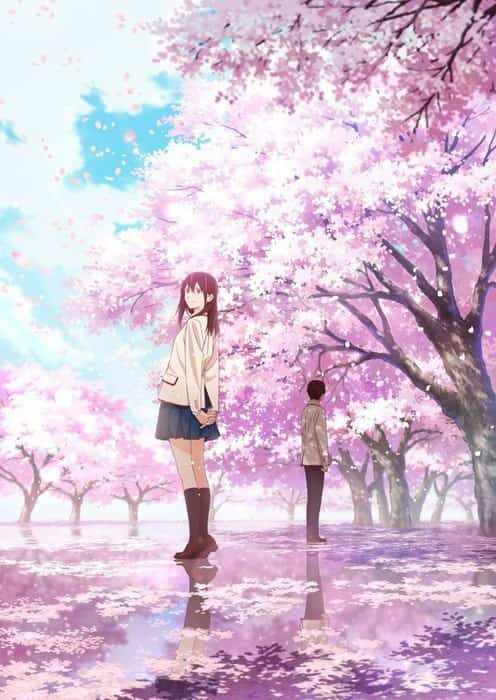
"I Want to Eat Your Pancreas" is a poignant anime film adapted from the light novel by Yoru Sumino. The story centers on the relationship between two high school students: an unnamed introverted protagonist and his outgoing classmate, Sakura Yamauchi. The protagonist, who prefers solitude and reading books, discovers a handwritten journal titled "Living with Dying" in a hospital waiting room. The journal belongs to Sakura, who reveals that she is suffering from a terminal pancreatic illness and has only a short time left to live. Despite her condition, Sakura maintains a cheerful and carefree demeanor, contrasting sharply with the protagonist's reserved nature.
Sakura, intrigued by the protagonist's indifference to her illness, decides to confide in him, as he is the only person who knows her secret. She persuades him to spend time with her, and the two embark on a series of outings, including trips to the beach, a visit to a hot spring, and other everyday adventures. Through these experiences, the protagonist begins to open up, gradually forming a deep emotional connection with Sakura. Their relationship evolves from casual companionship to a profound bond, as Sakura encourages him to confront his fears and embrace life more fully.
The narrative explores themes of mortality, human connection, and the fleeting nature of existence. Sakura's illness looms over their interactions, adding a layer of bittersweet urgency to their time together. The protagonist, initially detached and emotionally closed off, undergoes significant personal growth as he learns to appreciate the present and the people around him. Sakura, despite her impending death, remains a source of light and inspiration, challenging the protagonist to live authentically.
The story takes an unexpected turn when Sakura's life is tragically cut short not by her illness, but by a random act of violence. Her sudden death leaves the protagonist grappling with grief and regret, forcing him to reflect on the impact she had on his life. The film concludes with the protagonist visiting Sakura's family, where he learns more about her thoughts and feelings through her journal. This final act of closure underscores the enduring influence of their relationship and the importance of cherishing the moments shared with others.
The main characters are portrayed with depth and nuance. The protagonist's journey from isolation to emotional vulnerability is central to the narrative, while Sakura's resilience and zest for life provide a counterbalance to the story's somber undertones. Their dynamic is both heartwarming and heartbreaking, capturing the complexities of human relationships in the face of inevitable loss. The film's exploration of these themes, combined with its emotional storytelling, makes it a memorable and impactful work within the anime genre.
Sakura, intrigued by the protagonist's indifference to her illness, decides to confide in him, as he is the only person who knows her secret. She persuades him to spend time with her, and the two embark on a series of outings, including trips to the beach, a visit to a hot spring, and other everyday adventures. Through these experiences, the protagonist begins to open up, gradually forming a deep emotional connection with Sakura. Their relationship evolves from casual companionship to a profound bond, as Sakura encourages him to confront his fears and embrace life more fully.
The narrative explores themes of mortality, human connection, and the fleeting nature of existence. Sakura's illness looms over their interactions, adding a layer of bittersweet urgency to their time together. The protagonist, initially detached and emotionally closed off, undergoes significant personal growth as he learns to appreciate the present and the people around him. Sakura, despite her impending death, remains a source of light and inspiration, challenging the protagonist to live authentically.
The story takes an unexpected turn when Sakura's life is tragically cut short not by her illness, but by a random act of violence. Her sudden death leaves the protagonist grappling with grief and regret, forcing him to reflect on the impact she had on his life. The film concludes with the protagonist visiting Sakura's family, where he learns more about her thoughts and feelings through her journal. This final act of closure underscores the enduring influence of their relationship and the importance of cherishing the moments shared with others.
The main characters are portrayed with depth and nuance. The protagonist's journey from isolation to emotional vulnerability is central to the narrative, while Sakura's resilience and zest for life provide a counterbalance to the story's somber undertones. Their dynamic is both heartwarming and heartbreaking, capturing the complexities of human relationships in the face of inevitable loss. The film's exploration of these themes, combined with its emotional storytelling, makes it a memorable and impactful work within the anime genre.
Cast
- Sakura YamauchiEmilie AubertotBeatrice Maruffa
- Rosa López
- TakahiroCarles TeruelDōri Sakurada
Comment(s)
Staff
- DirectorShin'ichirō Ushijima
- StoryboardDaisuke YoshidaTomoyuki ItamuraShin'ichirō Ushijima
- Original authorMaru Ayase
- Original Character Designloundraw
- Art DirectorYukako Ogawa
- Animation DirectorHiroshi UchidaToshiyuki KannoMika TakahashiTomohiro KoyamaDai ImaokaMika TakazawaNatsuko FujiwaraKeisuke KobayashiHirotoshi AraiMiki MutōKazumasa IshidaChang Hee WonYurie Ōhigashi
- 3D DirectorKoremi Kishi
- Cgi DirectorNobuaki Kikuchi
- ProducerYūma TakahashiShinichiro Kashiwada
- ScreenplayShin'ichirō Ushijima
- Unit DirectorMasaharu TomodaFumihiro YoshimuraJunichi FujiseDaisuke YoshidaTomoyuki ItamuraShin'ichirō Ushijima
- Original creator
- Character DesignYūichi Oka
- Chief Animation DirectorYūichi Oka
- Art designNatsuki KusakabeYukako OgawaKeito Watanabe
- Sound DirectorShōji Hata
- Director of PhotographyMayuko Koike
- MusicHiroko Sébu
Production
- ProductionABC AnimationAniplexEast Japan Marketing & Communications, Inc.FutabashaTohan CorporationThe Asahi Shimbun Company
- Animation ProductionStudio VOLN
Relations
Recommendations based on shared tags.