
TV-Series
Description
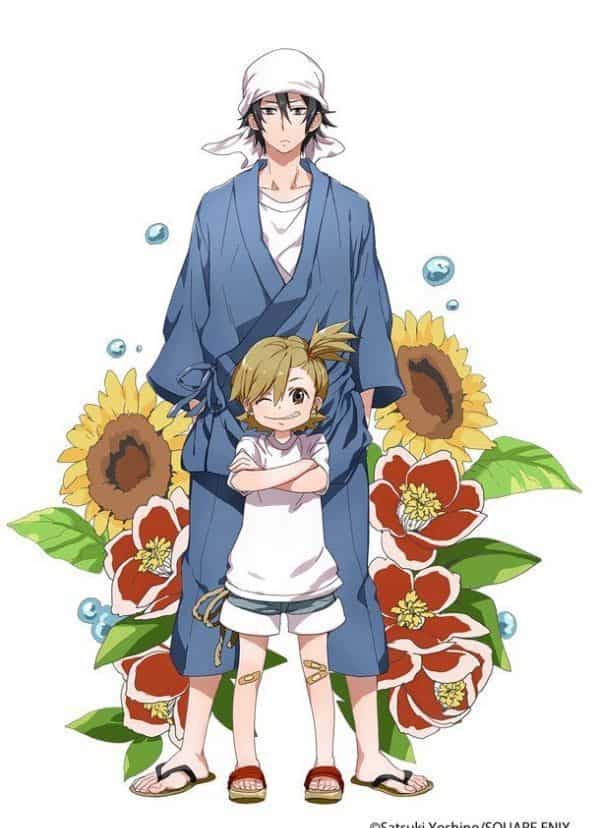
"Barakamon" centers around Seishu Handa, a talented but socially awkward calligrapher whose career takes an unexpected turn after an incident with a critic. Following a public outburst, Handa is sent by his father to the remote Goto Islands to reflect and refine his craft. The series explores his adjustment to rural life and his interactions with the island's quirky inhabitants, who challenge his preconceived notions of art and community.
Handa's initial frustration with the slower pace of island life gradually gives way to personal growth as he forms bonds with the locals. Among them is Naru Kotoishi, a spirited and mischievous young girl who frequently visits his home, becoming a central figure in his daily life. Her unfiltered curiosity and energy often disrupt Handa's work but also inspire him to see the world differently. Other notable characters include Miwa Yamamura, a cheerful and nosy teenager; Hiroshi Kido, a kind-hearted fisherman; and Tamako Arai, a reserved but perceptive high school student.
The narrative unfolds through episodic vignettes that blend humor and heartfelt moments, showcasing Handa's evolving relationships and his journey toward self-discovery. As he immerses himself in the island's culture, Handa begins to appreciate the simplicity and authenticity of rural life, which influences his calligraphy. The series balances lighthearted comedy with introspective themes, emphasizing the importance of human connection and the value of embracing imperfection in both art and life.
Through its portrayal of Handa's transformation and the vibrant community around him, "Barakamon" offers a nuanced exploration of creativity, identity, and the impact of environment on personal growth. The story remains grounded in its focus on everyday experiences, making it a relatable and engaging narrative about finding one's place in the world.
Handa's initial frustration with the slower pace of island life gradually gives way to personal growth as he forms bonds with the locals. Among them is Naru Kotoishi, a spirited and mischievous young girl who frequently visits his home, becoming a central figure in his daily life. Her unfiltered curiosity and energy often disrupt Handa's work but also inspire him to see the world differently. Other notable characters include Miwa Yamamura, a cheerful and nosy teenager; Hiroshi Kido, a kind-hearted fisherman; and Tamako Arai, a reserved but perceptive high school student.
The narrative unfolds through episodic vignettes that blend humor and heartfelt moments, showcasing Handa's evolving relationships and his journey toward self-discovery. As he immerses himself in the island's culture, Handa begins to appreciate the simplicity and authenticity of rural life, which influences his calligraphy. The series balances lighthearted comedy with introspective themes, emphasizing the importance of human connection and the value of embracing imperfection in both art and life.
Through its portrayal of Handa's transformation and the vibrant community around him, "Barakamon" offers a nuanced exploration of creativity, identity, and the impact of environment on personal growth. The story remains grounded in its focus on everyday experiences, making it a relatable and engaging narrative about finding one's place in the world.
Episodes
Staffel 1
1Genki na Ko
Calligrapher Seishu Handa punches a senior judge at an exhibition after the judge criticizes his work. As punishment,his father sends him to the Goto Islands to reflect. Handa arrives expecting solitude but immediately meets Naru, a young girl who runs through his temporary residence and breaks a window. She repeatedly returns, bringing other children who treat his home as a playground. Handa attempts to practice calligraphy but cannot concentrate because of their noise and curiosity. Frustration builds as his rigid, city-bred expectations clash with the islanders’ casual intrusion. He finds a brush and writes Naru’s name on a paper airplane, surprising himself with the fluid movement. Observing Naru’s unrestrained energy later, he realizes his previous calligraphy had become stiff and pretentious. He decides to stay on the island rather than flee back to Tokyo. The episode closes with Handa still surrounded by the children, now facing the challenge of rebuilding his artistic identity amid constant disruption.
2Yakamashika
Handa Seishū attempts to practice calligraphy in his new rural surroundings,but the local children, led by Naru, repeatedly interrupt him with games and noise. Naru invites herself into his workspace, bringing mud and chaos, which forces Handa to spend more time cleaning than writing. Frustrated, Handa confronts the children and demands they leave him alone, yet they remain undeterred and return the next day. Seeking an escape, Handa decides to take a walk along the beach, where he meets Hiroshi, a high school student who offers him practical advice about island life. Hiroshi explains that the village elders rely on written signs for community events and suggests Handa use his calligraphy skills to help. Handa agrees and produces a sign for a local fishing competition, expecting praise for his refined technique. Instead, the villagers laugh at his formal style, pointing out that the bold, simple letters they need must be legible from a distance on a boat. Handa takes the criticism as a personal failure and locks himself indoors, determined to create a better version. The next morning, he wakes to find Naru and the other children have painted colorful, oversized letters on his outer wall—exactly the kind of direct, eye-catching script the villagers wanted. Realizing the children inadvertently solved the problem, Handa completes a new sign that blends his professional skill with the clarity they showed, earning genuine approval from the fishermen. When a sudden rainstorm threatens to wash away the children’s mural, Handa rushes outside with a tarp to protect their work, marking the first time he acts to preserve something created not by himself but by the community around him. The episode closes with Handa beginning to see his calligraphy not as an isolated art but as a tool for connecting with the people who now fill his daily life.
3Mochi wa Mochiya
Handa Seishuu receives a request from the village chief to write a sign for the annual mochi-making event. He declines,insisting calligraphy is art, not commercial work. Later, he sees a bold hand-painted sign outside Hiroshi’s shop and learns Hiroshi made it himself. Annoyed by the competition, Handa agrees to write the event sign after all. He joins the villagers in the mochi-pounding process, where Naru and the other children pelt him with rice flour. Hiroshi arrives and reveals he taught himself calligraphy by copying Handa’s previous work, humbling Handa. During the pounding, Handa struggles with the physical labor but earns the villagers’ approval by persisting. The event concludes with both Handa and Hiroshi displaying their signs, and the village uses Hiroshi’s sign for its clarity and practicality. Handa realizes his calligraphy lacks the functional value the community requires. He decides to focus on creating work that serves the villagers’ needs rather than his own artistic pride. The episode ends with Handa receiving a new challenge: writing a calligraphy piece for the village’s upcoming festival.
4Island Dad
Handa accompanies the village elder Kousuke on a fishing trip,aiming to catch a large grouper to prove his worth and obtain materials for a new calligraphy brush. While Handa reels in only a small fish, Kousuke lands a massive grouper, demonstrating decades of skill. Embarrassed, Handa later purchases an equally large fish from a market and presents it as his own catch. The village children quickly expose the deception when they notice the purchased fish lacks the distinctive scar on the grouper Kousuke caught. Kousuke’s wife, Tama, then offers Handa a calligraphy brush crafted from the fin of her husband’s grouper, explaining that Kousuke had intended it as a gift from the start. Handa accepts the brush with humility and uses it to produce a calligraphy piece that conveys the strength and character of the island’s people. Kousuke, who had been quietly observing, shows genuine approval, shifting their relationship from rivalry to mutual respect. Handa’s growing awareness that his calligraphy must incorporate an understanding of the community around him becomes evident as he begins to embrace the islanders’ traditions. As he settles into island life with a new sense of belonging, a delivery of his collected works from Tokyo arrives, hinting at his unresolved ties to the mainland.
5海に行こう
Naru and the other village children invite Handa to the beach. Hiroshi brings a fishing rod and lends it to Handa while the children gather shellfish. Handa casts repeatedly but catches nothing,growing increasingly frustrated. He spots a large fish near the shore and, abandoning the rod, jumps into the water to catch it by hand. His chase tangles him in a stationary set net belonging to a local fisherman. The fisherman, Ishidō, pulls Handa out and angrily scolds him for damaging the net and disrupting the catch. Handa apologizes and insists on helping repair the net. Ishidō accepts and, during the repair work, explains the net’s importance to the village’s shared livelihood. Hiroshi and the children assist, and by evening the net is restored. Ishidō then invites Handa to the upcoming village festival, telling him that participating in such communal work is how outsiders become part of the community. Handa returns home with the children, carrying the repaired section of net as a reminder. The episode closes with the village preparing for the festival and Handa resolving to take part, setting up his next step in adapting to island life.
6Yosomon
7The River Embraces You
Handa receives a notification that his calligraphy piece has been accepted for an exhibition,but he learns it will be placed in a corner while his rival Kawafuji’s work occupies the central position. The news leaves Handa brooding over his perceived inadequacy and the gap between his work and Kawafuji’s. Meanwhile, the village children decide to craft a wooden sign as a gift to thank Handa for his guidance. Naru leads the group in carving and painting the sign, though their lack of skill results in rough lettering and smeared colors. Handa initially scoffs at the sign’s crude craftsmanship, comparing it unfavorably to professional calligraphy. His dismissive reaction visibly disappoints the children, who had put genuine effort into the project. Later, Handa’s former calligraphy teacher arrives on the island and reviews his recent work, pointing out that Handa’s technique remains strong but his current pieces lack personal expression. The teacher advises him to stop fixating on competition and instead draw inspiration from his surroundings. Seeing the children’s sign again, Handa notices how each child’s imperfect stroke carries their individual intent and care. He realizes his earlier frustration came from measuring everything against formal exhibition standards rather than valuing sincerity. Handa apologizes to the children, accepts the sign with gratitude, and hangs it in his workshop. That night, he begins a new calligraphy piece, no longer attempting to outdo Kawafuji but instead writing with a focus on the island’s natural flow and the people around him.
8Nodoka
The village festival approaches,and Hiroshi asks Handa to provide a calligraphy piece for the main lantern. Hiroshi suggests the theme nodoka, meaning tranquil or peaceful. Handa accepts but repeatedly fails to produce a character that satisfies him. He writes several versions, each feeling forced or inauthentic. Kawafuji arrives for a visit and reveals that Handa’s father called to demand Handa submit a work for an upcoming exhibition. The added pressure deepens Handa’s frustration. While walking with the children, Handa observes the villagers calmly preparing for the festival together. Naru and the others pull him into their activities, from hauling ropes to setting up stalls. During the festival, Handa watches the lanterns light up and sees the community gathered without pretense. He realizes his earlier attempts missed the unforced, lived-in quality of the village’s peace. Returning to his work, he paints nodoka in a single, fluid stroke, capturing the atmosphere he witnessed. Kawafuji departs, carrying the finished piece to deliver to Handa’s father, leaving Handa uncertain whether the submission will meet his father’s expectations.
9Okinawa Son
Handa’s father and his former calligraphy master,Kanzaki, arrive on the island without prior notice. Kanzaki immediately inspects Handa’s recent work and declares that Handa’s calligraphy has grown weaker since moving from Tokyo. Handa’s father expresses his disappointment directly, pushing Handa to return to the city and focus on his career. The island children, sensing Handa’s distress, try to cheer him up by dragging him to a beach gathering. During the outing, Handa isolates himself and practices calligraphy on the sand with a large stick. Kanzaki observes the beach scene from a distance and later acknowledges that Handa’s work shows a new warmth that was previously absent. The evening concludes with Kanzaki and Handa’s father leaving the island, leaving Handa the choice to remain. Handa decides to stay, reaffirming his commitment to his life on the island. The episode closes with Handa resuming his daily routine, but now under the watchful expectation of further development in his art.
10Episode 10
Seishuu Handa’s father,a renowned calligrapher, arrives unannounced on the island. Handa scrambles to clean his borrowed house and hides the evidence of his relaxed lifestyle. His father inspects the living space and demands to see Handa’s recent calligraphy works. Handa presents pieces influenced by the island’s atmosphere, but his father dismisses them as straying from proper discipline. Handa withdraws into self-doubt, recalling past criticisms that drove him to leave Tokyo. Naru and the village children notice his distress and coax him outside to paint a large sign for a local event. While working with the children, Handa experiments with bold, unconstrained strokes that break his usual rigid forms. He completes a character for the sign that captures the villagers’ straightforward energy. Handa then uses that same approach to produce a new calligraphy piece overnight. He shows it to his father the next morning without explanation. His father studies the work, gives a curt nod of acknowledgment, and departs without further comment. Handa interprets the nod as acceptance and decides to remain on the island to continue developing his own style. The episode closes with Handa facing the challenge of balancing his father’s expectations with his growing creative independence.
11東京にいるんですが
Handa receives a phone call from his mother informing him that his grandfather has collapsed and been hospitalized. He immediately packs and leaves the island,returning to Tokyo for the first time since his exile. At the hospital, he discovers his grandfather is in stable condition and that the situation was exaggerated to bring him back. His former rival Kawafuji appears and explains that Handa’s grandfather deliberately arranged for Handa to attend a major calligraphy exhibition in the city. Handa visits the exhibition, where his own past work is displayed alongside pieces from other renowned calligraphers. He encounters members of the Tokyo calligraphy circle who praise his recent style, noting it has changed noticeably from his earlier rigid work. Kawafuji pressures Handa to submit new work for an upcoming competition, reminding him that his reputation in the professional calligraphy world depends on producing pieces in the current circuit. Handa hesitates, realizing he has been avoiding the competitive pressure that once made him punch a senior curator. He spends the night in his old apartment, struggling to produce a piece and finding his hand unable to move. The next morning, Naru calls him from the island, her casual chatter about village life loosening the tension in his shoulders. He picks up his brush and writes freely, completing a piece that reflects his time on the island rather than the style expected by the Tokyo judges. Before leaving the city, he visits his grandfather, who tells him to return to the island and continue living there. Handa boards the ferry back, carrying the completed work but uncertain whether he will submit it to the competition that Kawafuji entered him in without permission.
12Return to Where You Belong
Handa receives a phone call from his father in Tokyo,who informs him that his calligraphy has been selected for an exhibition and requires his presence in the city for several days. Handa hesitates, uncertain whether to leave the island routine he has built. Naru and the other children notice his distraction; Naru hides his suitcase and Miwa and Tamako attempt to keep him occupied with island activities. Hiroshi and the village adults urge Handa to go, assuring him that the island will remain open for his return. The villagers hold a farewell gathering, presenting Handa with handmade gifts and written messages. Handa travels to Tokyo, participates in the exhibition, and receives quiet recognition from his father for his artistic growth. During his time in the city, he feels disconnected from the fast-paced environment and finds himself thinking constantly of the island’s people. He cuts the stay short and boards a ferry back without informing anyone. He arrives during the children’s summer bonfire celebration, and they greet him with joyful surprise. Handa tells the group directly that he has come back to stay and that the island is now his home. The villagers welcome his decision, and the celebration resumes. In the final scene after the credits, a car pulls up near the village, and a woman steps out, carrying luggage and looking toward the houses.
Cast
- Takao Kawafuji
- Seimei Handa
- Kentarō Ōhama
- Iwao Yamamura
- Tamako Arai
- Tomoko Kido
- Seishū Handa
- Yūjirō Kido
- Akiko
- Vice Principal
Comment(s)
Staff
- DirectorMasaki Tachibana
- ScriptPierre Sugiura
- Episode DirectorShingo KanekoKazuhisa ŌnoMasaki TachibanaTaketomo IshikawaShinya KawatsuraShinya Iino
- MusicKenji Kawai
- Character DesignMajiro
- ArtNizo Yamamoto
- Animation DirectorHiroyuki OkunoHideki ItōAiko WakatsukiRioShūji MaruyamaAkiko MatsuoMika SawadaKikuko SadakataShin'ya KitamuraHiroyuki SaitaMajiroKuniyuki ItōRyū NakayamaIzuro IjuuinTakeo Junon
- Director of Photography
- Series CompositionPierre Sugiura
- StoryboardMasayuki KojimaMasatsugu ArakawaKazuhisa ŌnoMasaki TachibanaRyōsuke NakamuraShinya KawatsuraKaoriShigeru Shinno
- Unit DirectorRyōsuke Nakamura
- Original creator
- Art DirectorHiroshi KatōIzumi Hoki
- Chief Animation DirectorMajiro
- Sound DirectorKazuhiro Wakabayashi
- Producer
Production
- Animation ProductionKinema Citrus
- ProductionVAPNippon Television NetworkBarakamon Production Committee
Relations
Manga overview
Music
Ending