
TV-Series
Description
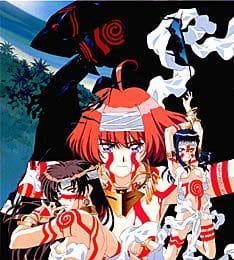
"Neo Ranga" is a 48-episode anime series that blends science fiction, drama, and action, centered around the arrival of a mysterious giant robot and its impact on three sisters and the world at large. The story begins when a massive, ancient robot named Ranga emerges from the ocean near the fictional island nation of Barou. Ranga is discovered to be connected to the Shimabara sisters—Minami, Yuuhi, and Ushio—who inherit control of the robot after their long-lost brother, Dan Moroboshi, sends it to them as a gift. The sisters, living in Tokyo, are initially overwhelmed by the sudden responsibility and the attention Ranga draws.
As the series progresses, Ranga becomes a focal point for both awe and fear. The Japanese government, military forces, and various international organizations seek to control or destroy the robot, viewing it as a potential threat. The sisters, each with distinct personalities, must navigate the challenges of managing Ranga while dealing with their own personal struggles. Minami, the eldest, is pragmatic and level-headed, often taking on a leadership role. Yuuhi, the middle sister, is more emotional and idealistic, while Ushio, the youngest, is energetic and impulsive. Their differing approaches to handling Ranga and its powers create tension but also highlight their growth as individuals and as a family.
Ranga itself is a sentient being with immense power, capable of flight, energy projection, and other advanced abilities. Its origins are shrouded in mystery, tied to ancient civilizations and divine mythology. The robot’s presence sparks global intrigue, leading to conflicts with shadowy organizations, rogue nations, and even supernatural entities. The series explores themes of power, responsibility, and the consequences of wielding such a force in a world unprepared for its existence.
Throughout the narrative, the Shimabara sisters face moral dilemmas, political intrigue, and personal challenges as they strive to protect Ranga and determine its purpose. The series balances episodic storytelling with an overarching plot, delving into the sisters’ relationships, the robot’s origins, and the broader implications of its existence. "Neo Ranga" combines action-packed sequences with character-driven drama, creating a multifaceted narrative that examines the intersection of humanity, technology, and mythology.
As the series progresses, Ranga becomes a focal point for both awe and fear. The Japanese government, military forces, and various international organizations seek to control or destroy the robot, viewing it as a potential threat. The sisters, each with distinct personalities, must navigate the challenges of managing Ranga while dealing with their own personal struggles. Minami, the eldest, is pragmatic and level-headed, often taking on a leadership role. Yuuhi, the middle sister, is more emotional and idealistic, while Ushio, the youngest, is energetic and impulsive. Their differing approaches to handling Ranga and its powers create tension but also highlight their growth as individuals and as a family.
Ranga itself is a sentient being with immense power, capable of flight, energy projection, and other advanced abilities. Its origins are shrouded in mystery, tied to ancient civilizations and divine mythology. The robot’s presence sparks global intrigue, leading to conflicts with shadowy organizations, rogue nations, and even supernatural entities. The series explores themes of power, responsibility, and the consequences of wielding such a force in a world unprepared for its existence.
Throughout the narrative, the Shimabara sisters face moral dilemmas, political intrigue, and personal challenges as they strive to protect Ranga and determine its purpose. The series balances episodic storytelling with an overarching plot, delving into the sisters’ relationships, the robot’s origins, and the broader implications of its existence. "Neo Ranga" combines action-packed sequences with character-driven drama, creating a multifaceted narrative that examines the intersection of humanity, technology, and mythology.
Episodes
Staffel 1
1Showdown At Tennozu Isle
Neo Ranga rises from Tokyo Bay and walks through the city. The Japanese military deploys tanks,helicopters, and artillery to intercept the giant. Civilians flee as the creature destroys buildings and infrastructure. The Shimabara sisters—Minami, Ushio, and Yuuhi—go about their daily lives unaware of the chaos. A narrator explains that the three orphans have inherited the throne of the South Pacific island kingdom of Barou. Their missing older brother married Barou's princess, making the sisters the new royal heirs. The ancient god Neo Ranga serves as the protector of Barou's monarchy. Ranga pushes through military blockades and heads directly toward the sisters' location. The military launches a full assault at Tennozu Isle, but Ranga ignores their attacks and continues its advance. The episode ends with the sisters discovering their involuntary link to the unstoppable god. Tokyo faces the immediate crisis of a divine guardian that neither the government nor the sisters can control.
2Episode 2
3Episode 3
4Episode 4
5Carnival in the Desert
Minami,Ushio, and Yuuhi attend a long-awaited desert festival filled with stalls, costumes, and rides. During the festivities, the sisters notice a peculiar statue placed on an altar and surrounded by ominous-looking men. Local tribes revere the statue as a sacred deity, creating a cult-like atmosphere around it. Masked men attempt to steal the statue during the night, but Neo Ranga appears and thwarts the theft. The locals abruptly abandon the festival and flee in haste, prompting the sisters to investigate. The sisters discover that the statue carries a curse which brings destruction and chaos to the land. The curse also affects the minds of the people, causing further disorder. When the sisters try to convince the locals to abandon the cursed deity, they meet resistance. Masked men capture Neo Ranga and turn his powers against the island's inhabitants. A final showdown erupts between Neo Ranga and the forces of evil, with the sisters struggling to survive amid the chaos. The episode ends on a cliffhanger, leaving Neo Ranga captured and the island's fate unresolved.
6Episode 6
7Episode 7
8The Landscape Seen Through Yuuhi's Eyes
Yuuhi Shimabara traverses the ruined districts of Yokohama with a sketchbook. She documents the abandoned buildings and shattered infrastructure through drawings and photographs. Neo Ranga frequently appears as the subject of her artwork. Yuuhi meets a boy named Taro who has lost his family in the catastrophe. The two children bond over their shared fascination with the destroyed cityscape. They venture deeper into the urban ruins together,uncovering relics of the civilization that collapsed. Meanwhile, the Okamura siblings confront a growing moral dilemma regarding Ranga's powers. Minami, Ushio, and Yuuhi struggle between using the god to protect Yokohama and withdrawing to live peacefully. Ranga's presence continues to draw both hope and fear from the local population. The episode ends with the sisters' alliances under strain as external forces pressure them for control over the deity. The unresolved question of how the siblings will wield Ranga's power sets the stage for escalating confrontations with both military units and the shadow organization seeking to capture the god.
9Episode 9
10Episode 10
11Episode 11
12Episode 12
13Episode 13
14Episode 14
15Episode 15
16Episode 16
17The Melancholy of the Immortal
The episode follows the Shimabukuro sisters as they manage Ranga's presence in Tokyo. The public grows restless,leading to protests outside the sisters' home. The youngest sister, Minami, feels the weight of the crowd's anger directly. She questions whether keeping Ranga in the city serves any purpose. The middle sister, Ushio, tries to negotiate with local officials who demand Ranga's removal. Their older sister, Ayane, receives a business proposition from a corporation seeking to weaponize the god. Ayane rejects the offer, causing the corporation to explore other, more aggressive methods. Ranga senses the sisters' distress and remains inactive, which further frustrates both the family and the onlookers. A small group of radicals attempts to storm the sisters' compound, but Ranga's subtle movement scatters them without causing harm. The sisters realize their political and social isolation has deepened. Their only ally, a journalist who previously supported them, turns critical after witnessing Ranga's potential for destruction. The episode ends with the sisters barricading themselves inside their home, uncertain if they can trust anyone outside their family.
18Fun In The Sun With A Watermelon
19Episode 19
20Episode 20
21Episode 21
22Episode 22
23Episode 23
24The White Tide
25The Seeds of Independence in Western Tokyo
The episode begins with a brief recap of the first season's events. It then opens the second season by showing the Japanese government's response to the Shimabara sisters and their god. The authorities designate the sisters' Musashino neighborhood as a quasi-embassy requiring passports for entry and exit. The government cuts off utilities to the village to isolate the area. Outside forces manipulate these political decisions to weaken Ranga's influence. The sisters face the immediate consequences of their town becoming a sealed-off enclave. Minami confronts the financial and logistical pressures of the blockade. Ushio struggles with the rising hostility from their neighbors and the state. The episode establishes new directorial oversight as Toshiyuki Tsuru takes over from Jun Kamiya. The change in creative leadership signals a heightened focus on political conflict over supernatural threats. The closure of the episode shows Ranga standing idle as human authorities tighten their grip. The episode ends with the sisters trapped between popular resentment and government coercion,setting the stage for further escalations.
26The Blessed Heart of Evil
Minami Shimabara views Neo Ranga as a source of income,Ushio as a guardian for the people, and Yuuhi as a tool to expand her influence. The three sisters embark on a mission at sea. Pirates capture the sisters during this mission. An ancient god, one of the old deities like Neo Ranga, attacks the giant protector. Neo Ranga fights off this attacking god. The sisters manage to escape their captors. The pirates survive the encounter and deliver a critical observation to the sisters. They argue that Neo Ranga does not fit into the structure of modern society. This argument forces Minami, Ushio, and Yuuhi to reconsider their individual reasons for controlling the god. The episode ends with the sisters questioning whether their personal goals for Ranga can coexist with the creature's true nature. The next episode, "Battlefield Yearning," introduces a militant group that rejects the government's solution of granting the Musashino area foreign-soil status.
27Battlefield Yearning
A militant group calling itself the Teikoku arises from discontent among Japan's youth. The group rejects the government's decision to grant foreign-soil status to the Musashino area. Teikoku members see this governmental solution as a direct threat to national sovereignty. They vow to take whatever action necessary to overturn the status change. The episode introduces the Teikoku as a new opposition force against the existing political arrangement. The group's emergence places additional pressure on the Shimabara sisters and their control of Ranga. The sisters previously managed Ranga amid government manipulation and corporate interests. Now they face a nationalist militant faction unwilling to accept any compromise on territorial integrity. The Teikoku's formation raises the stakes for the Musashino area's unusual political status. Their willingness to use force sets the stage for direct violent confrontation. The episode closes with the militants preparing to escalate their resistance beyond political rhetoric. The Teikoku moves to raise another ancient god from the depths to challenge Ranga directly.
28Episode 28
29How to Embarrass the King
30Courage on Display
31Working it for the Camera
32We’re Going LIVE!
33The Great Osaka Battle (Part A)
34The Great Osaka Battle (Part B)
35What Happened to Christmas Eve?
36Christmas in Crisis
37One Too Many Greasy Spoons
38In a World Without Punishment
39The Recovering
40Tastes Like Chicken
41Insurrection Time
42God of a Godless Land
43Recovering Sacred Ground
44Sweet Poison
45Time Lost But Not Forgotten
46Angels in Vogue
47Promises and Prophecy
48In the Paradise of Destitution
Cast
- Ushio Shimabara
- Ushio
- Yuuji
- Mei Ohmori
- Yoshiyuki Takesue
- Nayel
- Hayato Tetsu
- Yuuhi Shimahara
- Yuhi Shimabara
- Mei Omori
- Yuuhi Shimabara
- Geni Rey
- Ushio ShimaharaMarta Ullod
- Masaru ShimabaraXavier FernándezSeiji Toyama
- Mar Roca
- Shogo Haseoka
- Tsubasa Sasai
- LabureyYuri
Comment(s)
Staff
- Chief DirectorJun KamiyaToshiyuki Tsuru
- Script
- Episode DirectorHajime KamegakiJun KamiyaNanako ShimazakiKoji MasunariMasahiko MurataShigeru UedaOsamu UemuraHideki TakayamaKenichirō WatanabeRion KujoToshiyuki Tsuru
- MusicKuniaki Haishima
- Character DesignHiroto Tanaka
- ArtYūji IkedaJunichi HigashiShigenori TakadaTakafumi Nishima
- Mecha designShiho Takeuchi
- Director of PhotographyMotoaki Ikegami
- ProducerNaoji HōnokidaniTakashi Watanabe
- Series DirectorJun Kamiya
- StoryboardHajime KamegakiNoriyuki AbeTakao KatoJun KamiyaNanako ShimazakiKoji MasunariMasahiko MurataShigeru UedaHiroto TanakaOsamu UemuraHideki TakayamaSusumu NishizawaJun TakadaKenichi TakeshitaToshiyuki Tsuru
- Unit DirectorJun KamiyaHiroto TanakaToshiyuki Tsuru
- Original creator
- Art DirectorYūji Ikeda
- Animation DirectorHideyuki MotohashiSatoshi IshinoYasuhisa KatōFumihide SaiHirofumi SuzukiHiroto TanakaShiho TakeuchiOsamu HoriuchiHideki TachibanaYukimaro ŌtsuboMinoru YamazawaMasahiro OkamuraHirofumi MasudaKeiko ShimizuTakuji YoshimotoJunichi HayakawaGen TakaseAkira Inoue
- Sound DirectorKazuhiro Wakabayashi
- Executive producerYūji NunokawaKunihiko Ishizaki
Production
- ProductionPony CanyonStudio PierrotMarubeni
- Animation ProductionStudio Pierrot
Relations
Recommendations based on shared tags.
Anime overview



Manga overview

Music