
TV-Series
Description
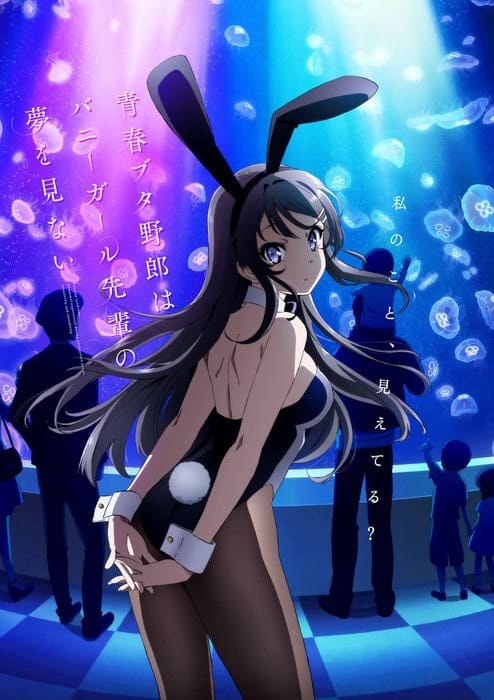
"Rascal Does Not Dream of Bunny Girl Senpai" is a supernatural romantic drama that explores the lives of teenagers grappling with mysterious phenomena known as "Adolescence Syndrome." The story centers on Sakuta Azusagawa, a high school student who encounters a series of strange occurrences affecting his peers. The narrative begins when Sakuta spots Mai Sakurajima, a famous actress and his upperclassman, wandering through the library in a bunny girl costume. Strangely, no one else seems to notice her. Mai reveals that she is suffering from Adolescence Syndrome, a condition causing her to gradually become invisible to others. Sakuta, intrigued and determined to help, investigates the phenomenon and discovers a deeper connection between Adolescence Syndrome and the emotional struggles of those affected.
As the story progresses, Sakuta encounters other individuals experiencing similar inexplicable events. Each case is tied to the emotional and psychological turmoil of adolescence, such as identity crises, social isolation, and unresolved trauma. For instance, Sakuta’s younger sister, Kaede, suffers from a condition where her memories are fragmented, and she believes she is living in a different reality. Another classmate, Tomoe Koga, finds herself trapped in a time loop, reliving the same day repeatedly. Through these encounters, Sakuta learns that Adolescence Syndrome manifests as a physical or temporal distortion of reality, often reflecting the inner struggles of the afflicted.
The relationship between Sakuta and Mai serves as the emotional core of the series. Their bond deepens as they work together to unravel the mysteries of Adolescence Syndrome, with Mai gradually opening up about her struggles with fame and loneliness. The series balances its supernatural elements with grounded, heartfelt moments, exploring themes of love, self-acceptance, and the complexities of human relationships. The narrative is driven by Sakuta’s unwavering determination to support those around him, even as he confronts his own emotional scars.
The supporting cast includes characters like Rio Futaba, a scientifically-minded classmate who assists Sakuta in understanding the phenomena, and Nodoka Toyohama, Mai’s childhood friend and fellow actress. Each character’s story arc contributes to the overarching exploration of Adolescence Syndrome, highlighting the interplay between emotional vulnerability and the surreal manifestations of their struggles. The series concludes with a poignant resolution to Sakuta and Mai’s journey, while leaving room for further exploration of the enigmatic syndrome and its impact on their lives.
As the story progresses, Sakuta encounters other individuals experiencing similar inexplicable events. Each case is tied to the emotional and psychological turmoil of adolescence, such as identity crises, social isolation, and unresolved trauma. For instance, Sakuta’s younger sister, Kaede, suffers from a condition where her memories are fragmented, and she believes she is living in a different reality. Another classmate, Tomoe Koga, finds herself trapped in a time loop, reliving the same day repeatedly. Through these encounters, Sakuta learns that Adolescence Syndrome manifests as a physical or temporal distortion of reality, often reflecting the inner struggles of the afflicted.
The relationship between Sakuta and Mai serves as the emotional core of the series. Their bond deepens as they work together to unravel the mysteries of Adolescence Syndrome, with Mai gradually opening up about her struggles with fame and loneliness. The series balances its supernatural elements with grounded, heartfelt moments, exploring themes of love, self-acceptance, and the complexities of human relationships. The narrative is driven by Sakuta’s unwavering determination to support those around him, even as he confronts his own emotional scars.
The supporting cast includes characters like Rio Futaba, a scientifically-minded classmate who assists Sakuta in understanding the phenomena, and Nodoka Toyohama, Mai’s childhood friend and fellow actress. Each character’s story arc contributes to the overarching exploration of Adolescence Syndrome, highlighting the interplay between emotional vulnerability and the surreal manifestations of their struggles. The series concludes with a poignant resolution to Sakuta and Mai’s journey, while leaving room for further exploration of the enigmatic syndrome and its impact on their lives.
Episodes
Staffel 1
1My Senpai is a Bunny Girl
2On First Dates, Trouble Is Essential
3The World Without You
4There Is No Tomorrow For A Rascal
5All the Lies I Have for You
6This World You Chose
7Adolescence Paradox
8Wash It All Away on a Stormy Night
9Sister Panic
10Complex Congratulations
11The Kaede Quest
12Life is a Never-Ending Dream
13The Dawn After an Endless Night
Cast
- Rio Futaba
- Sakuta Azusagawa
- Melanie Olbert
- Tomoe Koga
- Shōko Makinohara
Comment(s)
Staff
- Director
- ScriptMasahiro Yokotani
- Episode DirectorKazuya IwataDaisuke TsukushiMasahiro ShinoharaHidetoshi TakahashiRyūta OnoShōhei YamanakaKazuki Horiguchi
- Musicfox capture plan
- Original Character DesignKeeji Mizoguchi
- Art DirectorYukihiro Shibutani
- Animation DirectorKyoko NiimuraToshiaki MikiMasako ItōYumi ShimizuMadoka OzawaMio InoguchiIori NonoshitaRyū MiuraSakurako MitsuhashiYoriko GotōSatomi TamuraShuri ToidaHiroyuki KobashiGuonian WangRie IshigeShiori MiyazakiHaruka TsuzukiHikaru AsamiYurika SomeyaKurisu OgawaNi Yu
- Sound DirectorYoshikazu Iwanami
- Director of PhotographyYoshihiro Sekiya
- ProducerShuko YokoyamaYūichirō Kurokawa
- Series CompositionMasahiro Yokotani
- StoryboardJunichi SakataYoshikazu MiyaoKazuya IwataHideaki KurakawaDaisuke HiramakiRyūta OnoKazuki Horiguchi
- Unit DirectorKazuya Iwata
- Original creator
- Character DesignSatomi Tamura
- Chief Animation DirectorSatomi Tamura
- Art designKazushi Fujii
- Cgi DirectorYūto KarasawaYuusuke Noma
- Executive producerHiroyuki Shimizu
Production
- ProductionKadokawaABC AnimationHakuhodo DY Music & PicturesAniplexTokyo MXNippon BS Broadcasting CorporationNagoya Broadcasting Network
- Animation ProductionCloverWorks
Relations
Anime overview
Music
Ending