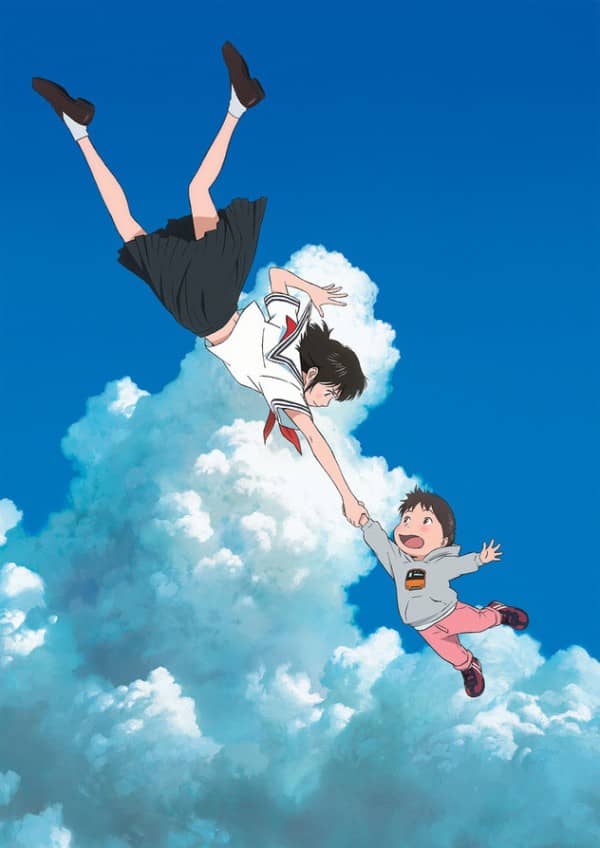
Movie
Description
"Mirai" centers on Kun, a young boy who struggles with jealousy and confusion after the arrival of his newborn sister, Mirai. The story unfolds in a blend of reality and fantasy as Kun navigates his feelings of displacement and resentment. His family’s home becomes a gateway to a series of surreal encounters with figures from his family’s past, present, and future, each interaction offering him a deeper understanding of his place within the family and the passage of time.
Kun’s journey begins when he encounters a teenage version of his sister, Mirai, who has traveled back in time to help him. Through her, Kun learns about the challenges and responsibilities of growing up. Subsequent encounters include a meeting with his mother as a young girl, revealing her own struggles and sacrifices, and his great-grandfather as a young man, showcasing the resilience and determination that shaped their family. These experiences gradually shift Kun’s perspective, helping him reconcile his emotions and appreciate the interconnectedness of his family’s history.
The narrative is driven by Kun’s emotional growth, as he transitions from a self-centered child to one who begins to understand the complexities of love, responsibility, and familial bonds. The story is grounded in themes of generational continuity, the cyclical nature of life, and the importance of empathy. The characters are portrayed with depth, each contributing to Kun’s evolving understanding of his role within the family. The blend of everyday family dynamics with fantastical elements creates a poignant exploration of childhood and the universal challenges of growing up.
Kun’s journey begins when he encounters a teenage version of his sister, Mirai, who has traveled back in time to help him. Through her, Kun learns about the challenges and responsibilities of growing up. Subsequent encounters include a meeting with his mother as a young girl, revealing her own struggles and sacrifices, and his great-grandfather as a young man, showcasing the resilience and determination that shaped their family. These experiences gradually shift Kun’s perspective, helping him reconcile his emotions and appreciate the interconnectedness of his family’s history.
The narrative is driven by Kun’s emotional growth, as he transitions from a self-centered child to one who begins to understand the complexities of love, responsibility, and familial bonds. The story is grounded in themes of generational continuity, the cyclical nature of life, and the importance of empathy. The characters are portrayed with depth, each contributing to Kun’s evolving understanding of his role within the family. The blend of everyday family dynamics with fantastical elements creates a poignant exploration of childhood and the universal challenges of growing up.
Cast
- Pare
- Suliane Brahim
- Catherine Le Hénan
- Mare
- Papi
Comment(s)
Staff
- Director
- MusicMasakatsu Takagi
- Character DesignHiroyuki Aoyama
- Animation DirectorHiroyuki AoyamaAyako Hata
- Producer
- Screenplay
- Original creator
- Art DirectorTakashi OmoriYohei Takamatsu
- Cgi DirectorRyo Horibe
Production
- ProductionKadokawaVAPD.N. Dream PartnersNippon Television NetworkDentsu Inc.YTVStudio ChizuNTT Docomo
- Animation ProductionStudio Chizu

Relations
Manga overview