TV-Series
Description
In a futuristic world where robots are common, a brilliant but grief-stricken scientist named Dr. Tenma creates a powerful robot boy to replace his own son, Tobio, who died in a traffic accident. Built with immense strength, rocket-powered limbs, and advanced artificial intelligence, the robot is designed to look and act like a real human child. However, Dr. Tenma eventually becomes disappointed when his creation cannot grow or truly replicate the emotions of a lost son, leading him to abandon the robot.
The robot boy falls into the clutches of a cruel circus owner named Hamegg, who forces him to perform as a stagehand and exhibit, treating him harshly. His fortunes change when he is discovered by Professor Ochanomizu, the kind-hearted and wise head of the Ministry of Science. The professor rescues the robot, becomes his legal guardian, and gives him the name Astro Boy, helping him integrate into human society as a sixth-grade student. Professor Ochanomizu recognizes that Astro Boy possesses not only incredible powers but also a unique capacity for human emotion, known as Kokoro.
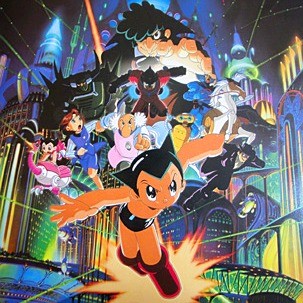
As Astro Boy adjusts to his new life, he uses his superpowers to protect Metro City from various threats. These include renegade robots, alien invaders, and human criminals who hate robots. A recurring theme is the social prejudice and discrimination that robots face from humans who view them as mere tools. Despite being a powerful superhero, Astro Boy is a pacifist at heart who seeks to solve problems through understanding and compassion rather than violence whenever possible. He is often joined by his spunky younger sister, Uran, another robot created by Professor Ochanomizu, and his human school friends Kenichi, Shibugaki, and Tamao.
The story explores Astro Boy’s search for his own identity as he grapples with the knowledge that he was created to replace a dead child. His original creator, Dr. Tenma, often reappears as a complex antagonist, sometimes seeking to reclaim his creation or prove that robots are superior to humans. Astro Boy also faces powerful robot rivals like Atlas, a similar creation built with a darker purpose, and must confront major conflicts such as a robot revolution led by the Blue Knight and anti-robot movements pushed by humans like the politician Acetylene Lamp. Throughout these adventures, the series consistently raises deep philosophical questions about the relationship between humanity and technology, the nature of consciousness, and what it truly means to have a heart.
The robot boy falls into the clutches of a cruel circus owner named Hamegg, who forces him to perform as a stagehand and exhibit, treating him harshly. His fortunes change when he is discovered by Professor Ochanomizu, the kind-hearted and wise head of the Ministry of Science. The professor rescues the robot, becomes his legal guardian, and gives him the name Astro Boy, helping him integrate into human society as a sixth-grade student. Professor Ochanomizu recognizes that Astro Boy possesses not only incredible powers but also a unique capacity for human emotion, known as Kokoro.
As Astro Boy adjusts to his new life, he uses his superpowers to protect Metro City from various threats. These include renegade robots, alien invaders, and human criminals who hate robots. A recurring theme is the social prejudice and discrimination that robots face from humans who view them as mere tools. Despite being a powerful superhero, Astro Boy is a pacifist at heart who seeks to solve problems through understanding and compassion rather than violence whenever possible. He is often joined by his spunky younger sister, Uran, another robot created by Professor Ochanomizu, and his human school friends Kenichi, Shibugaki, and Tamao.
The story explores Astro Boy’s search for his own identity as he grapples with the knowledge that he was created to replace a dead child. His original creator, Dr. Tenma, often reappears as a complex antagonist, sometimes seeking to reclaim his creation or prove that robots are superior to humans. Astro Boy also faces powerful robot rivals like Atlas, a similar creation built with a darker purpose, and must confront major conflicts such as a robot revolution led by the Blue Knight and anti-robot movements pushed by humans like the politician Acetylene Lamp. Throughout these adventures, the series consistently raises deep philosophical questions about the relationship between humanity and technology, the nature of consciousness, and what it truly means to have a heart.
Episodes
Staffel 1
1Power Up!
2Rocket Ball
3Atom in space
4Thunderbolt
5Save the Roboter Farm!
6Atlas Birth
7Atom VS Atlas
8Neon Express
9Franken
10Venus Robots
11Reviving Jumbo
12Robot Hunters
13The Rise of Pluto
14Mikuro's Adventure
15Population's intelligence protection!
16Dark Robot Hunter
17Deep City
18The Blue Knight
19Hydra-Jacked
20Geo Raider
21Secret of the Blue Knight
22Goodbye Princess
23Little Sister, Big Trouble
24Bea-chan
25Only a Machine
26Robot Boy
27Dawn of the Techno-Revolution
28The Legend of Tohron
29March of the Micro Bears
30Old Dog, New Tricks
31The Case of the Phantom Fowl
32Gideon
33Fairy Tale
34Shape Shifter
35Phoenix (or Firebird)
36Space Academy
37Atlas Strikes Back
38Battle-Bot
39Time Hunters
40Escape from Volcano Island
41Avalanche
42Battle of Steel Island
43Undercover
44Into the Dragon's Lair
45Night Before the Revolution
46Robotonia
47Showdown in Robotonia
48Journey to Tomorrow
49Astro Reborn
50The Final Battle
Cast
- Shibugaki
- Reno
- Shadow
- Claudio VelazquezKathlynn Tolentino
- Zoran
- Tamao
- Skunk Kusai
- Robita
- Yūko Kisaragi
- Uran
Comment(s)
Staff
- DirectorKazuya KonakaKeiichirō Mochizuki
- StoryboardKazuo YamazakiToshio HirataYukihiro ShinoYoshio TakeuchiYukio SuzukiHiromitsu MoritaKazuya KonakaKeiichirō MochizukiFumihiro YoshimuraNoboru FuruseShinji SeyaMasayoshi NishidaTakuo SuzukiSatoshi KuwabaraFumio Maezono
- MusicTakashi Yoshimatsu
- Character DesignShinji Seya
- Chief Animation DirectorShinji Seya
- Mechanical designShinji AramakiTakeshi Takakura
- Director of PhotographyHajime NoguchiHirokata Takahashi
- ProducerYasuhisa KazamaMinoru KubotaAtsuya TakaseTsuneyuki MorishimaNorio HayashiKaoru Matsuzaki
- ScriptChiaki J. KonakaSadayuki MuraiMarc HandlerKeiichi HasegawaKenji KonutaHirotoshi KobayashiPamela HickeyDennys McCoyLarry Biscoff
- Episode DirectorKazuo YamazakiToshio HirataShigeharu TakahashiMasami HataYukihiro ShinoYoshio TakeuchiYukio SuzukiHiroshi IshiodoriKeiichirō MochizukiFumihiro YoshimuraYasumi MikamotoMakoto FuchigamiMasayoshi NishidaTakuo SuzukiKazunori TanahashiSatoshi KuwabaraSaburō HashimotoJun TakizawaKentaro MizunoYoshizō TsudaFumio MaezonoTakechika Narikawa
- Original creator
- Art DirectorHiroshi Katō
- Animation DirectorHiroshi UchidaShinichi SuzukiYoshishige KosakoTakashi SaijōNoboru FuruseShinji SeyaShinsuke TerasawaKeizō ShimizuMasayoshi NishidaTakuo SuzukiHiroshi KanazawaShigeru KatōMasaki YoshimuraJōji YanaseToshi Shishikura
- Sound DirectorMasafumi MimaMasafumi Zanma
- Executive producerTakayuki MatsutaniRyuuichi MoriHaruyuki Machida
Production
- ProductionTezuka ProductionsFuji Television NetworkDentsu Inc.Sony Pictures Entertainment
Relations
Anime overview
Manga overview