TV-Series
Description
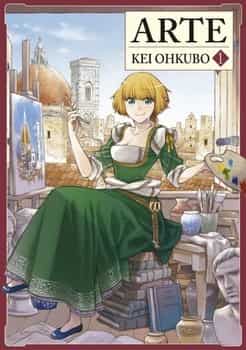
Set in 16th-century Florence during the Renaissance, "Arte" centers on Arte Spalletti, a young noblewoman determined to pursue her passion for art despite societal expectations. Born into an aristocratic family, Arte is expected to conform to traditional gender roles, but she dreams of becoming a professional artist. After her father's death, her mother pressures her to abandon her ambitions, but Arte refuses. She leaves her comfortable life behind and seeks apprenticeship under the renowned but gruff master painter Leo.
Leo initially rejects Arte due to her gender, believing women lack the strength and endurance required for the demanding work of an artist. However, Arte's unwavering determination and talent gradually earn his respect, and he agrees to take her on as his apprentice. The series follows Arte's journey as she navigates the challenges of being a woman in a male-dominated profession, from mastering technical skills to earning the trust of clients and peers. Along the way, she encounters various characters, including fellow artisans, merchants, and nobles, who shape her growth as an artist and individual.
The narrative explores themes of perseverance, gender equality, and the pursuit of one's dreams. Arte's interactions with Leo and others highlight the societal constraints of the era, as well as the personal sacrifices required to break free from them. Her work ranges from creating frescoes and portraits to designing costumes for theatrical performances, showcasing the diverse opportunities and struggles of Renaissance artists. Through her experiences, Arte not only hones her craft but also challenges the prejudices of her time, inspiring those around her to reconsider their assumptions about gender and artistry.
The series balances Arte's professional development with her personal relationships, particularly her evolving bond with Leo, who becomes both a mentor and a source of emotional support. Other key characters include Veronica, a courtesan who becomes Arte's friend and model, and Yuri, a young nobleman who admires Arte's talent and determination. Together, these relationships enrich the story, providing depth to Arte's journey and the world she inhabits. "Arte" offers a compelling portrayal of a young woman's struggle to carve out a place for herself in a rigidly hierarchical society, blending historical detail with a heartfelt narrative of ambition and resilience.
Leo initially rejects Arte due to her gender, believing women lack the strength and endurance required for the demanding work of an artist. However, Arte's unwavering determination and talent gradually earn his respect, and he agrees to take her on as his apprentice. The series follows Arte's journey as she navigates the challenges of being a woman in a male-dominated profession, from mastering technical skills to earning the trust of clients and peers. Along the way, she encounters various characters, including fellow artisans, merchants, and nobles, who shape her growth as an artist and individual.
The narrative explores themes of perseverance, gender equality, and the pursuit of one's dreams. Arte's interactions with Leo and others highlight the societal constraints of the era, as well as the personal sacrifices required to break free from them. Her work ranges from creating frescoes and portraits to designing costumes for theatrical performances, showcasing the diverse opportunities and struggles of Renaissance artists. Through her experiences, Arte not only hones her craft but also challenges the prejudices of her time, inspiring those around her to reconsider their assumptions about gender and artistry.
The series balances Arte's professional development with her personal relationships, particularly her evolving bond with Leo, who becomes both a mentor and a source of emotional support. Other key characters include Veronica, a courtesan who becomes Arte's friend and model, and Yuri, a young nobleman who admires Arte's talent and determination. Together, these relationships enrich the story, providing depth to Arte's journey and the world she inhabits. "Arte" offers a compelling portrayal of a young woman's struggle to carve out a place for herself in a rigidly hierarchical society, blending historical detail with a heartfelt narrative of ambition and resilience.
Episodes
Staffel 1
1Io sono Arte
In sixteenth-century Florence,Arte, a young noblewoman, refuses her mother’s demand to marry and instead pursues a career as a painter. She cuts her hair, dons commoner clothes, and leaves her family home to seek apprenticeship in the city. At the workshop of the painter Leo, Arte presents herself as a prospective apprentice. Leo dismisses her immediately, citing her gender and noble background as disqualifications. Arte persists, and Leo sets a test: draw a model who was scheduled to sit for the workshop. When the model does not arrive, Arte draws Leo himself. Leo examines the drawing and criticizes it as technically proficient but lacking emotion and vitality. Despite his harsh words, Leo recognizes Arte’s unwavering resolve and offers her a conditional place in his studio. She must handle all household chores and prove her dedication before receiving any formal instruction. Arte accepts without hesitation, viewing the menial work as the only path to the artistic knowledge she craves. The episode concludes with Arte beginning her new life as a maid and de facto apprentice, facing the immediate challenge of earning Leo’s respect and overcoming his reluctance to teach a woman.
2Apprentice
Arte arrives at Leo’s workshop and receives a pile of chores: grinding pigments,washing brushes, and stretching canvases. Leo tells Arte that mastering these tasks forms the foundation of painting. Arte grows impatient and asks to sketch from a live model. Leo denies her request, stating she has not yet earned that right. A noblewoman visits the workshop and demands a portrait from Leo within days. Leo refuses the commission because his current workload prevents it. Arte privately accepts the task, believing she can complete the portrait herself. She begins sketching the noblewoman without Leo’s knowledge. Leo discovers her sketches and examines them carefully. He acknowledges her natural talent but warns that skipping the fundamentals will create technical limits later. He assigns her to clean the studio as a lesson but then gives her a small wooden panel to paint, testing whether she has absorbed the material preparation. Arte faces the panel with renewed focus, understanding now that every task in the workshop carries purpose. Leo watches to see if she can translate her preparation into a finished piece.
3Il primo cliente
Arte receives her first independent commission from the noblewoman Veronica,who demands a portrait that conceals her age and emphasizes her beauty. Leo advises Arte to follow the patron’s wishes to secure payment, but Arte instead paints a realistic depiction, highlighting Veronica’s natural features including her wrinkles. Veronica reacts with visible anger, accusing Arte of incompetence and threatening to withhold payment. Arte offers to repaint the portrait as a flattering version, explaining that her original work reflects her training in honest representation. Veronica examines the second version and rejects it, demanding the first portrait back. She then admits that she values authenticity over flattery and hires Arte for ongoing work, revealing that she had been testing the artist’s integrity. Arte gains a stable contract but also faces the challenge of reconciling her principles with future patrons’ expectations. The episode closes with Arte preparing for a new commission while Leo observes her growing confidence in handling difficult clients.
4Apprentice
Arte accepts a commission to paint a portrait of a noblewoman,Caterina. Her initial sketches focus solely on physical likeness, but Caterina rejects them as lifeless. Leo instructs Arte to observe the sitter’s personality rather than merely replicating features. Arte returns to Caterina’s home and spends time talking with her, learning about her past love for dance and her current frustrations. Using this insight, Arte produces a new sketch that captures Caterina’s spirited nature, finally earning the client’s approval. Simultaneously, Leo’s former master, Ubertino, arrives in Florence and criticizes Leo’s unorthodox teaching methods. Ubertino dismisses Arte’s abilities outright, citing her gender and noble upbringing as disqualifications. Leo counters by defending Arte’s dedication and rapid progress, refusing to send her away. Arte witnesses the exchange and resolves to prove herself through her work, though Ubertino’s influence now casts doubt on her place in the workshop.
5The Painter's Guild
Arte completes her Madonna painting under Leo’s guidance and submits it to the painters’ guild for the licensing examination. The guild members,including the influential artist Ubertino, scrutinize her work and her status as a woman. Ubertino argues that no female painter should be admitted, questioning her technical competence despite the visible quality of her piece. Arte responds by explaining her artistic choices and the dedication she applied to each brushstroke. The guild master examines the painting closely and acknowledges its merit, overruling Ubertino’s objections. The guild grants Arte a license, making her a recognized painter in Florence. Following the examination, Ubertino privately warns her that her struggle has only begun, as clients and fellow artists will continue to test her resolve. Arte returns to Leo’s workshop, where he congratulates her but reminds her that a license alone does not guarantee work. The next day, a merchant arrives at the workshop seeking a painter for his daughter’s portrait, but specifies that he wants a male artist.
6Episode 6
Leo informs Arte that he will take on a new apprentice,a boy named Yuri from a noble Florentine family. Arte reacts with visible unease, fearing her own position in the workshop may become secondary. Yuri arrives and immediately questions Arte’s presence, assuming a woman cannot be a serious artist. Arte responds by doubling her efforts on a commissioned portrait, attempting to prove her worth through speed and precision. Leo assigns both apprentices to collaborate on a single painting, forcing them to coordinate their approaches. Arte struggles to accept Yuri’s input, while Yuri privately admits to Leo that he respects Arte’s draftsmanship. During the joint work, Arte notices Yuri’s meticulous brushwork and concedes that his technique has merit. Yuri, in turn, acknowledges that Arte’s grasp of composition surpasses his own. They complete the painting together, and Leo praises their combined result. Arte stops seeing Yuri as a rival and instead agrees to share the workshop’s tasks with him. The episode closes with Arte and Yuri preparing to take on separate commissions, but their differing social statuses hint at future complications within the guild’s hierarchy.
7Episode 7
The guild assigns Leo a portrait commission for a noblewoman with a tight deadline. Leo delegates the preparatory sketch and part of the underpainting to Arte. Arte arrives at the client’s residence alone to deliver the sketch and encounters the guild’s elder members who openly question a female artist’s competence. The noblewoman’s mother demands to see Arte’s hands,inspecting them for calluses to judge her dedication. Arte shows the calluses earned from years of drawing, momentarily silencing the doubters. She returns to the workshop and completes her portion of the painting under Leo’s supervision. When the guild members inspect the finished work, they cannot distinguish Arte’s contributions from Leo’s. The elder reluctantly acknowledges her skill but reminds her that membership in the guild remains barred to women. Arte receives payment for her work—the first money she has earned as an artist—and uses it to buy better brushes. Leo then informs her that a new commission requires them to travel to a different city, separating her from the workshop she has begun to call home.
8The Apprentice
Arte returns to Florence from Venice. Leo announces his decision to leave for Rome to study under a master painter. He offers Arte the use of his workshop during his absence. Arte accepts to use the workshop as a chance to establish herself independently. She receives her first commission: a portrait of a noblewoman named Sofia. Sofia initially rejects Arte’s realistic style and demands a more idealized depiction. Arte revises the painting to meet Sofia’s expectations but struggles with compromising her artistic integrity. Veronica,a fellow artist, advises Arte to understand the client’s needs without sacrificing her core skills. Arte completes the portrait to Sofia’s satisfaction and gains a new patron. The experience strengthens Arte’s resolve to become a master painter. The Florentine guild requires a master to pass a rigorous examination. Arte learns that the next examination will be a public competition against established male artists. The episode closes with Arte preparing to challenge the guild’s expectations.
9The Painter's Resolve
Arte accepts a portrait commission from the Della Scala family but must work behind a folding screen because the mother considers it improper for a woman to look directly at her daughter. Arte paints from a cramped space,relying on verbal descriptions and quick glances when the screen shifts. The resulting sketches feel lifeless, and the daughter, Caterina, remains rigid and silent during sessions. Leo urges Arte to find a way to capture Caterina’s spirit rather than merely her likeness. Arte removes the screen and speaks directly to Caterina, discovering her passion for horseback riding and her frustration with being treated as a fragile ornament. Using this new understanding, Arte reworks the portrait to show Caterina in a confident, active pose. The mother initially protests the departure from tradition but relents after seeing the portrait’s vitality and her daughter’s genuine smile. Arte delivers the finished work, earning a public acknowledgment from the family and a small increase in her reputation. The commission also brings a new patron’s interest, and Leo informs Arte that a larger, more politically sensitive project now awaits her judgment.
10The Sculptor
Arte travels to the workshop of Leo,a sculptor commissioned to create a statue of Saint Cecilia for a church. Leo struggles with his work, having already discarded several clay models. He explains to Arte that the figures lack the vitality he desires. Arte offers to assist by preparing the clay, but Leo refuses, citing the pride of a craftsman. When Arte demonstrates her ability by quickly sculpting a small bird, Leo recognizes her skill and allows her to help. As they work together, Arte notices Leo’s reluctance to shape the face of the saint. Leo confesses that he lost his wife and unborn child in an accident years ago, and since then his hands cannot convey warmth in his sculptures. Arte urges him to channel his memories of love into the work rather than suppress them. Leo reworks the statue’s expression, imbuing it with a gentle sorrow that moves the client upon delivery. With the commission completed, Leo regains his confidence and decides to continue sculpting. Arte returns to the Vivaldi workshop, where a letter from her family arrives, hinting at unresolved matters from her past.
11The Heir
Arte receives a commission to paint a portrait of a young noblewoman from the Medici family,requiring her to balance this prestigious task with her ongoing apprenticeship. Meanwhile, Leo’s former master, the acclaimed painter Ubertino, arrives in Florence and publicly challenges Leo’s standing as an artist. Ubertino’s presence forces Leo to confront the unresolved rift from his apprenticeship years when Ubertino expelled him for his stubborn pride. Arte witnesses the tension and learns from other artisans that Ubertino’s hostility stems from jealousy over Leo surpassing him in reputation. Despite Leo’s refusal to meet his former master, Arte seeks out Ubertino to understand his grievances and defends Leo’s dedication to art. Ubertino dismisses Arte initially but becomes intrigued when she shows him her sketches, acknowledging her raw talent. Arte persuades Leo to visit Ubertino, emphasizing that avoiding the confrontation only prolongs their mutual bitterness. Leo reluctantly agrees and meets Ubertino, where both men admit their mistakes—Leo for his arrogance and Ubertino for his pride in rejecting a gifted pupil. The reconciliation allows Ubertino to acknowledge Leo’s growth, and he offers subtle guidance on Arte’s technique before departing Florence. With the conflict resolved, Arte refocuses on her Medici commission, but she now faces the pressure of delivering a work worthy of both her masters’ teachings. The episode closes with Arte beginning the portrait, aware that any misstep could damage the Medici’s trust and reflect poorly on Leo’s tutelage.
12The Path She Should Take
Arte returns to Florence from Venice,delivering a painting commissioned by the Medici family that depicts a Venetian canal scene. The Medici representative praises her technical mastery and awards her full payment plus a letter of recommendation. Reuniting with Leo, Arte learns he will depart for Rome to study under a renowned sculptor, ending their daily collaboration. Ubertino, her father’s former colleague, challenges her right to run a workshop, citing guild rules that bar women from master status. Leo counters by presenting Arte’s completed works and the patronage she already secured, undermining Ubertino’s legal argument. Arte declares her intention to open her own atelier in Florence, rejecting her father’s previous plan for her to marry into another family. Veronica offers Arte a workspace within her art school, providing shared resources and access to established patrons. Arte accepts, paints a sign for her workshop, and begins recruiting apprentices from modest backgrounds. She teaches her first two students, directly applying the methods she learned from Leo and Veronica. Ubertino’s faction formally withdraws opposition after Arte’s independent commission from the Medici is announced. Leo departs for Rome, and the two exchange a promise to continue improving their craft separately. The episode ends with Arte receiving her first private commission, placing her new atelier under immediate financial and creative pressure.
Cast
Comment(s)
Staff
- DirectorTakayuki Hamana
- ScriptReiko Yoshida
- Episode DirectorNorihiko SudoShigeru YamazakiShigeki AwaiTakashi AndōKyō NanahoshiMotohiro AbeXin Ya CaiSachiko Kanno
- MusicGorō Itō
- Character DesignChieko Miyakawa
- Chief Animation DirectorChieko MiyakawaKana Hashidate
- Sound DirectorYasunori Ebina
- ProducerShousei ItoMotohiro OdaSōta ShioiriShinji ŌmoriHirotaka KanekoAtsushi YoshikawaSôji MiyagiSachiko InamotoMasahiko NaganoGuo Xiang YangNoritoshi NakanoTakahiro Fujii
- Series CompositionReiko Yoshida
- StoryboardOsamu SakataGoichi IwahataYumiko IshiiTakayuki HamanaShigeki AwaiTomoko IwasakiToshio SusukidaHitoshi TadanoXin Ya Cai
- Unit DirectorOsamu SakataHitoshi Tadano
- Original creator
- Art DirectorScott MacDonald
- Animation DirectorOsamu SakataSatoko MiyachiYumiko IshiiTakayoshi HashimotoMiyako NishidaMasayuki FujitaKana HashidateYurie IijimaSaori HosodaYosuke Yajima
- Director of PhotographyTakuya Nōdai
Production
- ProductionThe Klockworx Co., Ltd.Flying DogBS FujiToei Video Co., Ltd.Tokyo MXTV Tokyo MedianetMUSEAsmik Ace Entertainment, Inc.NBCUniversal Entertainment JapanNorth Stars PicturesRayArte Production CommitteeNikkatsu Corporation
- Animation ProductionSeven Arcs
News3
Relations
Manga overview