TV-Series
Description
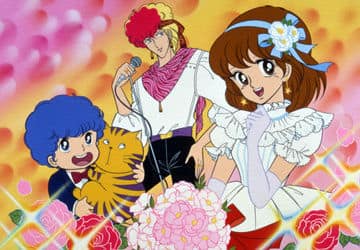
"Ai Shite Night" centers on Yaeko "Yakko" Mitamura, a 16-year-old girl who works at her family's Chinese restaurant in Tokyo. Yakko harbors a deep crush on Go Kato, a handsome and popular high school student who frequents the restaurant. Despite her feelings, Yakko struggles to express them, often feeling overshadowed by her lack of confidence and her perception of Go as unattainable. Her life takes a dramatic turn when she encounters a mysterious boy named Banjo "Ban" Shogo, a rebellious rock musician with a rough demeanor. Ban, who initially appears abrasive and self-centered, becomes inexplicably drawn to Yakko, leading to a complex love triangle.
Ban's pursuit of Yakko is relentless, and his brash personality contrasts sharply with Go's polite and reserved nature. As the story progresses, Yakko finds herself torn between her idealized love for Go and the growing, albeit confusing, feelings she develops for Ban. The narrative explores themes of unrequited love, self-discovery, and the complexities of relationships, as Yakko navigates her emotions and the challenges posed by both suitors. Ban's troubled past and his struggles with his identity as a musician add depth to his character, while Go's seemingly perfect exterior hides his own vulnerabilities and insecurities.
The series delves into the dynamics of friendship, rivalry, and personal growth, with supporting characters such as Yakko's best friend, Moko, and Ban's bandmates contributing to the unfolding drama. Moko provides comic relief and emotional support, while Ban's interactions with his band reveal his dedication to music and his desire to escape his troubled past. The story balances lighthearted moments with more serious undertones, particularly as Yakko grapples with her feelings and the consequences of her choices.
As the love triangle intensifies, Yakko must confront her own fears and insecurities, ultimately learning to understand her heart and make decisions that align with her true desires. The series concludes with a resolution that reflects the characters' growth and the evolving nature of their relationships, offering a satisfying conclusion to the emotional journey. "Ai Shite Night" is a blend of romance, comedy, and drama, capturing the turbulence of adolescence and the complexities of love.
Ban's pursuit of Yakko is relentless, and his brash personality contrasts sharply with Go's polite and reserved nature. As the story progresses, Yakko finds herself torn between her idealized love for Go and the growing, albeit confusing, feelings she develops for Ban. The narrative explores themes of unrequited love, self-discovery, and the complexities of relationships, as Yakko navigates her emotions and the challenges posed by both suitors. Ban's troubled past and his struggles with his identity as a musician add depth to his character, while Go's seemingly perfect exterior hides his own vulnerabilities and insecurities.
The series delves into the dynamics of friendship, rivalry, and personal growth, with supporting characters such as Yakko's best friend, Moko, and Ban's bandmates contributing to the unfolding drama. Moko provides comic relief and emotional support, while Ban's interactions with his band reveal his dedication to music and his desire to escape his troubled past. The story balances lighthearted moments with more serious undertones, particularly as Yakko grapples with her feelings and the consequences of her choices.
As the love triangle intensifies, Yakko must confront her own fears and insecurities, ultimately learning to understand her heart and make decisions that align with her true desires. The series concludes with a resolution that reflects the characters' growth and the evolving nature of their relationships, offering a satisfying conclusion to the emotional journey. "Ai Shite Night" is a blend of romance, comedy, and drama, capturing the turbulence of adolescence and the complexities of love.
Episodes
Staffel 1
2Misogynist Giuliano
3Still early for a kiss
4Rock 'n' roll fated meeting
5Gou and Yakko wedding`s dolls
6Platonic Love at Midnight
7Episode 7
8Episode 8
9Episode 9
10Ai no baasudee purezento
Ai leaves a goodbye letter for Shimura at his hotel front desk without seeing him and deletes his phone number. Mikan's mother tears up a photograph from their group outing and tells Mikan she has given up on Ryousuke. Mikan learns from her mother that her father was already married when her parents had their relationship. Wataru argues with his step-father about not taking college entrance exams and gets slapped. Ryousuke takes his class on an unauthorized field trip and faces suspension upon returning to school. Shimura calls Ryousuke at school to ask about Ai's whereabouts. Ryousuke calls Mikan to tell her he and Ai have split up, and Mikan reveals her mother has cancer. They go to an amusement park together, and Mikan asks to see him again. Ai takes a waitressing job and receives an offer to work as a bar hostess. Shimura gives Midorikawa a bank account with a note to build his dream bakery. Koda tells her husband she knows about his affair and then calls Wataru. Mikan gets drunk with Midorikawa, who tells her he loves her. Mikan waits outside Ryousuke's apartment and drunkenly tells him she desperately loves him. Ai observes Mikan's confession to Ryousuke from a distance and deletes his phone number from her phone. Ryousuke faces the consequences of his suspension while three love confessions hang unresolved.
11Good-bye Gou
12Episode 12
13Episode 13
14Episode 14
15Episode 15
16Episode 16
17Episode 17
18Episode 18
19Episode 19
20Lonely Boy at Night
21Go! Gou! Bee Hives
22Episode 22
23Hot Kiss in the Forest
24Together in the Storm
A storm hits Osaka and traps several characters together. Yakko Mitamura finds herself seeking shelter with Go Kato, intensifying the romantic tension between them. The confined setting forces Go to confront his feelings directly, moving beyond his usual playful demeanor. Hashizo, worried about Yakko, attempts to reach her but is prevented by the severe weather conditions. Satomi Okawa observes the deepening connection between Yakko and Go from a distance, reinforcing his internal conflict. He had previously stepped back upon realizing Yakko's choice, and this episode solidifies his position as a supportive onlooker. The storm serves as a catalyst, stripping away external distractions and focusing on the core emotional bonds. Shige-san, Yakko's protective father, grows more anxious at the Mambo restaurant due to her absence during the dangerous storm. His concern foreshadows his continued resistance to Go's influence over his daughter. The physical closeness during the storm eliminates the distance Go and Yakko had maintained, leading to a significant shift in their relationship dynamic. When the storm finally clears, the emotional landscape for the trio has permanently changed. The episode ends with Go more determined than ever to pursue Yakko, directly challenging the obstacles her father and his own musical ambitions present.
25Summer Festival`s Samba
Go Kato brings Yakko Mitamura and her brother Hashizo to a bustling summer festival. Hashizo stays close to Yakko, holding her hand as they navigate the crowded festival grounds. Go wins a goldfish for Hashizo at one of the game stalls, briefly bonding with the young boy. The evening creates a temporary atmosphere of a family outing, pulling Go and Yakko closer together. Hashizo enjoys the festive distractions, but his presence constantly reminds Go of his domestic responsibilities. Go watches Yakko care for Hashizo, seeing how naturally she fits into his daily life. The romantic tension between Go and Yakko builds quietly against the backdrop of the festival's noise and activity. Later, they return to the Mambo restaurant, where Shige-san, Yakko's father, observes them arriving together. Shige-san's expression reveals his continued wariness of Go's intentions toward his daughter. A moment of potential intimacy between Go and Yakko is interrupted when Hashizo calls out for her. The Bee Hive band's ongoing struggle for a major break looms in the background of Go's thoughts. The episode ends with Go returning to his small apartment, the quiet contrast to the lively festival emphasizing his dual burdens of musical ambition and childcare.
26Episode 26
27Interchange of Love
Gou Kato and the Bee Hive band aim to win the national rock contest and decide to prepare a new song for the competition. Keyboardist Satomi Okawa must compose the new piece but finds himself unable to concentrate on the music. Satomi remains disturbed after witnessing Gou kiss Yaeko "Yakko" Mitamura, as he harbors romantic feelings for her himself. His emotional turmoil over the kiss between his bandmate and the girl he loves blocks his creative process. Unable to resolve his feelings or contribute to the band's goal, Satomi vanishes without telling anyone his destination. His disappearance leaves Gou and the remaining band members without their primary composer and keyboard player. The band's preparation for the national contest grinds to a halt as they now face the immediate problem of Satomi's absence. The other members begin searching for Satomi while also trying to figure out how to proceed with the competition. The episode sets up the conflict between the band's collective ambition and the personal feelings that threaten to derail it. Satomi's disappearance leaves the group in disarray, forcing them to find him and repair their fractured dynamic before they can pursue their musical goal.
28Yakko's first kiss
29Baby I Love You
30A Call of Love from the Starry Sky
31The Return of the Wedding Doll
32Episode 32
33Solitary Heart
34Episode 34
35The Rhythm Box Is Broken
36The fire of love
37Episode 37
Go Kato informs Yaeko Koganei he accepted an offer to rejoin his former band in Osaka. Yaeko confronts Go about abandoning their shared apartment and their plans to build a life together in Tokyo. Go argues the band’s producer guarantees a steady income, something his solo performances at local clubs cannot provide. Yaeko reminds Go she works double shifts at the record shop to cover their expenses while he rehearses. Go insists this opportunity will restore his reputation after the previous band’s breakup. Yaeko’s brother, Hashizo, overhears the argument and punches Go for hurting his sister. Go leaves the apartment without further discussion, carrying only his guitar and a small bag. Yaeko’s father advises her to focus on her own career instead of waiting for an unreliable musician. Yaeko continues her routine at the record shop but avoids answering questions from customers about Go’s absence. A week later, Yaeko receives a postcard from Osaka with Go’s new address and a brief note asking her to visit. Yaeko tears the postcard in half but retrieves it from the trash and tapes it back together. She tells Hashizo she will decide after her next paycheck whether to buy a train ticket to Osaka.
38Episode 38
39Episode 39
40Episode 40
41Episode 41
42Episode 42
Cast
- Hiroyuki Sugi
- Shigemaru Mitamura
- Sammy
- Sergio Kato
- Anacleto MarabioAntonio Cobos
- Grinta
- Elisa
- Housekeeper
- Yaeko "Yakko" Mitamura
- Yakko Mitamura
- Sara Vivas
- Satomi
- Vincenzo Draghi
- Katia
- ShillerSilvano Fossati
- Satomi Ōkawa
Comment(s)
Staff
- DirectorOsamu Kasai
- StoryboardShigeo KoshiYukio KaizawaKazumi FukushimaYūgo SerikawaOsamu KasaiNobutaka NishizawaKōzō Masanobu
- MusicNozomi Aoki
- Character DesignYasuhiro Yamaguchi
- Animation DirectorShingo ArakiKazuhiro TagaTatsuhiro NagakiYūzō TomizawaYasuhiro YamaguchiNobuyuki FukuchiTakumi NodaTsuneo Komuro
- Script
- Episode DirectorShigeo KoshiTakao YoshizawaYukio KaizawaKazumi FukushimaYūgo SerikawaOsamu KasaiKōzō Masanobu
- Original creator
- Art DirectorMotoyuki Tanaka
- ProducerHiroshi TakedaToshio KatsutaMorihiro KatōYasuhiro Tomita
Production
- ProductionToei AnimationTV AsahiToei Agency
Relations
Recommendations based on shared tags.