Movie
Description
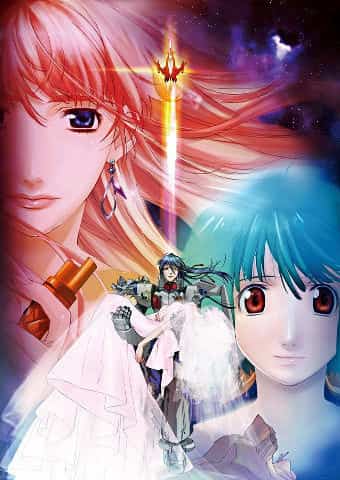
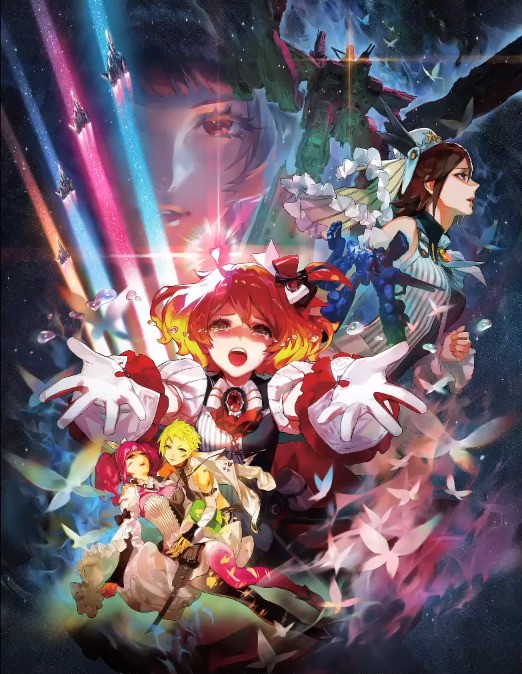
"Macross Frontier: Sayonara no Tsubasa" is the second film adaptation of the "Macross Frontier" television series, condensing and reimagining the latter half of the original story with new scenes, altered plot elements, and enhanced animation. The narrative centers on the interstellar colonization fleet Macross Frontier, which faces an existential threat from the Vajra, a mysterious and highly advanced alien species. The story intertwines themes of love, identity, and survival against the backdrop of interstellar conflict.
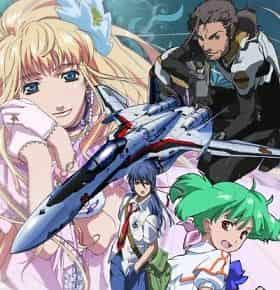
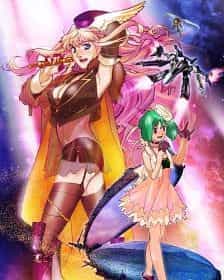
The protagonist, Alto Saotome, is a skilled pilot and former kabuki actor who becomes embroiled in the war between humanity and the Vajra. Alto is torn between his feelings for two central female characters: Sheryl Nome, a famous pop idol whose music holds a mysterious connection to the Vajra, and Ranka Lee, an aspiring singer whose own ties to the alien species are even more profound. Sheryl’s music is revealed to be a key element in understanding and potentially communicating with the Vajra, while Ranka’s latent abilities make her a target for both human and alien forces.
As the conflict escalates, the Macross Frontier fleet uncovers the truth about the Vajra: they are not inherently hostile but are driven by a misunderstood hive-mind intelligence. The story delves into the origins of the Vajra and their connection to humanity, particularly through the Protoculture, an ancient civilization that shaped the galaxy’s history. The film explores the ethical dilemmas of warfare, the consequences of miscommunication between species, and the power of music as a universal language capable of bridging divides.
Key plot points include the revelation of Ranka’s role as a "songstress of the fold," a figure capable of influencing the Vajra through her singing, and Sheryl’s struggle with a life-threatening illness that parallels her emotional journey. The climax features a dramatic battle where Alto must choose between his personal desires and his duty to protect humanity, culminating in a resolution that emphasizes the importance of understanding and coexistence.
The film retains the core themes of the "Macross" franchise, such as the transformative power of music and the exploration of human-alien relationships, while delivering a visually stunning and emotionally charged narrative. The characters’ development is tightly woven into the plot, with Alto’s internal conflict, Sheryl’s resilience, and Ranka’s growth serving as emotional anchors. The story concludes with a bittersweet yet hopeful tone, leaving the fate of its characters and the broader universe open to interpretation.
The protagonist, Alto Saotome, is a skilled pilot and former kabuki actor who becomes embroiled in the war between humanity and the Vajra. Alto is torn between his feelings for two central female characters: Sheryl Nome, a famous pop idol whose music holds a mysterious connection to the Vajra, and Ranka Lee, an aspiring singer whose own ties to the alien species are even more profound. Sheryl’s music is revealed to be a key element in understanding and potentially communicating with the Vajra, while Ranka’s latent abilities make her a target for both human and alien forces.
As the conflict escalates, the Macross Frontier fleet uncovers the truth about the Vajra: they are not inherently hostile but are driven by a misunderstood hive-mind intelligence. The story delves into the origins of the Vajra and their connection to humanity, particularly through the Protoculture, an ancient civilization that shaped the galaxy’s history. The film explores the ethical dilemmas of warfare, the consequences of miscommunication between species, and the power of music as a universal language capable of bridging divides.
Key plot points include the revelation of Ranka’s role as a "songstress of the fold," a figure capable of influencing the Vajra through her singing, and Sheryl’s struggle with a life-threatening illness that parallels her emotional journey. The climax features a dramatic battle where Alto must choose between his personal desires and his duty to protect humanity, culminating in a resolution that emphasizes the importance of understanding and coexistence.
The film retains the core themes of the "Macross" franchise, such as the transformative power of music and the exploration of human-alien relationships, while delivering a visually stunning and emotionally charged narrative. The characters’ development is tightly woven into the plot, with Alto’s internal conflict, Sheryl’s resilience, and Ranka’s growth serving as emotional anchors. The story concludes with a bittersweet yet hopeful tone, leaving the fate of its characters and the broader universe open to interpretation.
Cast
- Mena Roshan
- Ranka Lee
Comment(s)
Staff
- Director
- StoryboardAtsushi TakeuchiTomohiro HirataHidekazu SatōYūsuke YamamotoKeiji GotōTakao AboKazuya MiuraYasutake Ōkawara
- Music
- Character DesignYūichi TakahashiRisa Ebata
- Chief Animation DirectorToshiharu MurataJunichi TakaokaKenji ShinoharaHirotaka MarufujiRisa Ebata
- Mechanical designJunya IshigakiTakeshi Takakura
- Director of PhotographyMaki UedaItsurou Sasakura
- ProducerShinichi HiraiHisanori Kunisaki
- Screenplay
- Unit DirectorTomohiro HirataMasashi AbeTakao AboYukio TakahashiHiroshi TamadaKazuya MiuraTakahiro HaradaYasutake ŌkawaraKazuo Sakai
- Original creator
- Art DirectorShunichirō Yoshihara
- Animation DirectorYae ŌtsukaYūichi TakahashiAtsushi IrieMasayori KomineKyung Rock SeoNao Kawashima
- Sound DirectorMasafumi Mima
- Executive producerShin UnozawaMichiaki SatoKafumi Onishi
Production
- ProductionThe Klockworx Co., Ltd.Bandai VisualBig WestBandai Namco GamesMacross F the Movie Production Committee
- Animation ProductionSatelight
Relations
Anime overview

Manga overview