
TV-Series
Description
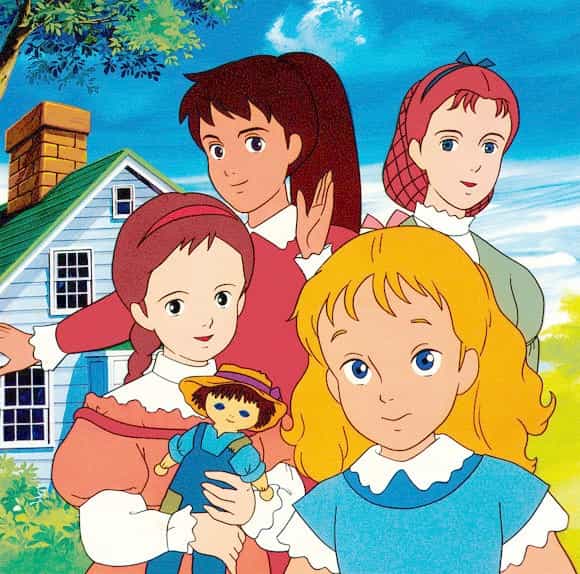
"Little Women" is an anime adaptation of Louisa May Alcott's classic novel, reimagined in a modern Japanese setting. The story centers on the lives of the four March sisters—Meg, Jo, Beth, and Amy—as they navigate the challenges of adolescence, family dynamics, and societal expectations in contemporary Tokyo. Each sister embodies distinct personalities and aspirations, shaping their individual journeys and collective experiences.
Meg, the eldest, is pragmatic and responsible, often balancing her desire for a stable, traditional life with the pressures of financial constraints. Jo, the second sister, is fiercely independent and ambitious, aspiring to become a successful writer while grappling with societal norms that challenge her unconventional path. Beth, the quiet and introspective third sister, finds solace in music and family, her gentle nature often overshadowed by her struggles with health. Amy, the youngest, is artistic and determined, striving to carve out her identity while navigating the complexities of youth and ambition.
The narrative unfolds as the sisters face various trials, including financial hardships, personal insecurities, and the absence of their father, who is deployed overseas. Their mother, Marmee, serves as a guiding force, offering wisdom and support as they confront these challenges. The story explores themes of resilience, sisterhood, and self-discovery, with each sister's arc reflecting their growth and evolving relationships.
Key plot points include Jo's pursuit of her writing career, which leads her to confront rejection and self-doubt, and Meg's journey toward balancing her dreams with the realities of adulthood. Beth's health struggles bring moments of poignancy and reflection, while Amy's artistic ambitions and rivalry with Jo highlight the complexities of sibling relationships. The series also delves into the sisters' interactions with their neighbors and friends, particularly the wealthy Laurence family, whose son, Laurie, becomes a close confidant and catalyst for emotional growth.
Throughout the series, the March sisters' bond remains a central focus, illustrating how their shared experiences and individual struggles strengthen their connection. The narrative balances moments of humor, heartbreak, and triumph, offering a nuanced portrayal of family life and personal development. By blending the timeless themes of Alcott's original work with a modern setting, the anime provides a fresh perspective on the enduring story of the March sisters.
Meg, the eldest, is pragmatic and responsible, often balancing her desire for a stable, traditional life with the pressures of financial constraints. Jo, the second sister, is fiercely independent and ambitious, aspiring to become a successful writer while grappling with societal norms that challenge her unconventional path. Beth, the quiet and introspective third sister, finds solace in music and family, her gentle nature often overshadowed by her struggles with health. Amy, the youngest, is artistic and determined, striving to carve out her identity while navigating the complexities of youth and ambition.
The narrative unfolds as the sisters face various trials, including financial hardships, personal insecurities, and the absence of their father, who is deployed overseas. Their mother, Marmee, serves as a guiding force, offering wisdom and support as they confront these challenges. The story explores themes of resilience, sisterhood, and self-discovery, with each sister's arc reflecting their growth and evolving relationships.
Key plot points include Jo's pursuit of her writing career, which leads her to confront rejection and self-doubt, and Meg's journey toward balancing her dreams with the realities of adulthood. Beth's health struggles bring moments of poignancy and reflection, while Amy's artistic ambitions and rivalry with Jo highlight the complexities of sibling relationships. The series also delves into the sisters' interactions with their neighbors and friends, particularly the wealthy Laurence family, whose son, Laurie, becomes a close confidant and catalyst for emotional growth.
Throughout the series, the March sisters' bond remains a central focus, illustrating how their shared experiences and individual struggles strengthen their connection. The narrative balances moments of humor, heartbreak, and triumph, offering a nuanced portrayal of family life and personal development. By blending the timeless themes of Alcott's original work with a modern setting, the anime provides a fresh perspective on the enduring story of the March sisters.
Episodes
Staffel 1
1Le retour de Papa (Father´s Return)
2Calinou (Milky Ann)
3Le deserteur (The deserter)
4La vie continue (Life Goes On)
5Danger sur la ville (Danger On The City)
6Le demenagement (Moving)
7La Tante Marthe (Aunt March)
8A la recherche d'une maison (Serching For a Home)
9L'irascible Jo (Jo the Short-Tempered)
10Critiques et louanges (Critic and Praises)
11Une femme amere (A Sour Woman)
12L'orage (The Storm)
13Une maison etrange (A Strange House)
14L'arrivee de Laurie (Laurie's Arrival)
15Un voisin curieux (A curious neighbour)
16Je n'ai pas vole cet argent!(I haven't stolen this money!)
17Le discours du President Lincoln (President Lincoln's Speech)
18Debut en societe (Debut in Society)
19Un garcon sympatique (A Nice Boy)
20Jo en visite chez les Laurence (Jo Visits the Laurence Family)
21Des cadeaux d'un dollar (Presents For a Dollar)
22Un Noel Superbe (A Wonderful Christmas)
23Une surprise pour Beth (A Surprise For Beth)
24Meg amoureuse (Meg in Love)
25Le chef d'ouevre de Jo (Jo's Masterpiece)
26Beth et Monsieur Laurence (Beth And Mr. Laurence)
27L'humiliation d'Amy (Amy's Humiliation)
28Amy et le theatre (Amy And the Theater)
29Amy tombe dans la riviere (Amy Falls Into the River)
30Le voyage de Meg (Meg's Journey)
31Meg n'est pas une poupee! (Meg Is Not A Doll!)
32Une femme capricieuse (A Capricious Woman)
33La fete en plain air (A Holiday in The Open Air)
34Amy a des hallucinations (Amy Has Hallucinations)
35Meg est amoureuse (Meg Is In Love)
36Le roman est poublie (The Novel Is Published)
37L'inquetude (Anxiety)
38Mauvaises Nouvelles (Bad News)
39Les lettres (Letters)
40La maladie (The Illness)
41Aide-toi, le ciel t'aidera! (Helf Yourself, Heaven Will Help You!)
42Le retour a la maison (Homecoming)
43En route pour New York (On the Way to New York)
44Qui a ecrit cette lettre? (Who Has Written This Letter?)
45Laurie dans l'oeil du cyclone (Laurie In The Eye of the Cyclone)
46Une surprise pour Noel ( A Surprise For Christmas)
47Au revoir, Anthony! (Good-Bye, Anthony!)
48Un grand espoir (A Great Hope)
Cast
- Amy March
- Mary MarchAstrid Bless
- Amparo Soto
- Patty
- Mr. Davis
- Antonio Prieto
- Elizabeth "Beth" March
- Katja Strobel
- Cornelia MeinhardtAlicia Sáinz De La Maza
- Dr. Banks
Comment(s)
Staff
- Series DirectorFumio Kurokawa
- StoryboardYoshio KurodaKōzō KusubaFumio KurokawaShigeo KoshiFumio IkenoTakeshi YamaguchiNorio YazawaHiromi SugimuraEiji OkabeShinichi TsujiTakao YotsujiShinichi MatsumiShin Namioka
- Character DesignYoshifumi KondōToshiki Yamazaki
- Animation DirectorTakumi KoyamaToshiki YamazakiAtsuko Ōtani
- Director of PhotographyToshiaki Morita
- ProducerJunzō NakajimaTaihei Ishikawa
- Script
- Original creator
- Art DirectorMasamichi Takano
- Sound DirectorEtsuji Yamada
- Executive producerKōichi Motohashi
- MusicKazuo Ōtani
Production
- Animation ProductionNippon Animation
- ProductionNippon AnimationFuji Television Network
Relations
Anime overview
Music
Opening
Ending
Ep. 01-14