TV-Series
Description
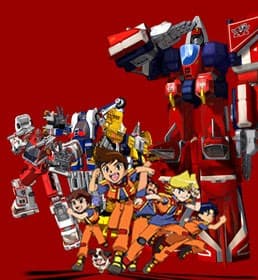
"Shutsugeki! Machine Robo Rescue" is a 2003 anime series that blends mecha action with rescue missions, targeting a younger audience. The story is set in a world where advanced robotics and technology are integral to disaster response and rescue operations. The narrative centers on a group of young cadets training to become part of the Machine Robo Rescue (MRR) team, an organization dedicated to saving lives during emergencies using specialized rescue robots.
The protagonist, Taiyou Ōzora, is a spirited and determined boy who dreams of becoming a top rescue operator. Alongside him are his fellow cadets, each with distinct personalities and skills, including the serious and disciplined Ryuusei Date, the cheerful and resourceful Haruka Hoshino, the quiet and analytical Subaru Mochizuki, and the strong-willed and competitive Ayame Misaki. Together, they undergo rigorous training under the guidance of their mentors, learning to operate the Machine Robo units—giant robots designed for specific rescue tasks such as firefighting, medical aid, and disaster recovery.
The series is structured around episodic missions, with each episode focusing on a new emergency scenario. These range from natural disasters like earthquakes and floods to technological malfunctions and human-caused accidents. The cadets must work as a team, combining their individual strengths and the unique capabilities of their Machine Robo units to overcome challenges and save lives. The missions often emphasize problem-solving, teamwork, and the importance of quick thinking under pressure.
As the series progresses, the cadets face increasingly complex and dangerous situations, testing their skills and resolve. The narrative also explores their personal growth, highlighting their struggles, triumphs, and the bonds they form with one another. While the focus remains on rescue operations, occasional subplots delve into the cadets' backgrounds and motivations, adding depth to their characters.
The overarching plot introduces a mysterious organization known as the Shadow Force, which seeks to disrupt the MRR's operations for its own agenda. This antagonistic group serves as a recurring challenge, forcing the cadets to confront not only natural disasters but also deliberate acts of sabotage. The conflict with Shadow Force escalates as the series nears its conclusion, culminating in a climactic showdown that tests the cadets' abilities and teamwork to their limits.
"Shutsugeki! Machine Robo Rescue" balances action-packed rescue sequences with themes of courage, responsibility, and the importance of helping others. The series maintains a straightforward, episodic structure while gradually building a larger narrative through the cadets' development and their encounters with Shadow Force. Its focus on teamwork and problem-solving, combined with the appeal of giant robots, makes it a distinctive entry in the mecha genre.
The protagonist, Taiyou Ōzora, is a spirited and determined boy who dreams of becoming a top rescue operator. Alongside him are his fellow cadets, each with distinct personalities and skills, including the serious and disciplined Ryuusei Date, the cheerful and resourceful Haruka Hoshino, the quiet and analytical Subaru Mochizuki, and the strong-willed and competitive Ayame Misaki. Together, they undergo rigorous training under the guidance of their mentors, learning to operate the Machine Robo units—giant robots designed for specific rescue tasks such as firefighting, medical aid, and disaster recovery.
The series is structured around episodic missions, with each episode focusing on a new emergency scenario. These range from natural disasters like earthquakes and floods to technological malfunctions and human-caused accidents. The cadets must work as a team, combining their individual strengths and the unique capabilities of their Machine Robo units to overcome challenges and save lives. The missions often emphasize problem-solving, teamwork, and the importance of quick thinking under pressure.
As the series progresses, the cadets face increasingly complex and dangerous situations, testing their skills and resolve. The narrative also explores their personal growth, highlighting their struggles, triumphs, and the bonds they form with one another. While the focus remains on rescue operations, occasional subplots delve into the cadets' backgrounds and motivations, adding depth to their characters.
The overarching plot introduces a mysterious organization known as the Shadow Force, which seeks to disrupt the MRR's operations for its own agenda. This antagonistic group serves as a recurring challenge, forcing the cadets to confront not only natural disasters but also deliberate acts of sabotage. The conflict with Shadow Force escalates as the series nears its conclusion, culminating in a climactic showdown that tests the cadets' abilities and teamwork to their limits.
"Shutsugeki! Machine Robo Rescue" balances action-packed rescue sequences with themes of courage, responsibility, and the importance of helping others. The series maintains a straightforward, episodic structure while gradually building a larger narrative through the cadets' development and their encounters with Shadow Force. Its focus on teamwork and problem-solving, combined with the appeal of giant robots, makes it a distinctive entry in the mecha genre.
Episodes
Staffel 1
1Commence the Rescue Combination!!
2Blazing Fire Fighter!
Cast
- Col. Hazard
- Susumu UtadaMasato Amada
- Makoto UtadaMasato Amada
- Jun Mizushima
- Gerald Narciso
- Jelly Cruz
- Submarine Robo
- Masato Amada
- Christian Alvear
- Jelly Cruz
- Fire Robo
Comment(s)
Staff
- DirectorMamoru Kanbe
- Script
- Episode DirectorMamoru KanbeMasakazu HishidaKiyoshi FukumotoToshinori NaritaNana HaradaHirofumi OguraTakeyuki SadoharaKagerō SanadaNoriyuki NakamuraTaiki NishimuraRiki FukushimaKatsumi Minoguchi
- Original creator
- Art DirectorJunichi Higashi
- Art designTomoyuki Aoki
- Director of PhotographyTakashi SuehiroKoji Toki
- Series Composition
- StoryboardTetsuya YanagisawaMamoru KanbeMasakazu HishidaKazuhito KikuchiKiyoshi FukumotoShigeki TakagiYasuhiro MinamiToshinori NaritaHirofumi OguraShingo SuzukiTakeyuki SadoharaNoriyuki NakamuraTaiki NishimuraRiki FukushimaKatsumi Minoguchi
- MusicNaoki Satō
- Character DesignHiroshi Takeuchi
- Animation DirectorHiroshi TakeuchiNobuyoshi SasakadoAyako KurataShinichi TakahashiSatoshi KuboNoboru JitsuharaKen SakumaTakurō Shinbo
- Sound DirectorSadayoshi Fujino
- ProducerNaotake FurusatoNorio YamakawaKyōtarō Kimura
Production
- ProductionSunriseTV TokyoBandai Visual
Relations
Recommendations based on shared tags.
Anime overview



Manga overview