
TV-Series
Description
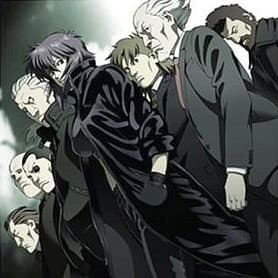
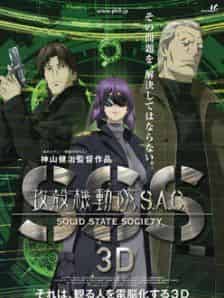
"Ghost in the Shell: Stand Alone Complex 2nd GIG" is a continuation of the cyberpunk narrative established in its predecessor, delving deeper into the complexities of a technologically advanced society. Set in a future where cybernetic enhancements and artificial intelligence are commonplace, the series explores themes of identity, political intrigue, and the ethical implications of technological progress.
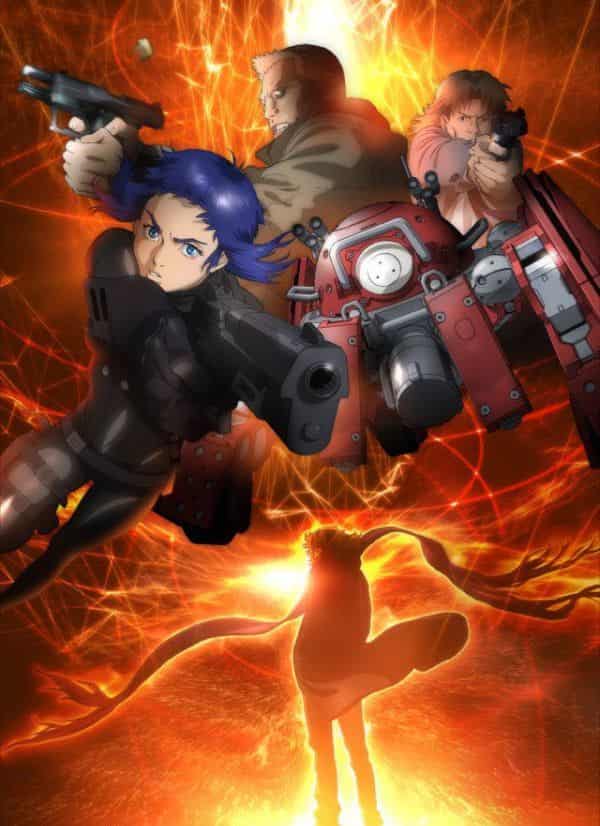
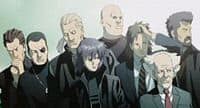
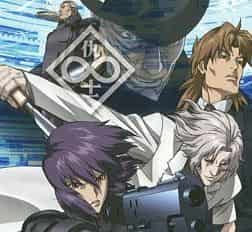
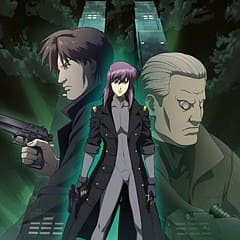
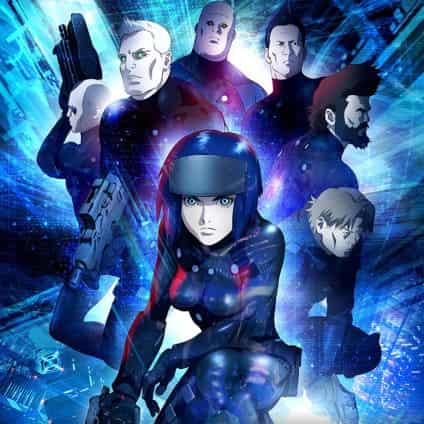
The story centers on Public Security Section 9, a specialized counter-cyberterrorism unit led by Major Motoko Kusanagi. The team, which includes Batou, Togusa, Ishikawa, Saito, Paz, Borma, and Chief Aramaki, is tasked with investigating a series of interconnected incidents involving a mysterious group known as the Individual Eleven. This collective is linked to a phenomenon called "The Individual Eleven Syndrome," a form of cyberbrain hacking that drives individuals to commit acts of terrorism. The syndrome is tied to a broader political conspiracy involving refugees from the Third and Fourth World Wars, who are marginalized and exploited by the Japanese government.
As Section 9 investigates, they uncover a plot orchestrated by Kuze, a former soldier and refugee leader with a personal connection to Kusanagi. Kuze seeks to expose the government's corruption and its role in perpetuating the refugee crisis. His actions spark a larger conflict, drawing Section 9 into a high-stakes game of espionage and warfare. The narrative intertwines the personal struggles of the characters with the broader socio-political issues, highlighting the tension between individual freedom and systemic control.
The series also explores the evolving relationship between Kusanagi and Kuze, whose shared history and philosophical differences add depth to the conflict. Kusanagi grapples with questions of identity and humanity, while Kuze represents a radical response to systemic oppression. The interplay between their ideologies drives much of the narrative tension.
Throughout the series, Section 9 faces numerous challenges, including internal betrayals, external threats, and the moral ambiguities of their work. The plot is structured around both standalone episodes and a central storyline, blending episodic investigations with a larger, interconnected narrative. This dual structure allows for a balance between character development and plot progression, maintaining a steady pace while exploring the series' thematic concerns.
"Ghost in the Shell: Stand Alone Complex 2nd GIG" is a thought-provoking exploration of a dystopian future, combining intricate storytelling with complex characters and a richly detailed world. The series builds on the foundation of its predecessor while expanding the scope of its narrative, offering a compelling examination of the intersection between technology, politics, and humanity.
The story centers on Public Security Section 9, a specialized counter-cyberterrorism unit led by Major Motoko Kusanagi. The team, which includes Batou, Togusa, Ishikawa, Saito, Paz, Borma, and Chief Aramaki, is tasked with investigating a series of interconnected incidents involving a mysterious group known as the Individual Eleven. This collective is linked to a phenomenon called "The Individual Eleven Syndrome," a form of cyberbrain hacking that drives individuals to commit acts of terrorism. The syndrome is tied to a broader political conspiracy involving refugees from the Third and Fourth World Wars, who are marginalized and exploited by the Japanese government.
As Section 9 investigates, they uncover a plot orchestrated by Kuze, a former soldier and refugee leader with a personal connection to Kusanagi. Kuze seeks to expose the government's corruption and its role in perpetuating the refugee crisis. His actions spark a larger conflict, drawing Section 9 into a high-stakes game of espionage and warfare. The narrative intertwines the personal struggles of the characters with the broader socio-political issues, highlighting the tension between individual freedom and systemic control.
The series also explores the evolving relationship between Kusanagi and Kuze, whose shared history and philosophical differences add depth to the conflict. Kusanagi grapples with questions of identity and humanity, while Kuze represents a radical response to systemic oppression. The interplay between their ideologies drives much of the narrative tension.
Throughout the series, Section 9 faces numerous challenges, including internal betrayals, external threats, and the moral ambiguities of their work. The plot is structured around both standalone episodes and a central storyline, blending episodic investigations with a larger, interconnected narrative. This dual structure allows for a balance between character development and plot progression, maintaining a steady pace while exploring the series' thematic concerns.
"Ghost in the Shell: Stand Alone Complex 2nd GIG" is a thought-provoking exploration of a dystopian future, combining intricate storytelling with complex characters and a richly detailed world. The series builds on the foundation of its predecessor while expanding the scope of its narrative, offering a compelling examination of the intersection between technology, politics, and humanity.
Cast
Comment(s)
No entries available.
Staff
- Director · Kenji Kamiyama
- Script · Kenji Kamiyama
- Script · Shōtarō Suga
- Script · Yoshiki Sakurai
- Script · Dai Sato
- Script · Yuichiro Matsuka
- Script · Yutaka Oomatsu
- Script · Jun'ichi Fujisaku
- Storyboard · Junji Nishimura
- Storyboard · Kenji Kamiyama
- Storyboard · Tetsuya Nishio
- Storyboard · Itsuro Kawasaki
- Storyboard · Masahiro Ando
- Storyboard · Tensai Okamura
- Storyboard · Yasuhiro Geshi
- Storyboard · Masaki Tachibana
- Storyboard · Masayuki Yoshihara
- Storyboard · Toshiyuki Kono
- Storyboard · Jun Matsumoto
- Storyboard · Kazunobu Fuseki
- Episode Director · Tetsuya Nishio
- Episode Director · Itsuro Kawasaki
- Episode Director · Kenichi Takeshita
- Episode Director · Masaki Tachibana
- Episode Director · Masayuki Yoshihara
- Episode Director · Toshiyuki Kono
- Episode Director · Jun Matsumoto
- Episode Director · Kazunobu Fuseki
- Music · Yoko Kanno
- Original Manga · Masamune Shirow
- Original Character Design · Makoto Shimomura
- Character Design · Tetsuya Nishio
- Character Design · Takayuki Goto
- Art Director · Yūsuke Takeda
- Art Director · Kazuki Higashiji
- Animation Director · Kyoji Asano
- Animation Director · Tetsuya Nishio
- Animation Director · Kenichi Konishi
- Animation Director · Hiroshi Shimizu
- Animation Director · Minako Shiba
- Animation Director · Takayuki Goto
- Animation Director · Shunji Murata
- Animation Director · Satoru Nakamura
- Animation Director · Kōichi Maruyama
- Animation Director · Ryota Niino
- Mechanical design · Kenji Teraoka
- Mechanical design · Shinobu Tsuneki
- Mechanical design · Kenzi Teraoka
- 3D Director · Makoto Endo
- Sound Director · Kazuhiro Wakabayashi
- Director of Photography · Kōji Tanaka
- Executive producer · Shigeru Watanabe
- Executive producer · Mitsuhisa Ishikawa
- Producer · Hisanori Kunisaki
- Producer · Yuichiro Matsuka
Production
- Animation Production · Production I.G
- Production · Production I.G
- Production · Dentsu Inc.
- Production · NTV
- Production · Tokuma Shoten
- Production · Bandai Visual
- Production · Victor Entertainment
- Production · Manga Entertainment
- Production · Bandai Entertainment
- Production · GHOST IN THE SHELL STAND ALONE COMPLEX COMMITTEE
Relations
Anime overview
Music
Opening
- 27-52“"Rise"” - Origa
Ending
- 27-52“"Living Inside the Shell"” - Steve Conte
- ?“"Christmas in the Silent Forest"” - Ilaria Graziano (ep 26)
Insert songs
- 11“"I Do"” - Ilaria Graziano
- 3“"icy mice (Tadoko-Kaichou no Himitsu Party)" (icy mice 田所会長のひみつパーティ; Chief Tadokoro's Secret Party)” - Gabriela Robin
- 2“"Monochrome" (モノクローム)” - Ilaria Graziano