
Movie
Description
"The Wind Rises" is a historical drama anime that chronicles the life of Jiro Horikoshi, a talented aeronautical engineer, and his pursuit of designing innovative aircraft in early 20th-century Japan. The narrative spans several decades, beginning with Jiro's childhood, where his fascination with flight is ignited by dreams of meeting Italian aviation pioneer Giovanni Battista Caproni. These dreams recur throughout the story, serving as a symbolic connection between Jiro's aspirations and the broader themes of creativity and ambition.
As Jiro grows older, he enrolls in an engineering program and later joins Mitsubishi, where he dedicates himself to designing aircraft. His work is set against the backdrop of Japan's rapid industrialization and militarization, particularly during the interwar period and the lead-up to World War II. The story explores the tension between Jiro's passion for creating beautiful, functional aircraft and the moral implications of his designs being used for warfare.
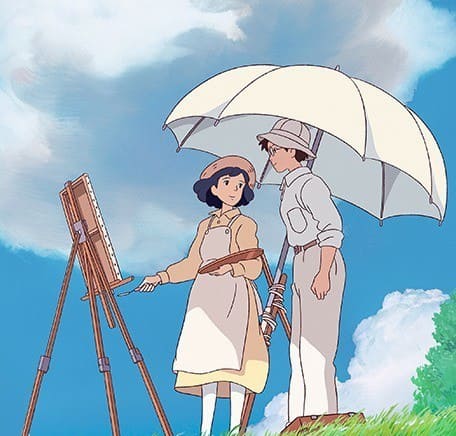
A significant subplot involves Jiro's relationship with Naoko Satomi, a young woman he meets during a trip to a mountain resort. Their romance blossoms despite Naoko's declining health due to tuberculosis. Their time together is marked by both tenderness and tragedy, as Naoko's condition worsens, and Jiro struggles to balance his personal life with his professional ambitions. The relationship adds emotional depth to the narrative, highlighting themes of love, sacrifice, and the fleeting nature of life.
The film also delves into the technical and creative challenges Jiro faces in his career, including the development of the Mitsubishi A5M and A6M Zero fighter planes. These achievements are juxtaposed with the broader societal and political context of Japan during the 1930s and 1940s, emphasizing the ethical dilemmas faced by engineers and innovators in times of conflict.
Through its portrayal of Jiro's life, "The Wind Rises" examines the intersection of art, science, and morality, presenting a nuanced perspective on the complexities of human ambition and the consequences of technological progress. The story is driven by its characters, particularly Jiro, whose determination and idealism are central to the narrative, and Naoko, whose presence underscores the emotional stakes of Jiro's journey. The film's historical setting and detailed depiction of aviation engineering provide a rich backdrop for its exploration of personal and professional struggles.
As Jiro grows older, he enrolls in an engineering program and later joins Mitsubishi, where he dedicates himself to designing aircraft. His work is set against the backdrop of Japan's rapid industrialization and militarization, particularly during the interwar period and the lead-up to World War II. The story explores the tension between Jiro's passion for creating beautiful, functional aircraft and the moral implications of his designs being used for warfare.
A significant subplot involves Jiro's relationship with Naoko Satomi, a young woman he meets during a trip to a mountain resort. Their romance blossoms despite Naoko's declining health due to tuberculosis. Their time together is marked by both tenderness and tragedy, as Naoko's condition worsens, and Jiro struggles to balance his personal life with his professional ambitions. The relationship adds emotional depth to the narrative, highlighting themes of love, sacrifice, and the fleeting nature of life.
The film also delves into the technical and creative challenges Jiro faces in his career, including the development of the Mitsubishi A5M and A6M Zero fighter planes. These achievements are juxtaposed with the broader societal and political context of Japan during the 1930s and 1940s, emphasizing the ethical dilemmas faced by engineers and innovators in times of conflict.
Through its portrayal of Jiro's life, "The Wind Rises" examines the intersection of art, science, and morality, presenting a nuanced perspective on the complexities of human ambition and the consequences of technological progress. The story is driven by its characters, particularly Jiro, whose determination and idealism are central to the narrative, and Naoko, whose presence underscores the emotional stakes of Jiro's journey. The film's historical setting and detailed depiction of aviation engineering provide a rich backdrop for its exploration of personal and professional struggles.
Cast
- Satomi
- Ana María CampsAlice Portugal
- Marion Musiol
- Juan Carlos Gustems
- Aurora Cancian
- João Victor Balboa
- Sra. KurokawaAline Francis
- Frank-Otto SchenkNarcís CarrerasJun KunimuraAnderson Araújo
- Katayama
- Till Endemann
- Sr. SatomiIvan Canovas
Comment(s)
Staff
- DirectorHayao Miyazaki
- MusicJoe Hisaishi
- Character DesignKitarō Kōsaka
- Animation DirectorKitarō Kōsaka
- Director of PhotographyAtsushi Okui
- ProducerToshio Suzuki
- ScreenplayHayao Miyazaki
- Original creatorHayao Miyazaki
- Art DirectorYōji Takeshige
- Sound DirectorKōji Kasamatsu
- Executive producerKoji Hoshino
Production
- ProductionTOHOHakuhodo DY Media PartnersNippon Television NetworkDentsu Inc.Studio GhibliKDDId-rightsMitsubishi CorporationBuena Vista Home Entertainment
- Animation ProductionStudio Ghibli
Relations
Manga overview