
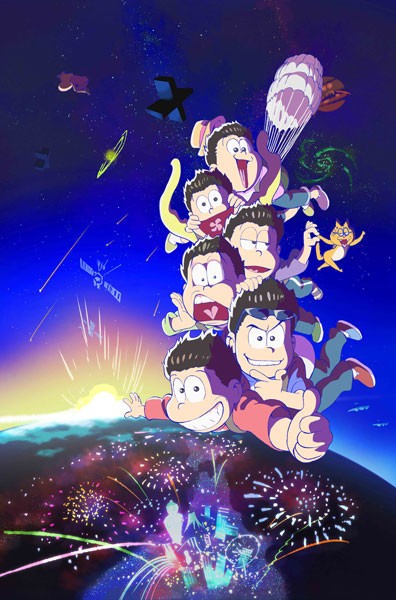
TV-Series
Description
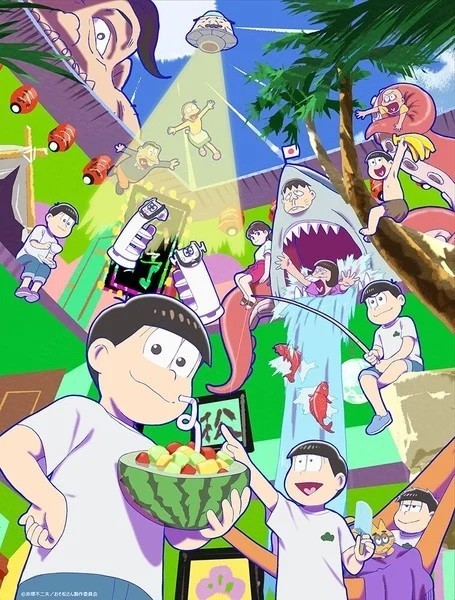
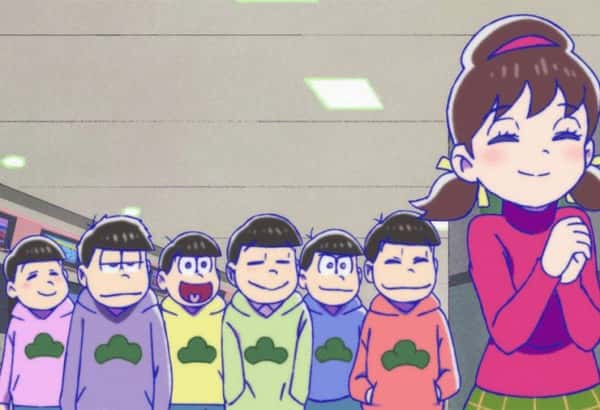
Six identical sextuplet brothers who were once mischievous children are now in their twenties, living as lazy NEETs who still reside with their parents and show no ambition to join the workforce. The Matsuno siblings Osomatsu, Karamatsu, Choromatsu, Ichimatsu, Jyushimatsu, and Todomatsu spend their days engaging in petty schemes, absurd competitions, and pointless arguments while struggling with the basic challenges of adult life such as finding girlfriends, getting jobs, or simply contributing to household chores. Despite their identical appearances, each brother has developed a distinct personality over the years.
Osomatsu, the eldest and self-appointed leader, is an immature gambler who spends his time on pachinko and horse racing. Karamatsu, the second born, fancies himself a cool ladies man but only succeeds in embarrassing himself. Choromatsu, the third and most responsible, often serves as the voice of reason while secretly being an otaku obsessed with idols. Ichimatsu, the fourth, is a cynical and depressed loner who prefers the company of stray cats. Jyushimatsu, the fifth, is hyperactive and reality-defying in his enthusiasm for baseball and life in general. Todomatsu, the youngest, is the most socially adept but also manipulative and two-faced, often trying to distance himself from his brothers to maintain his social standing.
The series is set in a contemporary Japanese suburb, primarily within the brothers childhood home where their long-suffering parents, Matsuzo and Matsuyo, provide food and shelter while constantly hoping their sons will finally move out. The neighborhood includes an oden stand run by Chibita, a former rival who now serves as a reluctant friend, while the flamboyant con-artist Iyami frequently schemes to reclaim his former glory as a main character. The brothers share an obsessive crush on Totoko, a fish-themed aspiring idol who finds their attention unwelcome but occasionally exploits their help for her own gain.
Unlike traditional serialized storytelling, the show unfolds through episodic, sketch-based narratives that frequently parody other anime genres, break the fourth wall, and descend into surreal absurdity. Notable recurring arcs include the brothers competing for their parents favor when divorce is threatened, the introduction of a perfect seventh brother named Kamimatsu who was supposedly born from their discarded goodness, and gender-swapped versions of the sextuplets who are far more successful in life. A particularly memorable storyline follows Jyushimatsu falling genuinely in love, offering rare heartfelt moments amid the chaos. The first episode famously features the brothers debating how to make their dated comedy style popular in modern times, leading to rapid-fire parodies of popular anime tropes before ultimately embracing their original Showa-era roots. Another significant arc follows Todomatsu trying to hide his part-time job at a fashionable cafe from his brothers, only to have them all show up and humiliate him. Throughout its run, the series maintains a core tension between the brothers pathetic circumstances and their unshakeable bond, however dysfunctional it may be, as they navigate the gap between childhood potential and adult disappointment.
Osomatsu, the eldest and self-appointed leader, is an immature gambler who spends his time on pachinko and horse racing. Karamatsu, the second born, fancies himself a cool ladies man but only succeeds in embarrassing himself. Choromatsu, the third and most responsible, often serves as the voice of reason while secretly being an otaku obsessed with idols. Ichimatsu, the fourth, is a cynical and depressed loner who prefers the company of stray cats. Jyushimatsu, the fifth, is hyperactive and reality-defying in his enthusiasm for baseball and life in general. Todomatsu, the youngest, is the most socially adept but also manipulative and two-faced, often trying to distance himself from his brothers to maintain his social standing.
The series is set in a contemporary Japanese suburb, primarily within the brothers childhood home where their long-suffering parents, Matsuzo and Matsuyo, provide food and shelter while constantly hoping their sons will finally move out. The neighborhood includes an oden stand run by Chibita, a former rival who now serves as a reluctant friend, while the flamboyant con-artist Iyami frequently schemes to reclaim his former glory as a main character. The brothers share an obsessive crush on Totoko, a fish-themed aspiring idol who finds their attention unwelcome but occasionally exploits their help for her own gain.
Unlike traditional serialized storytelling, the show unfolds through episodic, sketch-based narratives that frequently parody other anime genres, break the fourth wall, and descend into surreal absurdity. Notable recurring arcs include the brothers competing for their parents favor when divorce is threatened, the introduction of a perfect seventh brother named Kamimatsu who was supposedly born from their discarded goodness, and gender-swapped versions of the sextuplets who are far more successful in life. A particularly memorable storyline follows Jyushimatsu falling genuinely in love, offering rare heartfelt moments amid the chaos. The first episode famously features the brothers debating how to make their dated comedy style popular in modern times, leading to rapid-fire parodies of popular anime tropes before ultimately embracing their original Showa-era roots. Another significant arc follows Todomatsu trying to hide his part-time job at a fashionable cafe from his brothers, only to have them all show up and humiliate him. Throughout its run, the series maintains a core tension between the brothers pathetic circumstances and their unshakeable bond, however dysfunctional it may be, as they navigate the gap between childhood potential and adult disappointment.
Episodes
Staffel 1
1The Rebirth of Osomatsu-san
2Super Laundry Detergent
13Have a Happy New Year
Cast
- Totoko
Comment(s)
Staff
- DirectorYōichi Fujita
- ScriptShū Matsubara
- Unit DirectorTetsuji TakayanagiYasuo IwamotoShintaro InokawaYoshinori OdakaHikaru YamaguchiMamiko SekiyaYasuhiro AkamatsuTakumi DōyamaToshihiro MaeyaNaoya AndoGen AsanoNobutaka YodaTsuyoshi TobitaKana KawanaTakuma Aomatsu
- Original creator
- Art DirectorSeiki Tamura
- Animation DirectorYukari KobayashiMasumi HattoriIchirō OgawaTakashi KoizumiKumiko TakayanagiMinoru MoritaJōji YanaseKazuyuki IkaiTamaki KanbeKiyoshi NohjiMasayuki FujitaKasumi WadaNobuharu IshidoMaki KōnoNaoyuki AsanoKeiichirou MatsuiShinya NogamiKumiko NumataNoriko OguraSaeko OzawaTamaki IshiiHaru WatanabeSakurako SaganoKimiharu ObataDae Yeol ParkJoung Kyong LeeSeung Ah HanGen AsanoKanchi SuzukiYukako Futagami
- Sound DirectorHiromi Kikuta
- Director of PhotographyTōru Fukushi
- Series CompositionShū Matsubara
- StoryboardJun KamiyaTetsuji TakayanagiAtsuo TobeShinobu TagashiraYoshinori OdakaHikaru YamaguchiNaoyuki AsanoYōichi FujitaMamiko SekiyaTakumi DōyamaJōji FurutaSeishirō NagayaToshihiro MaeyaNaoya AndoGen AsanoTakuma AomatsuYōko Kanamori
- MusicYukari Hashimoto
- Character DesignNaoyuki Asano
- Chief Animation DirectorKumiko Numata
- Mecha designGen Asano
- Cgi DirectorYohei Shimozawa
- ProducerYoshihiro TominagaHiromasa MinamiMakoto HijikataYutaka KashiwagiKeisuke TakinoYasushi FujiiMasato KuwabaraHiroko Nishi
Production
- Animation ProductionStudio Pierrot
- ProductionOsomatsu-san Production Committee
Relations
Music