Movie
Description
"La Rose de Versailles" is set in 18th-century France, primarily during the final years of the reign of Louis XV and the tumultuous period leading up to the French Revolution. The narrative intertwines historical events with fictionalized drama, focusing on the lives of its central characters against the backdrop of a society on the brink of collapse.
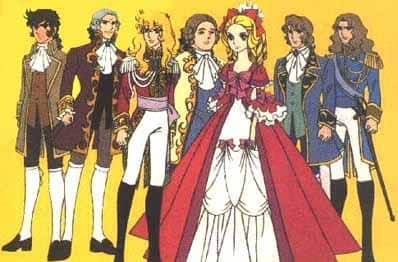
The story begins with the birth of Oscar François de Jarjayes, a noblewoman raised as a man by her father, General Jarjayes, to succeed him as the commander of the Royal Guard. Oscar grows up to become a skilled and disciplined soldier, earning respect and loyalty from her subordinates. Her dual identity as both a noblewoman and a military officer places her in a unique position within the rigid hierarchies of French society.
Oscar's life becomes deeply entangled with the royal family when she is appointed as the personal bodyguard of Marie Antoinette, the young Austrian princess who marries the future Louis XVI. The series explores the complex relationship between Oscar and Marie Antoinette, depicting the queen's transformation from a naive and carefree teenager into a figure of controversy and disdain among the French populace. Oscar, torn between her loyalty to the monarchy and her growing awareness of the suffering of the common people, becomes a symbol of the moral and social tensions of the era.
Another central character is André Grandier, a commoner and Oscar's childhood friend, who harbors unrequited love for her. André's unwavering devotion and his struggles with his lower-class status provide a poignant counterpoint to Oscar's privileged yet conflicted existence. Their relationship evolves against the backdrop of political unrest, as the growing discontent among the French people begins to challenge the established order.
The narrative also delves into the lives of other historical and fictional figures, including Count Axel von Fersen, a Swedish nobleman and Marie Antoinette's rumored lover, and Jeanne de Valois-Saint-Rémy, a manipulative and ambitious woman who schemes to exploit the monarchy's weaknesses. These characters contribute to the intricate web of alliances, betrayals, and personal dramas that drive the story forward.
As the French Revolution looms, the series portrays the escalating tensions between the aristocracy and the oppressed masses. Oscar, increasingly disillusioned with the monarchy's indifference to the plight of the poor, begins to question her role in upholding a system that perpetuates inequality. Her internal conflict mirrors the broader societal upheaval, culminating in her eventual decision to align herself with the revolutionary cause.
"La Rose de Versailles" masterfully blends historical accuracy with dramatic storytelling, offering a compelling exploration of themes such as loyalty, identity, and the consequences of social injustice. The series remains a landmark in anime history, celebrated for its rich character development and its poignant depiction of a pivotal moment in history.
The story begins with the birth of Oscar François de Jarjayes, a noblewoman raised as a man by her father, General Jarjayes, to succeed him as the commander of the Royal Guard. Oscar grows up to become a skilled and disciplined soldier, earning respect and loyalty from her subordinates. Her dual identity as both a noblewoman and a military officer places her in a unique position within the rigid hierarchies of French society.
Oscar's life becomes deeply entangled with the royal family when she is appointed as the personal bodyguard of Marie Antoinette, the young Austrian princess who marries the future Louis XVI. The series explores the complex relationship between Oscar and Marie Antoinette, depicting the queen's transformation from a naive and carefree teenager into a figure of controversy and disdain among the French populace. Oscar, torn between her loyalty to the monarchy and her growing awareness of the suffering of the common people, becomes a symbol of the moral and social tensions of the era.
Another central character is André Grandier, a commoner and Oscar's childhood friend, who harbors unrequited love for her. André's unwavering devotion and his struggles with his lower-class status provide a poignant counterpoint to Oscar's privileged yet conflicted existence. Their relationship evolves against the backdrop of political unrest, as the growing discontent among the French people begins to challenge the established order.
The narrative also delves into the lives of other historical and fictional figures, including Count Axel von Fersen, a Swedish nobleman and Marie Antoinette's rumored lover, and Jeanne de Valois-Saint-Rémy, a manipulative and ambitious woman who schemes to exploit the monarchy's weaknesses. These characters contribute to the intricate web of alliances, betrayals, and personal dramas that drive the story forward.
As the French Revolution looms, the series portrays the escalating tensions between the aristocracy and the oppressed masses. Oscar, increasingly disillusioned with the monarchy's indifference to the plight of the poor, begins to question her role in upholding a system that perpetuates inequality. Her internal conflict mirrors the broader societal upheaval, culminating in her eventual decision to align herself with the revolutionary cause.
"La Rose de Versailles" masterfully blends historical accuracy with dramatic storytelling, offering a compelling exploration of themes such as loyalty, identity, and the consequences of social injustice. The series remains a landmark in anime history, celebrated for its rich character development and its poignant depiction of a pivotal moment in history.
Cast
- Rosalie La Molier
- Andy Delos SantosJonas BergströmLuciano Roffi
- Marc ArnaudBarry StokesDaniel GarciaGérard LartigauBaek Suncheol
- Jon HallMichael OsbornMichael OsborneEnrique Hernández
Comment(s)
Staff
- Original creator
Production
- ProductionToei Animation
Relations

Manga overview