TV-Series
Description
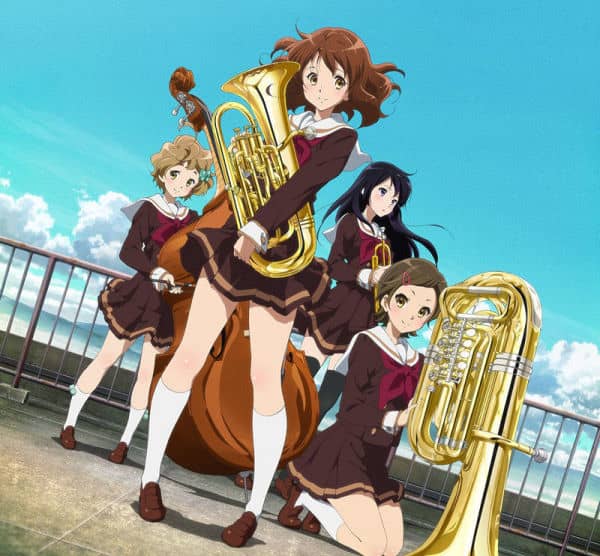
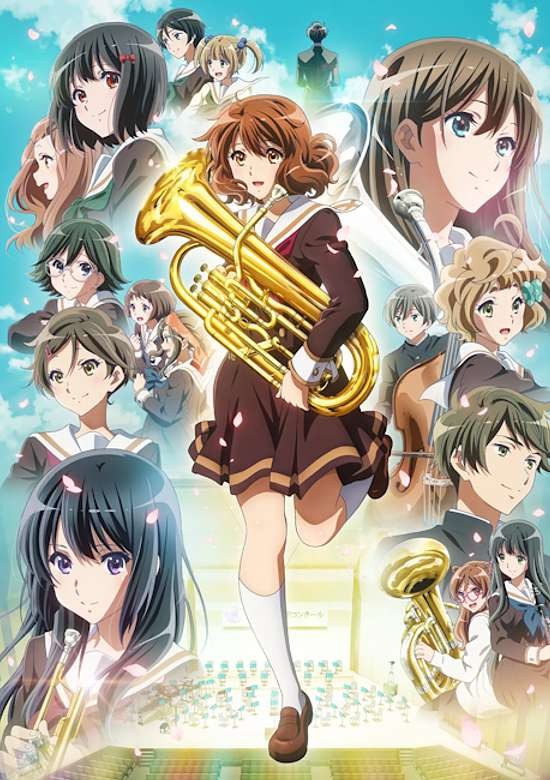
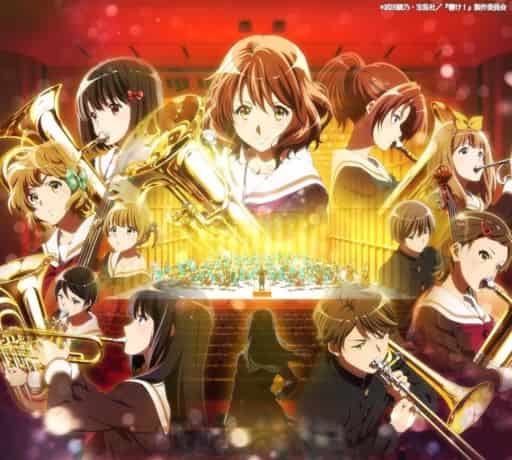
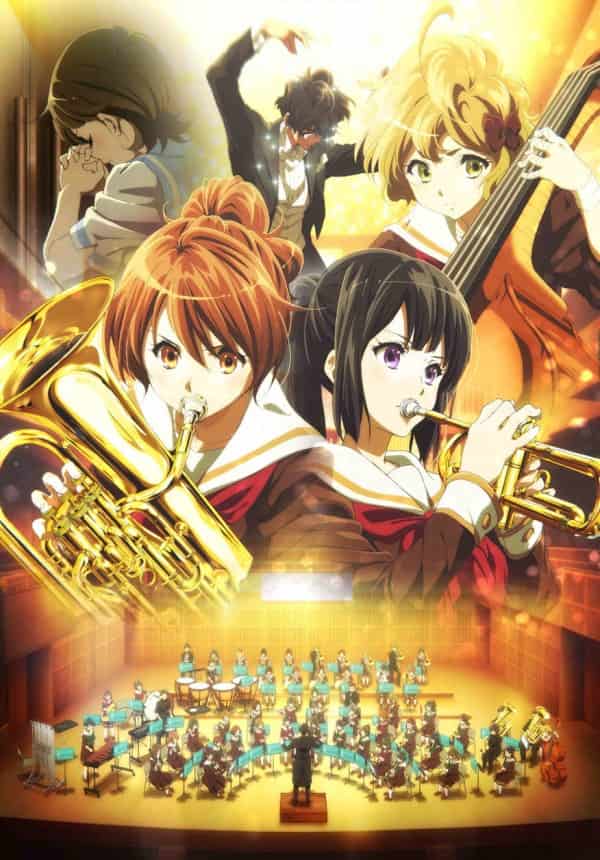
"Sound! Euphonium 2" continues the journey of the Kitauji High School Concert Band as they strive for excellence in the competitive world of high school music. The series picks up after the band’s success at the Kyoto Prefectural Concert Band Competition, where they earned a gold rating and advanced to the Kansai competition. The narrative delves deeper into the personal struggles, relationships, and ambitions of the band members, particularly focusing on Kumiko Oumae, the protagonist, and her evolving role within the group.
The story explores the challenges of maintaining unity and motivation as the band prepares for the Kansai competition. Tensions arise when new members join, and existing members grapple with their individual goals and insecurities. Kumiko, now a second-year student, finds herself navigating complex dynamics with her peers, including her close friend Hazuki Katou, her reserved yet talented classmate Reina Kousaka, and her senpai, Asuka Tanaka, whose enigmatic personality continues to influence the group. The series also introduces Nozomi Kasaki and Mizore Yoroizuka, former members who rejoin the band, bringing with them unresolved conflicts that test the group’s cohesion.
A significant subplot revolves around Mizore and Nozomi’s fractured friendship, stemming from Nozomi’s decision to leave the band in their first year. This storyline highlights themes of regret, forgiveness, and the emotional weight of personal choices. Meanwhile, Kumiko’s relationship with Reina deepens, as they share moments of vulnerability and mutual support, further exploring their bond beyond their musical partnership.
The band’s journey is marked by intense rehearsals, personal growth, and the pressure to perform at their best. The narrative emphasizes the importance of teamwork and communication, as the members learn to overcome their differences and work toward a shared goal. The series culminates in the Kansai competition, where the band’s hard work and dedication are put to the test. The outcome of their performance serves as a pivotal moment, reflecting their growth as individuals and as a collective.
Throughout the series, the music serves as both a narrative device and a central theme, with performances and rehearsals providing a backdrop for character development and emotional moments. The story balances its focus on the ensemble cast while maintaining Kumiko’s perspective, offering a nuanced portrayal of the challenges and rewards of pursuing artistic excellence in a competitive environment.
The story explores the challenges of maintaining unity and motivation as the band prepares for the Kansai competition. Tensions arise when new members join, and existing members grapple with their individual goals and insecurities. Kumiko, now a second-year student, finds herself navigating complex dynamics with her peers, including her close friend Hazuki Katou, her reserved yet talented classmate Reina Kousaka, and her senpai, Asuka Tanaka, whose enigmatic personality continues to influence the group. The series also introduces Nozomi Kasaki and Mizore Yoroizuka, former members who rejoin the band, bringing with them unresolved conflicts that test the group’s cohesion.
A significant subplot revolves around Mizore and Nozomi’s fractured friendship, stemming from Nozomi’s decision to leave the band in their first year. This storyline highlights themes of regret, forgiveness, and the emotional weight of personal choices. Meanwhile, Kumiko’s relationship with Reina deepens, as they share moments of vulnerability and mutual support, further exploring their bond beyond their musical partnership.
The band’s journey is marked by intense rehearsals, personal growth, and the pressure to perform at their best. The narrative emphasizes the importance of teamwork and communication, as the members learn to overcome their differences and work toward a shared goal. The series culminates in the Kansai competition, where the band’s hard work and dedication are put to the test. The outcome of their performance serves as a pivotal moment, reflecting their growth as individuals and as a collective.
Throughout the series, the music serves as both a narrative device and a central theme, with performances and rehearsals providing a backdrop for character development and emotional moments. The story balances its focus on the ensemble cast while maintaining Kumiko’s perspective, offering a nuanced portrayal of the challenges and rewards of pursuing artistic excellence in a competitive environment.
Episodes
Staffel 1
1Mid-summer Fanfare
2Hesitation Flute
3Troubled Nocturnes
4Awakening Oboe
5Miraculous Harmony
6Rainy Conductor
7Station Concert
8Rhapsody in Flu
9Sound! Euphonium
10After School Obligato
11First Love Trumpet
12The Last Competition
13Early-Spring Epilogue
Cast
- Satomi Niiyama
- Yuko Yoshikawa
- Kumiko Ōmae
- Sapphire Kawashima
- Takuya Gotō
- Reina Kōsaka
- Riko Nagase
- Shūichi Tsukamoto
Comment(s)
Staff
- Series DirectorNaoko Yamada
- Series CompositionJukki Hanada
- StoryboardTatsuya IshiharaYasuhiro TakemotoTaichi IshidateEisaku KawanamiNoriyuki KitanoharaIchirou MiyoshiNaoko YamadaTakuya YamamuraTaichi OgawaHaruka Fujita
- Unit DirectorTatsuya IshiharaHaruka Fujita
- Original creator
- Character DesignShoko Ikeda
- Chief Animation DirectorShoko Ikeda
- 3D DirectorTetsuo Umetsu
- Director of PhotographyKazuya Takao
- DirectorTatsuya Ishihara
- ScriptJukki Hanada
- Episode DirectorTatsuya IshiharaTaichi IshidateEisaku KawanamiNoriyuki KitanoharaIchirou MiyoshiNaoko YamadaTakuya YamamuraTaichi OgawaHaruka Fujita
- MusicAkito Matsuda
- Original Character DesignNikki Asada
- Art DirectorMutsuo Shinohara
- Animation DirectorKazumi IkedaFutoshi NishiyaChiyoko UenoMiku KadowakiNobuaki MarukiSeiichi AkitakeYuki KakudaYuko MyoukenTatsunari MarukoYuki TsunodaKohei Okamura
- Sound DirectorYōta Tsuruoka
Production
- ProductionPony CanyonKyoto AnimationRakuonshaLantis
- Animation ProductionKyoto Animation
Relations
Anime overview