TV-Series
Description
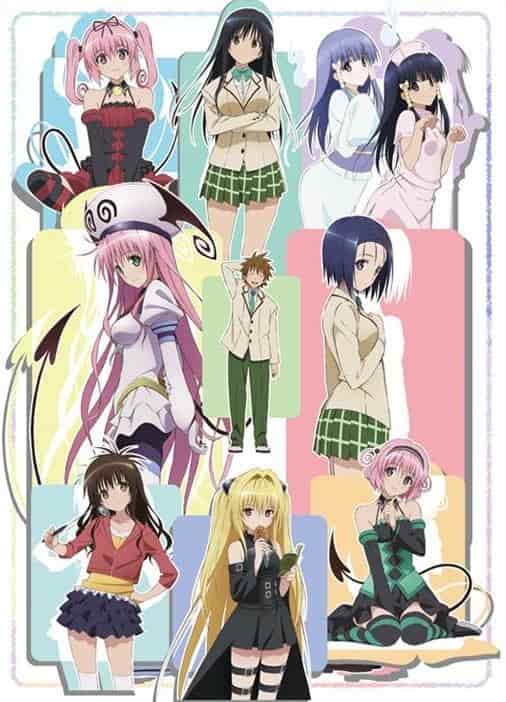
"Motto To Love Ru" is the second season of the anime adaptation of the manga series "To Love Ru," continuing the comedic and romantic escapades of Rito Yuuki, an ordinary high school student whose life becomes increasingly chaotic due to his interactions with alien girls. The series builds upon the foundation of the first season, expanding on the relationships and introducing new characters while maintaining its focus on lighthearted humor and romantic misunderstandings.
Rito Yuuki, the protagonist, remains at the center of the story, frequently finding himself in awkward and compromising situations, often due to his clumsiness or the unpredictable behavior of those around him. His life takes a dramatic turn when Lala Satalin Deviluke, the bubbly and eccentric alien princess, continues to pursue him romantically, despite his repeated attempts to navigate their complicated relationship. Lala’s inventions, which often malfunction, add to the chaos, creating humorous and unpredictable scenarios.
The series introduces new characters, including Lala’s younger sisters, Momo and Nana Deviluke, who arrive on Earth to bring Lala back to their home planet. Momo, the more reserved and calculating of the two, becomes a significant figure in the narrative, often scheming to bring Rito and Lala closer together. Nana, on the other hand, is more straightforward and initially skeptical of Rito, though her interactions with him gradually soften her stance. Their presence adds depth to the story, exploring themes of family and loyalty while contributing to the comedic and romantic tension.
Other recurring characters, such as Haruna Sairenji, Rito’s childhood friend and secret crush, and Yui Kotegawa, a classmate with a strong sense of justice, continue to play important roles. Haruna’s feelings for Rito remain a central emotional thread, though her shyness and hesitation often prevent her from expressing them directly. Yui, meanwhile, frequently finds herself entangled in Rito’s mishaps, leading to comedic confrontations and moments of vulnerability.
The episodic structure of "Motto To Love Ru" allows for a variety of comedic and romantic scenarios, ranging from school festivals and beach outings to encounters with other alien visitors. The series balances its humor with moments of genuine emotional connection, particularly in exploring the growing bonds between Rito and the various girls in his life. While the narrative often leans into slapstick comedy and fan service, it also touches on themes of acceptance, friendship, and the complexities of young love.
Overall, "Motto To Love Ru" expands on the world and relationships established in the first season, introducing new dynamics and characters while maintaining its focus on the humorous and romantic entanglements that define the series. The interactions between Rito and the diverse cast of characters drive the story forward, creating a blend of comedy, romance, and lighthearted chaos.
Rito Yuuki, the protagonist, remains at the center of the story, frequently finding himself in awkward and compromising situations, often due to his clumsiness or the unpredictable behavior of those around him. His life takes a dramatic turn when Lala Satalin Deviluke, the bubbly and eccentric alien princess, continues to pursue him romantically, despite his repeated attempts to navigate their complicated relationship. Lala’s inventions, which often malfunction, add to the chaos, creating humorous and unpredictable scenarios.
The series introduces new characters, including Lala’s younger sisters, Momo and Nana Deviluke, who arrive on Earth to bring Lala back to their home planet. Momo, the more reserved and calculating of the two, becomes a significant figure in the narrative, often scheming to bring Rito and Lala closer together. Nana, on the other hand, is more straightforward and initially skeptical of Rito, though her interactions with him gradually soften her stance. Their presence adds depth to the story, exploring themes of family and loyalty while contributing to the comedic and romantic tension.
Other recurring characters, such as Haruna Sairenji, Rito’s childhood friend and secret crush, and Yui Kotegawa, a classmate with a strong sense of justice, continue to play important roles. Haruna’s feelings for Rito remain a central emotional thread, though her shyness and hesitation often prevent her from expressing them directly. Yui, meanwhile, frequently finds herself entangled in Rito’s mishaps, leading to comedic confrontations and moments of vulnerability.
The episodic structure of "Motto To Love Ru" allows for a variety of comedic and romantic scenarios, ranging from school festivals and beach outings to encounters with other alien visitors. The series balances its humor with moments of genuine emotional connection, particularly in exploring the growing bonds between Rito and the various girls in his life. While the narrative often leans into slapstick comedy and fan service, it also touches on themes of acceptance, friendship, and the complexities of young love.
Overall, "Motto To Love Ru" expands on the world and relationships established in the first season, introducing new dynamics and characters while maintaining its focus on the humorous and romantic entanglements that define the series. The interactions between Rito and the diverse cast of characters drive the story forward, creating a blend of comedy, romance, and lighthearted chaos.
Episodes
Staffel 1
1Once again from here
2The thing that surfaces in the darkness
3Special Love Potion
4Yami Yami Fashion
5Queen of Romance!?
6Peach Girls
7Yami's Clinic
8Become Bigger ♪
9For Whom The Bell Tolls
10Pollen Telepathy
11All Quiet On The "Sister" Front
12I Love You ♡ 1
Cast
- Rito Yuuki
- Shizu Murasame
- Ren Elsie Jewelria
- Yami-chan
- Yui Kotegawa
- Leonie Dubuc
- Saki Tenjōin
- Rin Kujō
- Rito Yūki
Comment(s)
Staff
- Series CompositionYasunori Yamada
- StoryboardShigeru UedaKaori HiguchiMiho HiraoKai MoriHideya TakahashiKeiji GotōAtsushi Ōtsuki
- Music
- Character DesignYūichi Oka
- Chief Animation DirectorYūichi Oka
- Art designJunko Nagasawa
- Director of PhotographyYuki Kudo
- DirectorAtsushi Ōtsuki
- ScriptYasunori YamadaTomoyasu OkuboNoboru KimuraTsuyoshi Tamai
- Episode DirectorShigeru UedaMiho HiraoYukio KurodaYasuro TsuchiyaHideya TakahashiYūji Yanase
- Original creator
- Art DirectorYoshimi UminoMika Nakamura
- Animation DirectorToshinari YamashitaJunichi FukunagaTatsuya UranoYuka TakemoriRuriko WatanabeYūsuke NakamuraRyou KodamaAkira TabataRyo HagaYōko KutsuzawaHisako TsurukuboAyako OzakiHideaki ShimanoGokaku UenoYūichi OkaShōsuke ShimizuHaruo ŌgawaraYusuke KamataChika Kojima
- Sound DirectorJin Aketagawa
- ProducerTakeshi TanakaTakumi KusakabeNobuhiro Nakayama
Production
- ProductionTokyo Broadcasting SystemGeneon Universal EntertainmentXebec
- Animation ProductionXebec
Relations
Recommendations based on shared tags.