
TV-Series
Description
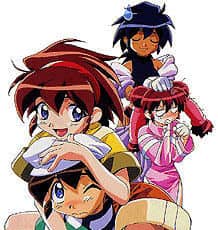
Set in a distant future where Earth has been abandoned, humanity now inhabits Terra II, a planet colonized by settlers. Due to a genetic anomaly, the population consists solely of men, and reproduction is achieved artificially. The story centers on Otaru Mamiya, a young man living in the nation of Japoness, who stumbles upon three marionettes—advanced humanoid robots with the ability to develop emotions. These marionettes, Lime, Cherry, and Bloodberry, are modeled after the "Maiden Circuit," a rare and advanced AI system that grants them the capacity to grow and learn like humans.
Lime, the first marionette Otaru encounters, is cheerful and energetic, embodying innocence and curiosity. Cherry, the second, is reserved and intellectual, often serving as the voice of reason. Bloodberry, the third, is strong-willed and combative, with a fiery personality. Each marionette represents a distinct aspect of human emotion and behavior, and their interactions with Otaru drive much of the narrative. As they develop deeper emotional bonds with him, they begin to exhibit traits that blur the line between machine and human.
The plot unfolds as Otaru and the marionettes become entangled in a conflict between Japoness and the neighboring nation of Gartland, which seeks to exploit the marionettes for military purposes. Faust, the ruler of Gartland, is a formidable antagonist who commands his own marionettes, designed for combat rather than emotional growth. The series explores themes of identity, humanity, and the ethical implications of artificial intelligence, as Otaru and his companions navigate the challenges posed by their adversaries and their own evolving relationships.
Throughout the series, the marionettes' growth is a central focus, as they grapple with their programming and the emergence of genuine emotions. Their journey is marked by moments of humor, drama, and action, as they strive to protect Otaru and each other while discovering what it means to be "alive." The narrative builds toward a climactic confrontation that tests the limits of their abilities and the strength of their bonds, ultimately raising questions about the nature of humanity and the potential for coexistence between humans and machines.
Lime, the first marionette Otaru encounters, is cheerful and energetic, embodying innocence and curiosity. Cherry, the second, is reserved and intellectual, often serving as the voice of reason. Bloodberry, the third, is strong-willed and combative, with a fiery personality. Each marionette represents a distinct aspect of human emotion and behavior, and their interactions with Otaru drive much of the narrative. As they develop deeper emotional bonds with him, they begin to exhibit traits that blur the line between machine and human.
The plot unfolds as Otaru and the marionettes become entangled in a conflict between Japoness and the neighboring nation of Gartland, which seeks to exploit the marionettes for military purposes. Faust, the ruler of Gartland, is a formidable antagonist who commands his own marionettes, designed for combat rather than emotional growth. The series explores themes of identity, humanity, and the ethical implications of artificial intelligence, as Otaru and his companions navigate the challenges posed by their adversaries and their own evolving relationships.
Throughout the series, the marionettes' growth is a central focus, as they grapple with their programming and the emergence of genuine emotions. Their journey is marked by moments of humor, drama, and action, as they strive to protect Otaru and each other while discovering what it means to be "alive." The narrative builds toward a climactic confrontation that tests the limits of their abilities and the strength of their bonds, ultimately raising questions about the nature of humanity and the potential for coexistence between humans and machines.
Episodes
Staffel 1
1Enter Lime! The Planet of Men
2Marionette Girl: The Troublemaker
3Big Trouble in Castle Japoness
4Cherry Panic! The Great Romantic Scheme!!
5Challenge from Faust
6Passionate Unwelcoming! Flying Love Attack!
7Getting Rich Quick is a Sour Joy
8Love Prophecy Battle Royale
9If We All Go to Gartlant Together, It Won't Be So Scary
10Infiltration of the Dark Empire
11Maiden Circuits Win the Day!?
12My First Kiss Tasted Like Plasma
13Otaru's Big Debut! Time for You to Shine
14Welcome the New Year! The Otaru Cup Marionette Contest
15Revival of the Females!? The Mystery of Lorelei
16What's a "Living Thing"?
17Gentleness, Heartbreak and Femininity
18Castle, Transform! Rise, Japonessguar!
19Tiger: To the End of Love, And Beyond!!
20Love Unending, Hearts Distant
21The Big Barbecue Party of Darkness and Light
22Soaring Emotion
23Faust: Warped Sincerity
24The Maiden's Voyage
25You'll Always Be There
Cast
- Rebeca Patiño
- James Lyon
- Márcio Araújo
- Sibel (Tiger)
- Tiger
- Marianne JaromiHyeon-Gyeong Jeong
- Godoh HernandezMiles SanchezMárcio Araújo
- Zarzamora (Bloodberry)
- Tigresa (Tiger)
- Isabel de Sá
- Rosana Beltrame
- Fourth Lee
Comment(s)
Staff
- DirectorMasami Shimoda
- Script
- Episode DirectorMasami ShimodaOsamu SekitaRyō YasumuraKiyoko SayamaTetsuya WatanabeTakashi IkehataKeiichi SugiyamaYukio NishimotoJun TakadaShinya HanaiYoshinori OdakaRyuichi Kimura
- Original Work
- Character DesignShuichi Shimamura
- Animation DirectorYoshiaki TsubataMakoto KogaShuichi ShimamuraSatoshi IshinoTsutomu SuzukiTomoaki KadoSusumu YamaguchiMichinori ChibaTatsuya OkaKenichi ImaizumiFutoshi HigashideYūji Yanase
- Director of PhotographyHidetoshi Watanabe
- Series CompositionMayori Sekijima
- StoryboardMamoru KanbeMasami ShimodaRyō YasumuraKiyoko SayamaTakaaki IshiyamaTetsuji TakayanagiTetsuya WatanabeTakashi IkehataYukio NishimotoKatsumi TerahigashiHiroshi MatsuzonoNaori HirakiKazuyuki HondaKiichi Hadame
- MusicParome
- Original Character Design
- Art DirectorKazuo Nagai
- Sound Director
- ProducerNoriko KobayashiShinjiro Yokoyama
Production
- ProductionSotsu Co., Ltd.NASTV TokyoStudio JunioBandai VisualKadokawa Video
- Animation ProductionStudio JunioHal Film Maker
Relations
Anime overview


Manga overview