
TV-Series
Description
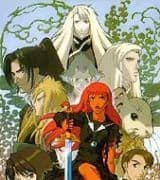
"12 Kingdoms" is a fantasy anime and manga series set in a richly detailed world inspired by Chinese mythology and political intrigue. The narrative centers on Yoko Nakajima, a high school student in Japan who is suddenly transported to a mystical realm known as the Twelve Kingdoms. This world is governed by a complex hierarchy of rulers, gods, and mythical creatures, with each kingdom ruled by a monarch chosen by the divine Kirin, a sacred beast that embodies the will of heaven. Yoko is revealed to be the rightful ruler of the kingdom of Kei, a revelation that thrusts her into a turbulent journey of self-discovery, leadership, and survival.
The Twelve Kingdoms operate under strict celestial laws, where rulers must maintain harmony and justice or face divine retribution. Yoko’s ascension to the throne is fraught with challenges, as she must navigate political machinations, internal rebellions, and her own insecurities. Her companions, including the enigmatic swordsman Rakushun, a rat-like beast-human hybrid, and the loyal Keiki, her Kirin, play pivotal roles in her growth and the stabilization of her kingdom. The series explores themes of governance, identity, and the moral responsibilities of power, often contrasting Yoko’s modern sensibilities with the feudal traditions of the Twelve Kingdoms.
Parallel storylines introduce other characters, such as Taiki, a young boy chosen as the Kirin of Tai, and Shoukei, a princess from the kingdom of Hou who struggles with her fall from grace. These narratives intertwine with Yoko’s journey, offering a broader perspective on the world’s intricate political and social systems. The series delves into the consequences of poor leadership, the cyclical nature of power, and the personal sacrifices required to uphold justice and order.
The world-building in "12 Kingdoms" is meticulous, with each kingdom possessing distinct cultures, histories, and challenges. The series emphasizes the interconnectedness of the realms and the delicate balance maintained by the celestial order. Yoko’s evolution from a reluctant outsider to a capable and compassionate ruler forms the emotional core of the story, while the ensemble cast provides depth and diversity to the narrative. The anime and manga blend action, drama, and philosophical inquiry, creating a compelling exploration of leadership and destiny within a fantastical yet grounded setting.
The Twelve Kingdoms operate under strict celestial laws, where rulers must maintain harmony and justice or face divine retribution. Yoko’s ascension to the throne is fraught with challenges, as she must navigate political machinations, internal rebellions, and her own insecurities. Her companions, including the enigmatic swordsman Rakushun, a rat-like beast-human hybrid, and the loyal Keiki, her Kirin, play pivotal roles in her growth and the stabilization of her kingdom. The series explores themes of governance, identity, and the moral responsibilities of power, often contrasting Yoko’s modern sensibilities with the feudal traditions of the Twelve Kingdoms.
Parallel storylines introduce other characters, such as Taiki, a young boy chosen as the Kirin of Tai, and Shoukei, a princess from the kingdom of Hou who struggles with her fall from grace. These narratives intertwine with Yoko’s journey, offering a broader perspective on the world’s intricate political and social systems. The series delves into the consequences of poor leadership, the cyclical nature of power, and the personal sacrifices required to uphold justice and order.
The world-building in "12 Kingdoms" is meticulous, with each kingdom possessing distinct cultures, histories, and challenges. The series emphasizes the interconnectedness of the realms and the delicate balance maintained by the celestial order. Yoko’s evolution from a reluctant outsider to a capable and compassionate ruler forms the emotional core of the story, while the ensemble cast provides depth and diversity to the narrative. The anime and manga blend action, drama, and philosophical inquiry, creating a compelling exploration of leadership and destiny within a fantastical yet grounded setting.
Episodes
Staffel 1
1Shadow of the Moon, the Sea of Shadow - The First Chapter
The episode opens by establishing the mundane and constrained life of high school student Youko Nakajima, who feels pressure to conform by hiding her natural red hair and maintaining the role of a model student. She experiences unsettling dreams of monsters and unfamiliar landscapes, hinting at her connection to another world. A confrontation with a classmate being bullied is interrupted by the sudden appearance of Keiki, a mysterious golden-haired man who kneels before Youko and swears allegiance, claiming she is the one he has been seeking. This intrusion is immediately followed by an attack from a monstrous, bird-like creature, which devastates the school but inexplicably leaves Youko and Keiki unharmed. Keiki provides Youko with a sword, explaining that enemies are after her and only she can defeat them, and imbues her with a protective spirit. Youko, along with her classmates Yuka Sugimoto and Asano, is drawn into a swirling vortex of light, the portal to the world of the Twelve Kingdoms, separating her from Keiki. Motivated by confusion and the immediate threat to her life, Youko begins to navigate this strange reality, her primary goal shifting from maintaining her social image to mere survival in an unknown and hostile environment. The episode's central conflict arises from the abrupt collision of Youko's ordinary world with a fantastical realm where she is a hunted figure, establishing the core premise of her displacement and the beginning of her arduous journey.
2Shadow of the Moon, the Sea of Shadow - The Second Chapter
Following the transport from Japan, the episode begins with the group separated after a youma attack. Yoko awakens alone on a shoreline and makes her way to a nearby village, where she is immediately captured by the inhabitants. The villagers identify her as a kaikyaku, a term for people from the outside world, and confine her in a jail. There, she reunites with her classmate Sugimoto, who does not recognize Yoko due to a change in her appearance and because Yoko can inexplicably understand the local language. The two are later taken from the village alongside another classmate, Asano, who has also been captured. While being transported, their captors are attacked by a group of youma known as Kiki. During the assault, Yoko unsheathes the sword given to her by Keiki and successfully fights off the creatures, allowing the three students to escape into the wilderness. The immediate consequence of this action is a fragile and uneasy alliance between the three as they flee, driven by the shared need to survive in this hostile world. Their motivations are primal and clear: to find food, shelter, and safety, while grappling with the disorienting reality of their situation. Asano reveals to the girls that he witnessed Keiki transform and apparently perish, severing their only link to an explanation. The episode establishes the fundamental conflict of survival against both human fear and supernatural predators, leaving Yoko, Sugimoto, and Asano alone and desperate in an unfamiliar land.
3Shadow of the Moon, Sea of the Shadow - The Third Chapter
The episode opens with Youko, Yuka, and Asano still bound and at the mercy of the pursuing youma, which are identified as a pack of Kiki. The creatures attack the wagon, killing the driver and causing the vehicle to tip over. One of the guards releases the three captives and urges them to flee before he is killed, but they are quickly surrounded by the remaining beasts. The hinman, a mysterious figure residing within Youko, takes control of her body and forces her to use the sword to slaughter the Kiki, demonstrating the weapon's power and the entity's influence. Following the attack, the group seeks sustenance and stumbles upon a town, where they break into a house looking for food. The homeowner, a woman named Takki, confronts them as thieves. Yuka seizes Takki from behind and demands that Youko kill her, but Youko finds herself unable to commit the act and breaks down in tears. Moved by their desperate state, Takki offers them shelter for the night, providing a brief respite from their journey. Meanwhile, a parallel scene unfolds in the palace of the King of Kou, who discusses with a woman named Kourin his belief that the kaikyaku, people from Japan, are a bad omen. He orders her to use her shirei to kill them, a command she reluctantly accepts, establishing a new, direct threat to the protagonists. The episode concludes with Youko experiencing another vision, further hinting at the larger forces and conflicts at play in the Twelve Kingdoms.
4月之影 影之海 四章
Yoko, accompanied by Sugimoto and Asano, arrives at an inn operated by Taa's mother, following Taa's promise of employment. Taa had gone ahead to locate her mother but fails to return, prompting Yoko to enter the establishment in search of her. While inside, Yoko inadvertently overhears a private conversation between Taa and her mother, revealing that Taa's true intention is not to secure work for the group but to sell them. This discovery serves as the episode's central turning point, shattering any remaining trust Yoko had placed in her guide. Overcome by shock and anger at the betrayal, Yoko flees the inn, with Taa immediately giving chase. The episode continues to explore the psychological turmoil inflicted upon Yoko by the blue monkey's illusions, which exploit her insecurities and fuel her confusion. The conflict shifts from external survival against youma to interpersonal deception, highlighting Yoko's vulnerability in an unfamiliar world. Her decision to run underscores her isolation and the constant threat posed by those she encounters. Taa's pursuit sets the stage for a direct confrontation, forcing Yoko to confront the immediate consequences of misplaced trust. The narrative emphasizes the harsh reality that Yoko must navigate, where alliances are precarious and self-reliance becomes increasingly necessary.
5Forgotten
The episode opens with Youko enduring a recurring nightmare featuring a mysterious man who shows her visions of monsters, establishing the continued psychological impact of her recent experiences. Upon arriving at school, she is confronted by her friend Asano, and a girl named Sugimoto greets her, only to be ignored by a distracted Youko. Later that day, Youko feels remorseful and attempts to apologize to Sugimoto, but finds that Sugimoto is not inclined to forgive the slight. The following morning, Youko continues to suffer from the same nightmares, and her parents pressure her to dye her hair, a request she deflects before heading to school. At school, her teacher confronts her about rumors concerning her staying out all night, escalating the tension in her daily life. This confrontation is abruptly interrupted by the sudden appearance of a mysterious stranger who kneels before her, urging her to accept her throne. Moments later, a giant creature called a Kochou attacks the school, causing chaos and injuring students. Youko and the stranger flee to the roof to escape the creature, where they are cornered by the Kochou. In this moment of crisis, the stranger reveals his name to be Keiki and presents Youko with a sword, compelling her to take it. The immediate consequence is that Youko is forced to confront the reality of the supernatural threat and her connection to the stranger, setting the stage for her departure from the familiar world.
6Shadow of the Moon, Sea of the Shadow - The Sixth Chapter
The episode opens in the Kingdom of Kou, where King Kou expresses anger toward his kirin, Kourin, for preventing Sugimoto from killing Youko. King Kou then confines Sugimoto to a house in a rural area, allowing her to live in isolation. In a forest within another kingdom, Youko regains consciousness in a unfamiliar house and is greeted by Rakushun, a large, anthropomorphic, rat-like half-beast. Rakushun attempts to offer her food, and Youko eventually consumes some peaches he provides. During a brief moment alone, a small, winged creature named Auzaru appears and warns Youko not to trust Rakushun. When Rakushun returns, Youko inquires if he knows Keiki, but Rakushun confirms he does not know that name. Their conversation is interrupted by the arrival of a local officer at the door. Youko hides while the officer tells Rakushun that he is searching for a man and a woman, referring to Asano and Youko, and mentions a reward for their capture. Rakushun denies any knowledge of the fugitives. After the officer departs, Youko questions Rakushun's motivation for protecting her, and he states simply that he wishes to help her. That night, Rakushun explains to Youko the fundamental structure of the world, detailing the creation of the Twelve Kingdoms and the divine laws that govern them. Later, when Youko is alone, Auzaru reappears and reiterates his warning that the half-beast will eventually betray her, creating a conflict in Youko's mind regarding whom she should believe. The episode establishes a temporary sanctuary for Youko while simultaneously introducing the persistent threats from both human authorities and her own internal doubts. Rakushun's exposition provides Youko with her first coherent understanding of the world she has been thrust into, which directly influences her subsequent decisions and her perception of her own circumstances.
7Shadow of the Moon, Sea of the Shadow - The Seventh Chapter
8Shadow of the Moon, Sea of the Shadow - The Eighth Chapter
This episode continues directly from the previous installment, with Youko's group remaining as captives of the youma that resemble tanuki. The creatures, having already consumed Sugimoto, turn their attention to the remaining humans. Youko is separated from Yuka and Asano and placed in a different cave, highlighting the youma's strategy of isolating their prey. The narrative focuses on the psychological state of the captives as they confront the immediate threat of being devoured. Yuka and Asano are left to rely on each other, their fragile cooperation tested by fear and mistrust. Meanwhile, Youko's resolve is challenged as she desperately seeks a means of escape, driven by a refusal to succumb to the same fate as her classmate. A critical turning point occurs when Ikuya, the keigi who has been observing Youko, intervenes directly. He materializes before her in the cave, offering not salvation but a pointed critique of her passive state. Ikuya's lecture emphasizes that she possesses the tools to save herself—specifically referencing the sword given to her by Rakushun—yet she remains paralyzed by self-doubt and a lack of initiative. This confrontation serves as a catalyst, forcing Youko to recognize her own agency in the situation. The episode concludes with Youko making a definitive choice to stop waiting for rescue and instead take action, grasping the sword with the intent to fight.
9Shadow of the Moon, the Sea of Shadow - The Ninth Chapter
Upon arriving in the Kingdom of En, Yoko Nakajima is reunited with the hanjyuu Rakushun, who had cared for her after she was wounded in the Kingdom of Kou. The episode shifts its focus from survival to exposition as Yoko is brought before King En, the ruler of the prosperous kingdom. King En and his officials provide Yoko with a comprehensive explanation of the world's history and its divine laws, revealing that she is not from another world by origin but is a Taika—a person born in the Twelve Kingdoms who was washed away to Earth as an embryo. This revelation establishes that Yoko is the true and destined ruler of the Kingdom of Kei, which is currently in a state of turmoil under an impostor queen. The narrative clarifies the broader conflict, explaining that King Kou has been orchestrating the pursuit of Yoko to prevent her from claiming the throne of Kei, a scheme that has also led to the enslavement of Keiki, the Kirin of Kei. Furthermore, it is revealed that King Kou's unjust actions are causing his own Kirin, Kourin, to suffer from the fatal 'soul poisoning,' a consequence of the king's deviation from the path of virtue. Faced with this information, Yoko is presented with an ultimatum: she can return to her former life in Japan, thereby abandoning the people of Kei to misery, or she can accept her fate and fight for the crown of a country she does not know. The episode concludes with Yoko being given a single night to make this monumental decision, with Rakushun choosing to stand by her side as she contemplates her future.
10Shadow of the Moon, the Sea of Shadow - The Tenth Chapter
Youko Nakajima and Rakushun arrive in the kingdom of En and are granted an audience with King Enki at his palace. The king provides Youko with a comprehensive explanation of the divine mandate that governs the twelve kingdoms, detailing the role of the Kirin and the selection of a ruler by Heaven. This exposition clarifies the cosmic structure that has been influencing her journey since her arrival in this world. Concurrently, Yuka Sugimoto receives instruction from a kaikyaku teacher in En, focusing on the language and customs of her new environment. The narrative concentrates on the acquisition of knowledge as a precursor to action, with both young women being prepared for the challenges ahead through formal education. King En's lessons directly address the source of Youko's unnatural appearance and the reasons for the persecution she faced in the kingdom of Kou. Youko learns that she was brought to this world because she has been chosen by a Kirin, though her own Kirin's identity remains undisclosed. The episode establishes the political and spiritual framework that Youko must navigate, positioning the kingdom of En as a place of refuge and enlightenment. It concludes with Youko beginning to understand the profound responsibilities and dangers that accompany her potential destiny as a monarch.
11Shadow of the Moon, Sea of the Shadow - The Eleventh Chapter
The episode shifts focus from Youko's immediate journey to a detailed backstory concerning the founding of the kingdom of En. Rakushun and Youko listen as a servant of King En recounts the origin of the king and his kirin, Enki. The narrative reveals that Enki, originally a taika from the human world, was brought to the Twelve Kingdoms as an infant after being found by his nyokai. Growing up aware of his nature as a kirin, he faced the responsibility of selecting a ruler for En, a duty he initially resisted due to witnessing the suffering caused by war and conflict in his past. In a moment of frustration, he created a shoku and returned to the human world, where he encountered a man named Shoryu, who would become King En. At the time, Shoryu was leading a group of displaced people, constantly facing attacks from rival forces. Recognizing Shoryu's character and his dedication to protecting those following him, Enki chose to intervene and save his life during a battle. By bowing to Shoryu and declaring him king, Enki fulfilled his role and established the prosperous rule of En that continues in the present. This extended flashback serves to illustrate the series' perspective on ideal leadership, contrasting Shoryu's selfless assumption of responsibility with the tyrannical rule seen in other kingdoms. For Youko, hearing this account provides a concrete example of what it means to be a ruler chosen by a kirin, a concept she is struggling to accept. The episode juxtaposes this tale of a confident king's origin with Youko's continued internal conflict, as she remains haunted by her past mistakes, including abandoning Rakushun and the deaths she has witnessed. Her fear of causing further harm and her lack of self-worth form the central barrier to her accepting her own destiny as the queen of Kei.
12Shadow of the Moon, Sea of the Shadow - The Twelveth Chapter
Youko's path toward accepting her role as the queen of Kei is complicated by a vision from her sword. The blade reveals the history of the previous queen of Kei and her possessive relationship with Keiki, showing how her failure as a ruler caused him great sorrow. Witnessing this past, Youko becomes fearful that she will repeat the same mistakes and prove to be an unworthy monarch. In the village, Heki confronts Sugimoto about her behavior, explaining that he was once like her and advising her to change her ways. Sugimoto disregards his counsel and instead encounters King Kou, who reiterates that Youko must be killed and secures Sugimoto's continued agreement. At the palace of En, Enki explains to Rakushun and Youko that King Kou's actions, including his interference in Kei, are a violation of the will of heaven and cannot be permitted to continue. The political conflict escalates when King Kou travels to meet with King En to argue his position. King En directly confronts him, revealing that he is aware of King Kou's schemes, including the installation of a false queen in Kei and the kidnapping of Keiki. King Kou denies all accusations before departing. Meanwhile, Youko, while in town, witnesses another vision in her sword, this time of the argument between Sugimoto and Heki. The central conflict is framed by the contrasting philosophies of leadership; King En's centuries-long prosperous reign serves as a direct example of a ruler who serves the people, a standard against which Youko measures herself and finds wanting. The episode tracks Youko's internal crisis, her fears amplified by the history she uncovers, even as the external threat from King Kou intensifies. Ultimately, Yuka, having learned the truth about King Kou's treachery from Heki, decides to abandon her resistance against Youko, marking a significant shift in her personal conflict.
13Shadow of the Moon, Sea of the Shadow - The Final Chapter
The conflict with King Kou reaches its conclusion as his own actions lead to his downfall. Upon confronting King En, Kou is enraged by the appearance of his kirin, Kourin, who is visibly suffering from shitsudo due to his rule. In a fit of fury, Kou charges at Youko with his sword, but Kourin intervenes and is fatally wounded instead, dying in his place. Realizing the fatal consequence of his reckless tyranny, Kou faces his impending doom. Following this, Youko agrees to the plan to rescue Keiki from the impostor queen's palace in the kingdom of Kei. King En organizes the assault, setting the attack for the following morning. Before the operation, Youko speaks with Rakushun, who expresses his strong desire for her to become queen. Rakushun transforms into his human form to reassure her that Keiki's choice was correct and that she was chosen for a reason. The next day, Youko, accompanied by Sugimoto, joins King En and his army as they breach the capital of Kei. While En's forces engage the defenders, Youko locates the dungeon where Keiki is imprisoned. She finds him under a spell and uses her magic ball to break the enchantment, freeing him. The narrative then accelerates significantly, covering the defeat of the impostor queen and Youko's ascent to the throne within a condensed timeframe. Large-scale battles and the war to secure the kingdom are largely skipped over, with the focus instead on the immediate aftermath. Youko is shown on the throne, visibly distressed and clutching a blood-stained sword, implying she was compelled to take a life to secure her position. Yuka Sugimoto's storyline is also resolved abruptly, as she is sent back to Japan by Keiki. The episode concludes with Youko having accepted her fate as the ruler of Kei, though the rapid resolution leaves the full scope of the conflict and its immediate consequences to the viewer's inference.
14Shadow of the Moon, Sea of the Shadow - Chapter of Recollection
The episode is structured as a conversation between Youko and Rakushun at the latter's home, functioning as an interlude that reviews the narrative thus far. Rakushun provides Youko with a detailed explanation of the Twelve Kingdoms' cosmology, clarifying the roles of the twelve rulers, the nature of kirin as divine messengers, and the hierarchical structure of their world. Youko, in turn, recounts her experiences since being transported from Japan, leading to a series of flashbacks that revisit key events and characters from the previous episodes. These recollections encompass the actions and motivations of Keiki, Enki, Sugimoto, Asano, King En, King Kou, and Kourin, among others. A central focus of Youko's concern is the unresolved fate of her friend Asano, who remains missing, reinforcing her ongoing anxiety about those who traveled with her. The episode culminates in a decision by Youko to resume her journey, prompting her to part ways with Rakushun. As a parting gift, she leaves him a specialized bird capable of recording and playing back messages. After her departure, the bird activates and delivers Youko's recorded words to Rakushun, in which she expresses profound gratitude for his friendship and steadfast support, acknowledging that her survival and progress would not have been possible without him. In the message, she also formalizes her commitment to her destiny by promising to build a worthy kingdom. This episode serves primarily as a narrative recap, consolidating the extensive lore and character arcs of the first story arc while simultaneously reinforcing the emotional bond between Youko and Rakushun and solidifying Youko's resolve to pursue her role as the future queen of Kei.
15Sea of the Wind, Shore of the Labyrinth - The First Chapter
The episode opens the new story arc 'Sea of the Wind, Shore of the Labyrinth,' shifting focus from Youko to the backstory of Taiki, the Kirin of the Tai Kingdom. The narrative is presented as a tale recounted to Youko and Keiki, revealing how Taiki's ranka was swept from the Twelve Kingdoms to Japan. Instead of being born as a beast of power, the ranka developed into a human boy named Kaname Takazato, the first son of a human family. The episode depicts Kaname's life in Japan as a quiet and awkward child who struggles to fit in with his family and peers. His mundane and emotionally isolated existence is contrasted with his eventual summoning back to the Twelve Kingdoms, where he is welcomed into a world of fantastical creatures and destiny. A key event is the birth of his guardian, Sanshi, who emerges fully formed from a fruit-like placenta and immediately bonds with the young Taiki. The episode juxtaposes this magical origin with Kaname's present-day life in Japan, where he has seemingly lost his memories of the other world and remains socially withdrawn, even from those who search for him. This dual timeline establishes the central mystery of what drove Taiki back to Japan and the consequences of his disappearance. The arc introduces new layers of the Twelve Kingdoms' lore, focusing on the profound connection between a ruler and their Kirin. Taiki's initial wariness of his divine role highlights the weight of his predetermined destiny. The episode effectively establishes the emotional core of Taiki's story, emphasizing themes of identity and belonging through the contrast between his two lives. By framing this narrative as a story being told, the episode also reinforces Youko's growing position as a ruler who must learn from the histories of the other kingdoms.
16Sea of the Wind, Shore of the Labyrinth - The Second Chapter
This episode shifts focus to the backstory of Taiki, the kirin of the kingdom of Tai, who is introduced in the present day as a troubled amnesiac boy named Kaname living in Japan. The narrative follows his initial arrival in the Twelve Kingdoms as a child, a stark contrast to Youko's traumatic experience. Taiki is greeted not by hostility, but by the gentle hanjyuu, Sanshi, who is born from a tree specifically to be his attendant and protector. The episode details his journey to the court of the king of En, where he is educated about his destiny as a kirin. The central conflict emerges from the weight of this destiny; despite the welcoming environment, Taiki struggles with the immense pressure and expectations placed upon him as a future ruler's advisor. This internal conflict is juxtaposed with his present-day situation, where he remains psychologically isolated and haunted by his forgotten past. The turning point in the flashback narrative is marked by an event so traumatic that it causes him to lose his memory and be cast back into Japan, though the specific incident is left as a cliffhanger. Consequently, the episode establishes the mystery of what drove Taiki from his kingdom, linking his past turmoil to his current withdrawn state. His former classmate, Yuka Sugimoto, persistently seeks him out, driven by a desire to understand his disappearance, which creates a link between his two worlds. The episode concludes with the implication that Taiki's story is intimately connected to Youko's new role as queen, setting the stage for their eventual intersection.
17Sea of the Wind, Shore of the Labyrinth - The Third Chapter
The narrative shifts focus from Youko's immediate conflict in Kei to a lengthy flashback detailing the early life of the young tai, Taiki. This episode centers on Taiki's arrival in the kingdom of Tai and the subsequent attempts to prepare him for his duty to select a new king. A botched kidnapping attempt by a foolish aspirant to the throne underscores the dangers surrounding the unprotected child. Upon his safe return, Taiki is placed in a protective environment often referred to as a 'holy daycare,' where he is meant to learn about his role. The weight of his predetermined destiny as a kirin begins to press heavily on him, as those around him can only offer vague assurances that he will fulfill his purpose. A significant portion of the episode is dedicated to the arrival of Keiki, the kirin of Kei, who is tasked with tutoring the young Taiki. Keiki's approach to mentorship is formal and stiff, treating conversations with the ten-year-old like interrogations and explaining complex concepts in an inaccessible manner, which nearly reduces Taiki to tears. Through these interactions, Keiki's own character is subtly illuminated, revealing his inherent awkwardness and raising questions about his past relationships, including with the previous queen of Kei. The episode also depicts the standard process for a kirin to find their sovereign, which relies on chance encounters with candidates rather than any formal procedure. This process is illustrated by a parade of hopefuls presenting themselves to Taiki, though it remains unclear how the recognition is supposed to manifest. A potential turning point occurs when Taiki locks eyes with the esteemed general Gyousou, reacting with a fear he cannot explain, possibly hinting at a divine connection. The immediate consequence of this flashback is a deeper understanding of both Taiki's vulnerability and Keiki's complex personality, setting the stage for the tragic future that is already known to the audience.
18Sea of the Wind, Shore of the Labyrinth - The Fourth Chapter
The narrative shifts focus to the early life of Taiki, the Kirin of Tai, and his initial struggles to understand his role and abilities. Having been raised in Japan (Hourai) for a decade, Taiki lacks the innate knowledge that kirin typically possess, such as the method for transforming into their true form and commanding shirei. To address this deficiency, the semi-divine being Youko, known as Hekisen Genkun, summons Keiki, the Kirin of Kei, to Mount Hou to serve as a tutor for the young boy. Keiki's initial attempt to instruct Taiki is formal and emotionally distant, inadvertently causing the child distress. This interaction provides a rare glimpse into Keiki's personality, highlighting his struggle to connect with others, a trait that leads him to later reflect on whether his similar demeanor contributed to the downfall of the previous queen of Kei. As the lesson progresses, Keiki slowly adapts his approach, becoming a more supportive and brotherly figure to Taiki. Their time together is cut short when Keiki must return to his own duties, but before departing, he makes a promise to Taiki to be the first to congratulate him when he selects a new king for Tai. Immediately following the departure, the focus shifts to the practical purpose of Taiki's existence on the sacred mountain. Candidates aspiring to be the next king of Tai, having survived the perilous journey across the Yellow Sea, begin to gather at Mount Hou and proceed toward Houto Palace for the selection ceremony. Taiki must now attempt to discern which, if any, of these individuals possesses the kingly aura (wang qi) that only a kirin can perceive. Among the hopefuls, a distinguished general named Gyousou captures Taiki's attention, though the boy initially mistakes his instinctual reaction to the man for fear, setting the stage for the complex path toward the eventual succession.
19Sea of the Wind, Shore of the Labyrinth - The Fifth Chapter
Taiki confronts a powerful, shapeshifting youma, marking a significant turning point in his development. With the lives of his companions at immediate risk, he successfully tames the creature, compelling it to assume a harmless form. This achievement represents his first decisive action within the narrative of the arc. Following this event, Taiki makes the consequential choice to select Gyousou as the new king of Tai, despite his own lingering unease and the apparent absence of a divine mandate. The decision weighs on him, leading him to confide his fears of having made an error to Keiki. In response, Keiki, with the assistance of King En and Enki, orchestrates a situation to demonstrate that Taiki's choice was indeed valid. The resolution presented to Taiki is that his personal decision to trust Gyousou was, in itself, the requisite revelation, not a defiance of divine will. The episode functions as the climactic installment of Taiki's flashback, concluding his immediate storyline. This arc concludes abruptly, transitioning without further resolution back to Youko's timeline, where her own coronation is depicted in a condensed manner. The narrative leaves the circumstances of Taiki's eventual return to Hourai and the present-day situation involving his protective guardians entirely unaddressed.
20Episode 20
21The Sea of Wind, the Shore of Labyrinth - Chapter of Reminiscence
This episode functions primarily as a recap, framed by the character Rokuta's concerns regarding the state of the twelve kingdoms. Rokuta observes that the kingdoms of Ko and Ho are in poor condition due to the absence of a ruling monarch, with the situation in Tai being the most dire as both its king, Tai-o, and the kirin, Taiki, are missing. The narrative delves into Rokuta's recollection of retrieving Taiki from Japan, known in this world as Horai. A point of concern is raised regarding the Shashinboku tree on Mt. Ho, where a new Ranka seed for Tai's kirin should be growing if Taiki were deceased; however, no such seed has appeared, leaving Taiki's fate uncertain. Enki, the kirin of the En kingdom, provides a comprehensive exposition on the geography and political structure of the twelve kingdoms, summarizing the information presented in previous episodes. This exposition revisits the fundamental laws governing the relationship between the kings and their kirin, as well as the dire consequences for a kingdom when this bond is severed or left unfulfilled. The episode serves as a narrative bridge, reiterating the established mythology and current political instabilities that drive the series' conflicts. It underscores the precarious situation in Tai, setting the stage for the exploration of Taiki's past and his significance to the realm. By focusing on Rokuta's perspective, the episode highlights the concern of the existing monarchs for the fate of their neighboring kingdoms. The recap elements effectively re-contextualize the events and rules that have led to the current crises faced by multiple kingdoms. The episode concludes by reinforcing the overarching theme of a ruler's essential role in maintaining the world's balance and the mysteries surrounding the disappearance of Tai's key figures.
22Forgotten
The narrative focus shifts to the kingdom of Tai, where the young kirin, Taiki, faces the culmination of his arduous journey to select a new ruler. Having traveled across the land in search of a candidate who can invoke the divine sanction of the heavens, Taiki finds himself in a province governed by Lord Han. Han presents a facade of competence and care for his people, but Taiki senses an underlying falsehood and cannot establish the necessary bond. The conflict intensifies as a youma attack throws the province into chaos, exposing Han's true cowardice and ineptitude as he prioritizes his own safety over his subjects. In the midst of the destruction, Taiki encounters Shoryu, a man of action and principle who risks his life to protect the helpless. This selfless act triggers the long-awaited heavenly approval, as the shoku, a divine wind signaling the acceptance of a new king, begins to stir. The turning point is marked not by Taiki's decision, but by an external force he cannot control; the king is chosen by heaven based on his inherent character, not his ambition. The immediate consequence is the ascension of Shoryu, who becomes King Shoryu of Tai. This selection fulfills Taiki's primary duty, but it is not a simple resolution. Taiki is left to grapple with the profound responsibility he carries and the knowledge that his perception of others can determine the fate of an entire nation. The episode underscores the immense pressure placed upon the kirin, whose solitary mission to find a worthy sovereign has come to an end, only to be replaced by the new and uncertain challenges of serving under a king he has just met.
23Episode 23
Following the successful retaking of the castle, Youko Nakajima formally assumes the throne as the new Empress of Kei, marking a significant shift in the narrative from survival to governance. The episode focuses on the immediate aftermath of the coup, depicting Youko's first actions as ruler and the reactions of those around her. Her motivation is portrayed as a commitment to establishing a just rule, directly contrasting with the tyranny of the former king, and she begins to grapple with the immense responsibility of her position. The political landscape of the kingdom is shown to be in flux, with various officials and generals deciding whether to pledge their loyalty to the new monarch or resist the change in leadership. Concurrently, the narrative introduces a new plotline in the kingdom of Sai, focusing on a girl named Suzu who has been transported to this world. Suzu is revealed to have been in servitude to an immortal master for a century, her situation highlighting the harsh realities faced by many in the twelve kingdoms. Her motivation stems from hearing rumors about the new, benevolent queen of Kei, which ignites a desperate hope that Youko might somehow be able to rescue her from her endless bondage. This parallel storyline establishes Suzu's perspective as a commoner suffering under the established order and sets up her expectations for the new ruler. The episode thus contrasts the nascent challenges of leadership from Youko's viewpoint with the profound, long-term suffering of the populace from Suzu's, creating a thematic link between the two characters. The episode concludes with Suzu's hope becoming a concrete, driving force, while Youko continues to face the immense practical and political tasks of solidifying her reign.
24Episode 24
25Episode 25
26Oppression: Great Distance in the Wind, the Sky at Dawn
Youko officially assumes the throne of Kei, marking a formal transition from hunted outcast to sovereign ruler. Her acceptance of the role brings immediate political consequences, as she must now navigate the complex expectations of the court she has inherited. The episode details the practical realities of her new position, including the weight of administrative duties and the lingering loyalty of officials to the previous, corrupt regime. Concurrently, the narrative shifts to the kingdom of Sai, where the maid Suzu endures her century of servitude to an immortal master. Suzu learns of Youko's ascension in Kei, and this news ignites a desperate hope that the new queen might somehow be a catalyst for her own liberation. This parallel storyline highlights the widespread impact of Youko's rise, demonstrating how her actions in one kingdom reverberate across the Twelve Kingdoms. Shoukei, the former princess of Hou, continues her own arduous journey, further illustrating the theme of displaced individuals struggling to survive. The episode juxtaposes Youko's growing authority and responsibility against the powerlessness of Suzu and Shoukei, underscoring the vast disparity in their circumstances. Suzu's hope, born from hearing of Youko, presents a subtle turning point, suggesting that a ruler's influence can inspire even those in seemingly hopeless situations. The immediate consequences are a solidified rule for Youko, contrasted with the continued suffering and newly kindled aspirations of those in distant lands.
27Episode 27
28Episode 28
29Episode 29
30Episode 30
31Episode 31
32Episode 32
33Episode 33
Gyokuyou arrives in the province of Wa and immediately witnesses the brutal exercise of local authority when a lord orders a man to be crucified. Horrified by the spectacle, which echoes the violence she herself escaped, Gyokuyou throws a stone at the lord's soldiers in a spontaneous act of defiance. Her intervention provides an opening for Youko, who is also in the area observing her kingdom, to have her shirei rescue the condemned man and pull Gyokuyou away from the ensuing retaliation. This chance encounter brings the two former servants of Lady Riyo into proximity, though they do not formally meet. Meanwhile, Suzu's grief over the death of her companion hardens into a desire for vengeance against Lord Shoukou, the official responsible. Her attempts to seek justice through proper channels are thwarted by a populace too intimidated to corroborate her account, illustrating the pervasive control Shoukou exerts over the city. Suzu's quest for retribution leads her to purchase a dagger capable of killing immortals, but she is ultimately intercepted by a group of rebels organizing against the corrupt lord. Youko's journey through her own kingdom forces her to confront the reality of her political inheritance, revealing a landscape where corrupt officials like Shoukou operate with impunity, undermining her rule before she can effectively establish it. The episode traces the convergence of these separate character journeys toward the locus of conflict in Wa, setting the stage for a confrontation with the entrenched corruption that has festered in the absence of effective sovereignty.
34Episode 34
Youko, still traveling in the province of Wa, formally joins the rebel forces opposing the local lord, Shoukou. The narrative follows the rebels as they finalize their plans to disperse Shoukou's troops and draw him out of his castle, marking a shift toward open conflict. Koshou, one of the rebel leaders, articulates the prolonged psychological burden of witnessing injustice without the power to intervene. The story expands its perspective by illustrating the varied experiences of common people living under oppressive rule. As the rebellion mobilizes, Youko is confronted with the practical and ethical complexities of fighting against a system that is technically under her own authority as queen. Her decision to participate in the battle involves confronting and eliminating troops who are nominally her own subjects. Meanwhile, Asano's parallel storyline continues as he struggles with his delusions about the world and his desire to return to Japan. His confrontation with Youko highlights their fundamentally different approaches to the circumstances they face. The episode juxtaposes the large-scale maneuvering of the rebellion with the personal crises of individuals caught in the conflict. As the rebel forces advance, the immediate consequence is a direct military engagement aimed at removing a corrupt lord, despite the uncertain response from the higher authorities in Kei.
35A Great Distance in the Wind, the Sky at Dawn - Chapter Twelve
The three separate groups converge in Wa Province as their plans begin to align. Shoukei's companions, a band of men intent on rebellion, decide to instigate a riot to draw the attention of Queen Kei to the province's suffering. They determine that they require funding to execute their plan. Suzu's group, having moved their base after suspecting Yoko was a spy, also resolves to take action against the provincial lord, Shoukou. They conclude that they need to acquire weapons, specifically touki, to stand a chance against his forces. Both groups independently arrive at the same inn, one to raise money and the other to purchase the weapons from a dealer. Upon realizing they are both working toward the same goal of opposing Shoukou, they share their perspectives and situations, much to the anxiety of the innkeeper. Shoukei confides in Suzu her belief that Queen Kei is inherently good but remains unaware of the injustices occurring in her name. Yoko, having located Seki and Suzu's new headquarters, arrives and engages them in a brief conversation. It is during this exchange that they discover their shared objective, and Yoko reveals her identity as the one who has been protecting them. When asked if she possesses a touki weapon, Yoko draws her sword, stating that her own blade will suffice and declaring her intention to fight alongside them.
36A Great Distance in the Wind, the Sky at Dawn - Chapter Thirteen
The rebel forces execute a strategy of targeted strikes to draw the majority of Shoukou's troops out of his castle and into the surrounding province. Shoukei and the band of men she is traveling with observe these coordinated attacks and recognize the tactical intent behind them, drawing the group closer to the central conflict. Youko leads a contingent of one hundred soldiers to seize a safe house belonging to Shoukou, successfully capturing and securing the position. However, Shoukou dispatches additional soldiers from the castle who arrive before Youko's group can evacuate the premises, forcing the rebels to prepare for a defensive stand. During this occupation, Youko discovers Asano inside the house, revealing his continued presence in this world and his entanglement in the uprising. The episode focuses heavily on the mechanics of the rebellion, detailing the dispersal of enemy forces and the tactical capture of a strategic location. This plot-driven approach contrasts with the more introspective character studies prevalent in earlier parts of the narrative arc. The presence of Youko within the rebel army creates a complex situation, as she is technically fighting against her own kingdom's corrupt officials, highlighting the difficulty of reforming a broken system through established channels. Asano's storyline continues to feel distinct from the main political and military developments, with his personal fears and desire to return to Japan clashing against the immediate, life-or-death struggle of the insurrection.
37風の万里 黎明の空 十四章
The rebel forces successfully infiltrate the provincial city where the official Shoukou is located by executing a plan to分散 the guarding soldiers. Once inside, Youko and her companions split up to search for Shoukou. Youko learns of Shoukou's precise location from her kirin companions, Suiki and Hanki, and confronts him directly. Shoukou recognizes Youko by her distinctive red hair and realizes that the Queen of Kei herself has come to pass judgment on him. Interpreting her arrival as the divine retribution he had long anticipated, Shoukou discards his sword and accepts his fate, requesting that Youko execute him. The arrival of Youko's retainers, Koshou and Suzu, who are eager to kill Shoukou, creates a tense moment, but Youko intervenes to prevent his immediate death, intending to extract information from him first. Concurrently, Asano, who had been captured by the rebels, is entrusted by Suzu with a mission to summon reinforcements. Asano's efforts prove futile, as the royal army, anticipating the rebellion's movements, is already mobilizing against the insurgents, leading to his death. The episode culminates with the arrival of the royal army, dispatched by the minister Seikyou, setting the stage for a direct confrontation between the queen and the forces that have perpetuated the province's corruption.
38Episode 38
39Courage & Respect
Youko Nakajima openly declares her identity as the Queen of Kei to the rebel forces in Wa Province, marking a definitive turning point in the uprising against the province's corrupt rulers. Minister Seikyou, underestimating the Queen's resolve, deploys the Royal Army to subdue the rebels, a move that inadvertently clarifies for Youko the extensive reach of the political corruption within her own kingdom. Rather than retreat, Youko confronts her own generals and issues a direct command for the entire army to stand down, effectively reclaiming her sovereign authority in a single, decisive action. The narrative focus converges on Youko, Suzu, and Gyokuyo, who have now become comrades in the rebellion, allowing for reflection on their individual journeys that led them to this common cause. Gyokuyo and Suzu recognize their past selves of helpless endurance in the frightened citizens of Wa, who are hesitant to join the fight against their oppressors. Moved by this realization, Youko vows to resolve the problems that festered due to her initial inexperience as a ruler. The episode culminates in Youko's first royal decree, which abolishes the long-standing policy of prostration before the throne. This decree serves as both a symbolic and practical measure to dismantle the culture of power-worship that enabled figures like Shoukou to commit their crimes. It compels those in positions of authority to face the people they rule directly and to earn the respect demanded by their station, thereby challenging the existing power structure of the kingdom. As the episode concludes, Youko has firmly taken her rightful place on the throne and in control of her kingdom's immediate future.
40Ally of the Moon
Queen Youko of Kei dispatches her trusted retainer, Seishin, on a diplomatic mission to the kingdom of Hou. Seishin carries letters addressed to Gekkei, the provincial lord who assassinated the tyrannical King Hou and now serves as the territory's de facto, though reluctant, interim ruler. Despite his actions saving the kingdom from genocide, Gekkei has refused to formally assume the role of regent, burdened by the personal grief of having killed his former closest friend. The letters, one from Youko and another from the former princess Shoukei, whom Gekkei had spared, serve as a catalyst for his change of heart. Confronted with the political necessity and the personal forgiveness offered in Shoukei's message, Gekkei resolves to accept his duty and officially become the interim king of Hou. Seishin also delivers a separate letter from Youko to Queen Kyou of Kyou, requesting clemency for Shoukei, who had sought refuge there. Queen Kyou's judgment is to banish Shoukei from her kingdom. This punishment, however, carries a crucial consequence: it officially resolves Shoukei's status, meaning she is no longer a fugitive hunted for her past crimes against her own kingdom. The episode thus functions as an epilogue to the Hou arc, resolving the political and emotional fallout of its revolution. Concurrently, the narrative shifts to King En of En, who, accompanied by Youko and Rakushun, embarks on his annual, mysterious pilgrimage to Mount Shou. This journey signals a transition in the series' focus toward the history and challenges of En's kingdom. King En's seemingly lazy demeanor contrasts with the weight of his centuries-long reign, and his pilgrimage hints at deeper, unresolved matters tied to his past. The episode juxtaposes the resolution of one kingdom's crisis with the initiation of a new conflict in another, exploring the burdens of leadership and the personal cost of political decisions.
41Gott der Meere des Ostens, Ozean des Westens, Das erste Kapitel
The episode shifts focus to the kingdom of Hou in the aftermath of the events involving the former king and Gyokuyo (Sonshou). It centers on Gekkei, the provincial lord who led the successful insurrection against King Hou, exploring his personal turmoil following the act. The narrative reveals that the deposed king was once Gekkei's closest friend, and his decision to kill him stemmed from witnessing his friend's transformation into a tyrant who pursued a policy of genocide against his own people. Since the uprising, Gekkei has resisted assuming the throne as an interim ruler, attempting to avoid the ultimate responsibility for his actions by maintaining the status quo. A letter from Sonshou becomes the catalyst that compels him to finally accept the duty and the title of king. This segment functions as a personal epilogue to the previous arc, examining the moral weight and long-term consequences of a necessary but painful rebellion. The episode then transitions to the past, offering a glimpse into the early years of King En's centuries-long reign. It depicts a much younger King En, who appears to rule with a seemingly lazy demeanor, focusing on rebuilding his war-torn kingdom. This approach leads to friction with the ambitious provincial lord Atsuyu, who believes he can govern more effectively and considers challenging En's authority. The narrative also provides deeper insight into the relationship between a ruler and their Kirin through the characters of En and his disillusioned unicorn advisor, Enki.
42The God of the Sea in the East, the Mighty Ocean in the West - Chapter Two: Reverie
The episode shifts focus between the kingdom of Hou and the past of King En of En. In Hou, the provincial lord Gekkei is confronted by the consequences of his rebellion against the previous king, his former friend Sonshou. A letter from the former kirin Gyokuyo, now known as Sonshou, reaches Gekkei and prompts him to reflect on his actions. Gekkei's internal conflict stems from his personal bond with the fallen king, a relationship that complicates the political necessity of the usurpation. The narrative then transitions to a historical account of King En's early reign, where he faces a challenge from the ambitious provincial lord Atsuyu. Atsuyu perceives King En's laid-back governance as incompetence and seeks to assume control to address the kingdom's lingering problems. Enki, the kirin of En, is shown to be deeply disillusioned with political power after witnessing centuries of war, leading him to doubt his king's capabilities. Complicating matters further is the arrival of a boy named Kouya, who appears to be an agent of Atsuyu. Kouya engages with Enki, presenting a contrasting perspective that accepts violence as a means to achieve goals. Enki finds a sense of kinship with Kouya, though their moral paths diverge significantly. The episode culminates with Enki being taken as a political prisoner by Atsuyu's forces, a development he accepts with weary resignation. This sets the stage for a direct confrontation between the king and his would-be usurper, rooted in their fundamentally different philosophies on leadership.
43東の海神 西の滄海 第三章
The episode depicts the military standoff between the forces loyal to King Shouryuu and the rebel forces of Atsuyu in Gen Province. The king's army, led by Seishou, establishes a position on the bank opposite the rebel stronghold at Ganbo, separated by the Rokusui River. Despite recruiting volunteers from the populace and swelling its numbers to over twenty thousand, with an additional thirty thousand soldiers remaining in the capital Kankyou, the royal army remains conspicuously inactive. This stillness creates an unsettling atmosphere as both sides anticipate the coming conflict. Disguised as a common soldier, King Shouryuu has infiltrated the provincial army monitoring the royal forces from the slopes of Mount Ganbo, observing the situation with keen interest. The king's hidden presence allows him to witness the unfolding events firsthand while searching for his kidnapped麒麟, Rokuta. The stalemate breaks when the royal army begins constructing an embankment along the Rokusui River instead of preparing to attack Ganbo directly. Interpreting this as preparation to flood his position by diverting the river, Atsuyu orders the provincial forces to impose grain levies on nearby regions and prepares to counter the perceived threat. Elsewhere in the provincial capital, Rokuta, weakened by exposure to blood, receives care from the女官 Meishin. Despite her history of unquestioningly following Atsuyu's commands, Meishin unexpectedly urges Rokuta to flee the city, explaining only that Atsuyu has changed without elaborating further. Following her directions, Rokuta descends into the underground passages beneath the city, where he hears strange cries emanating from the depths. Investigating, he discovers a locked and sealed cell containing an elderly man bound in chains. This prisoner is later revealed to be Genkai, Atsuyu's father, whom Atsuyu had deposed and imprisoned years earlier. Meanwhile, Meishin faces interrogation before Atsuyu for assisting Rokuta's escape, during which she boldly counsels that Atsuyu should surrender. For her defiance, she is confined to an isolated cell by Kouya. The episode establishes the tactical dimensions of the rebellion while revealing the internal corruption beneath Atsuyu's rule through the discovery of his imprisoned father.
44Sea God of the East, Azure Sea of the West - Final Chapter
45Sea God of the East, Azure Sea of the West - Reminiscence Chapter
As the final episode of the series, this installment serves as a recap and reflection on the events of the "Sea God of the East, Azure Sea of the West" arc. The narrative structure shifts away from the immediate conflicts of En and instead focuses on the emotional and psychological states of the central characters following the resolution of the civil war in En. The episode revisits key moments from the arc, providing a retrospective look at the trials faced by Yoko Nakajima, Suzu, and Shokei. Their individual journeys, marked by hardship, loss, and moments of profound self-discovery, are juxtaposed to highlight their growth. Yoko's consolidation of her role as the sovereign of Kei is contrasted with her internal reflections on the path that led her to this point. For Suzu and Shokei, the recap underscores their transition from being victims of circumstance to individuals who have taken decisive action to shape their own destinies, with Suzu's decision to remain in En and Shokei's newfound purpose being reaffirmed. The episode also touches upon the political aftermath in En, illustrating the kingdom's first steps toward recovery under its new ruler. The primary conflict is no longer external but lies in the characters' acceptance of their pasts and their commitment to the future. By revisiting the arc's pivotal turning points, the episode demonstrates how the characters' motivations have been fundamentally altered by their experiences. The immediate consequence is a sense of closure, not just for the arc, but for the overarching narrative threads concerning the personal development of the main cast. The episode concludes with a sense of ongoing life in the twelve kingdoms, emphasizing the cyclical nature of history and the continuous process of growth for both the lands and their rulers.
Cast
- Gobo
- Yuka Sugimoto
- Shoukei
- Sekki
- Kocho-Keiki
- Sugimoto
- Albert Roig
- Rei de KoGal Soler
- Seki
- Shoko
- François Creton
- Saku Gyousou
- Sanshi HakuLetícia Quinto
- Haku SanshiYeong-Mi Jo
- Fábio de Castro
- Seishuu
- Yoko NakajimaLee HyeonseonHazel Hernan
- TaikiYolanda Gil
- Shôryu
- Kyoo
- ShokeiMeritxell Sota
- Rokuta
- Taiki / Kaname Takasato
- Kōsuke Okano
- Yuka Sujimoto
- Shusei
Comment(s)
Staff
- DirectorTsuneo Kobayashi
- StoryboardNagisa MiyazakiKatsuhito AkiyamaShigeru UedaHiroshi YamazakiTsuneo KobayashiHiroto TanakaShinji SatōTetsuhito SaitōMakoto MoriwakiTetsu KimuraJunichi TakaokaKōji YoshikawaTetsuji NakamuraMasaya FujimoriRanta UshioKentaro NakamuraMasato SumaSakura Yoshizane
- MusicKunihiko Ryo
- Original Character Design
- Art DirectorJunichi Higashi
- Sound Director
- Executive producerToshio WatanabeAtsuko KashiwagiIsao Yoshikuni
- ScriptSeiya Fujima
- Unit DirectorNagisa MiyazakiShigeru UedaHiroshi YamazakiTsuneo KobayashiShinji SatōAtsushi YanoKōji YoshikawaKeiichi SugiyamaHiroyuki TsuchiyaTetsuji NakamuraJunichi WatanabeMasakazu ObaraMitsutaka NoshitaniKentaro NakamuraMasato SumaChiaki KonYuuzan TakeyamaMasakatsu Ōyagi
- Original creator
- Character DesignHiroto TanakaYuko Kusumoto
- Animation DirectorYoshiaki TsubataMinako ShibaHiroto TanakaYuko KusumotoYoshinori TokiyaMinoru YamazawaTsuguyuki KuboYūichi EndōShinya UchidaNoriko OtakeKeiko ShimizuYōko KadokamiNaoki MurakamiKumiko HorikoshiSatoru KobayashiTakashi Hasegawa
- Director of PhotographyAtsuho Matsumoto
- ProducerKen Suekawa
Production
- ProductionNHKNHK EnterprisesNHK Enterprises 21Sogo Vision
- Animation ProductionStudio Pierrot
Relations
Manga overview