
TV-Series
Description
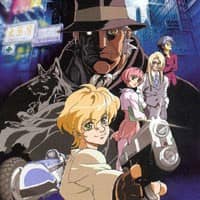
"Heat Guy J" is set in the futuristic city of Judoh, a sprawling metropolis where advanced technology coexists with deep social stratification. The narrative centers on the partnership between Daisuke Aurora, a skilled investigator for the Special Services Bureau, and J, a highly advanced android designed for combat and investigative tasks. Together, they tackle crime and corruption in a city where organized crime syndicates, corporate greed, and political intrigue intertwine.
The series explores the dynamic between humans and androids, particularly through the relationship between Daisuke and J. J is not just a tool but a sentient being with emotions and a distinct personality, often displaying humor and a sense of justice. Daisuke, on the other hand, is a pragmatic and resourceful investigator who relies on J's capabilities while grappling with the ethical implications of working alongside an artificial intelligence. Their partnership is tested as they confront increasingly complex cases that reveal the darker underbelly of Judoh.
The overarching plot involves the rise of the Mafia-like organization, the Baffalo Family, which seeks to consolidate power in Judoh. The Baffalo Family's leader, Kyoko Milchan, is a formidable antagonist whose ambitions threaten the city's fragile balance. As Daisuke and J delve deeper into the criminal underworld, they uncover connections between the Baffalo Family and powerful corporate entities, as well as the city's political elite. This web of corruption forces the duo to navigate moral ambiguities and make difficult choices to protect the city and its inhabitants.
Supporting characters include Claire Leonelli, a skilled mechanic and Daisuke's childhood friend, who provides technical support and emotional grounding. Other key figures include Shun Aurora, Daisuke's younger brother, who becomes entangled in the city's conflicts, and various members of the Baffalo Family, each with their own motivations and agendas. The series balances episodic crime-solving with a larger narrative arc, gradually revealing the complexities of Judoh's society and the forces shaping its future.
Themes of trust, loyalty, and the nature of humanity are woven throughout the story, as characters confront their own beliefs and the consequences of their actions. The interplay between technology and human emotion is a recurring motif, particularly in J's development as a character who blurs the line between machine and person. The series maintains a steady pace, blending action, mystery, and philosophical inquiry to create a compelling exploration of a dystopian future.
The series explores the dynamic between humans and androids, particularly through the relationship between Daisuke and J. J is not just a tool but a sentient being with emotions and a distinct personality, often displaying humor and a sense of justice. Daisuke, on the other hand, is a pragmatic and resourceful investigator who relies on J's capabilities while grappling with the ethical implications of working alongside an artificial intelligence. Their partnership is tested as they confront increasingly complex cases that reveal the darker underbelly of Judoh.
The overarching plot involves the rise of the Mafia-like organization, the Baffalo Family, which seeks to consolidate power in Judoh. The Baffalo Family's leader, Kyoko Milchan, is a formidable antagonist whose ambitions threaten the city's fragile balance. As Daisuke and J delve deeper into the criminal underworld, they uncover connections between the Baffalo Family and powerful corporate entities, as well as the city's political elite. This web of corruption forces the duo to navigate moral ambiguities and make difficult choices to protect the city and its inhabitants.
Supporting characters include Claire Leonelli, a skilled mechanic and Daisuke's childhood friend, who provides technical support and emotional grounding. Other key figures include Shun Aurora, Daisuke's younger brother, who becomes entangled in the city's conflicts, and various members of the Baffalo Family, each with their own motivations and agendas. The series balances episodic crime-solving with a larger narrative arc, gradually revealing the complexities of Judoh's society and the forces shaping its future.
Themes of trust, loyalty, and the nature of humanity are woven throughout the story, as characters confront their own beliefs and the consequences of their actions. The interplay between technology and human emotion is a recurring motif, particularly in J's development as a character who blurs the line between machine and person. The series maintains a steady pace, blending action, mystery, and philosophical inquiry to create a compelling exploration of a dystopian future.
Cast
- Ian Naluse
Comment(s)
No entries available.
Staff
- Director · Kazuki Akane
- Screenplay · Hiroshi Ohnogi
- Screenplay · Kazuki Akane
- Screenplay · Miya Asakawa
- Screenplay · Akihiko Takadera
- Storyboard · Eiichi Sato
- Storyboard · Kazuki Akane
- Storyboard · Hidekazu Sato
- Storyboard · Sumio Watanabe
- Storyboard · Nobuhiro Kondo
- Storyboard · Hiroshi Ishiodori
- Storyboard · Tomokazu Tokoro
- Storyboard · Takashi Yamazaki
- Storyboard · Toshiyuki Tsuru
- Storyboard · Hiroshi Hara
- Storyboard · Takayuki Tanaka
- Storyboard · Shoji Yabushita
- Storyboard · Kenji Yasuda
- Episode Director · Kazuki Akane
- Episode Director · Hidekazu Sato
- Episode Director · Keisuke Onishi
- Episode Director · Masashi Abe
- Episode Director · Hiroyuki Tsuchiya
- Episode Director · Takashi Yamazaki
- Episode Director · Toshiyuki Tsuru
- Episode Director · Takayuki Tanaka
- Episode Director · Yutaka Hirata
- Episode Director · Kouji Ogawa
- Episode Director · Kenji Yasuda
- Episode Director · Masayuki Matsumoto
- Episode Director · Yasuo Ejima
- Episode Director · Tamao Sate
- Episode Director · Daisuke Ichiki
- Music · Try Force
- Original creator · Kazuki Akane
- Character Design · Takahiro Kishida
- Character Design · Nobuteru Yuki
- Art Director · Yōko Komiya
- Chief Animation Director · Nobuteru Yuki
- Animation Director · Shuichi Shimamura
- Animation Director · Masahiro Sekiguchi
- Animation Director · Futoshi Fujikawa
- Animation Director · Toshiya Washida
- Animation Director · Kouji Matsuyama
- Animation Director · Yuji Mukoyama
- Animation Director · Haruo Sotozaki
- Animation Director · Masanori Osawa
- Animation Director · Takehiro Hamatsu
- Animation Director · Shinji Takeuchi
- Animation Director · Yoshinosuke Naitou
- Animation Director · Hideki Yamazaki
- Animation Director · Mamoru Abiko
- Animation Director · Higashi Narita
- Animation Director · Kunihiko Natsume
- Animation Director · Yuko Watanabe
- Animation Director · Nobuteru Yuki
- Animation Director · Makoto Kohara
- Animation Director · Satoru Kobayashi
- Animation Director · Yūko Watabe
- Mechanical design · Takeshi Takakura
- Mechanical design · Takayuki Takeya
- Sound Director · Jin Aketagawa
- Cgi Director · Takayuki Chiba
- Director of Photography · Hiroshi Maeda
- Producer · Tetsuo Gensho
- Producer · Atsushi Sugita
- Producer · Shinjiro Yokoyama
- Producer · Tsutomu Kasai
- Producer · Tetsuya Tomioka
Production
- Production · Bandai Co., Ltd.
- Animation Production · Satelight
- Production · Satelight
- Production · TBS
- Production · Dentsu Inc.
- Production · Heat Guy J Project
Relations
Manga overview
Music
Ending
- 1-13“"Kokoro no Sukima" (心の隙間 "Gap in the Heart")” - wyse
- 14-25“"Hikari" (ひかり "Light")” - Saeko Chiba
- ?“"Face"” - Try Force (ep 26)